Training Tips
Martial Arts Warm-Up Drills for Focused, Safer Practice
Martial arts warm-up drills do more than fill the first few minutes of a lesson. A well-planned start can help students shift attention away from the day, explore movement with control, and prepare for the technical work that follows. The goal is not to rush through a list of exercises. It is to create a bridge between arriving on the training floor and practising with purpose.
Warm-ups should match the class, the environment, and the instructor's guidance. The ideas below can help you understand the role of preparation without treating a general routine as a substitute for individual coaching.
Begin with attention and space
Before moving quickly, check the training area. Make sure there is enough room and that you know where partners, equipment, and other students are positioned. A calm start makes it easier to hear instructions and respond to changes.
Use the first movements to notice how you feel that day. Are you distracted? Are you moving too quickly? Can you keep your balance while using a comfortable range of motion? This simple self-check helps you adjust your effort and communicate with an instructor if something does not feel right.
Use gradual movement
A warm-up can progress from simple movement to more specific practice. Walking, light steps, arm circles, controlled knee lifts, and gentle changes of direction can help students explore coordination without immediately demanding speed or power.
The quality of the movement matters more than the number of repetitions. Keep the range comfortable and avoid forcing a stretch. If an exercise causes pain, stop and ask for guidance. Warm-up practice should prepare learning, not become a test of toughness.
Connect mobility to martial arts positions
General movement becomes more useful when it connects to the positions and transitions used in class. You might practise shifting weight from one foot to the other, turning with control, lowering into a stable stance, or returning to a ready position after a step.
Move slowly enough to notice where your balance changes. Keep your eyes and breathing steady, and avoid adding speed before the pathway is clear. A coach can help you understand which details matter for the day's lesson.
Add coordination and timing
Many martial arts exercises ask the body to coordinate several actions at once. A warm-up can introduce this demand gradually through simple footwork patterns, directional changes, or movements that pair the hands and feet.
Start with a pattern you can remember. Once the pattern feels clear, practise changing direction or responding to a cue. The aim is controlled attention. If complexity causes you to lose posture or stop listening, return to a simpler version.
Prepare technique without rushing contact
Technical preparation may include practising a stance, a chamber, a controlled hand movement, or a light kicking pathway. The instructor should determine what is appropriate for the class. Students should avoid turning a warm-up into unsupervised contact or high-speed exchanges.
When partners are involved, both people should understand the exercise and agree on its pace. Use communication and control. A good preparation drill makes the objective clear before adding distance, timing, or resistance.
Match the warm-up to the lesson
A Taekwondo-focused lesson may emphasise different movements from a Hapkido or self-defence lesson. Competition training may also require a different preparation emphasis from a fundamentals class. This is why a coach-led warm-up is more useful than using one fixed routine for every session.
KIMOO Martial Arts offers Hapkido, Taekwondo, self-defence, and competition training in Santa Clara, California. If you are new to training, ask the instructor how warm-up drills connect to the class you are considering. The answer can show you how thoughtfully the academy links preparation with instruction.
Finish preparation with a clear objective
Before the main exercise begins, identify one quality to carry forward. You might focus on returning to balance, listening for a cue, keeping movements controlled, or maintaining a stable posture during a transition. One clear objective is easier to remember than a long list of corrections.
After practice, consider whether the warm-up helped you understand the lesson. Did you move with more awareness? Did the preparation make the first technique easier to follow? Your reflection can help you ask better questions and practise more intentionally next time.
Learn from experienced instruction
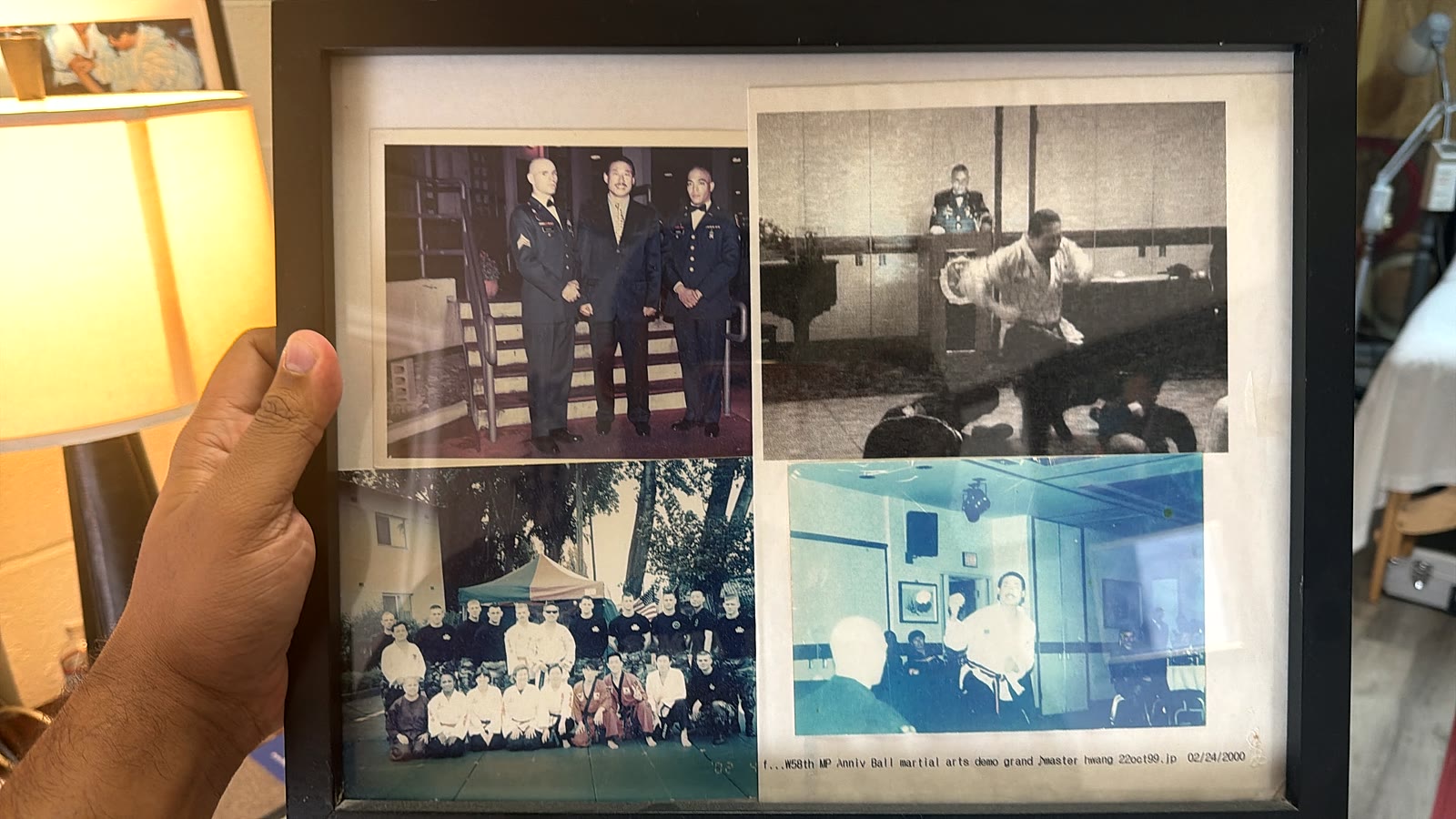
Grand Master Jong Yeon Hwang trained at the Korea Hapkido Headquarters Dojang from 1971 and holds 8th Dan Hapkido. He won Gold at the 10th Wushu World Cup in Milan in 2005. He received the President's Volunteer Service Award, a White House honor, in 2023. KIMOO received Santa Clara District 2 Business of the Year in 2019.
These are verified facts about the academy's leadership and recognition. The most useful way to judge a training environment is also to experience how instructors explain movement, preparation, and control in person.
Frequently asked questions
How long should martial arts warm-up drills take?
There is no single length for every class. The instructor can adjust preparation to the lesson, the training environment, and the students. Follow the coach's direction rather than treating a general routine as a fixed prescription.
Should a warm-up include stretching?
It may include comfortable mobility work, but do not force a stretch or ignore pain. Ask the instructor which movements suit the class and use a controlled range of motion.
Can I warm up before arriving at the academy?
You can use gentle movement to transition into practice, but follow the academy's class instructions once you arrive. Do not assume an independent routine replaces a coach-led preparation.
Should beginners do fast drills?
Beginners should first understand the movement and the purpose of the exercise. Speed can be added only when control and instructions remain clear.
Are partner drills part of a warm-up?
They can be, but partner exercises require clear instructions, communication, and a controlled pace. Both partners should know how to pause and reset.
How can warm-ups improve my practice habits?
Treat the opening minutes as focused learning time. Observe your balance, listen carefully, and carry one clear objective into the main lesson. Want to build thoughtful training habits from the start? Book a free trial class at KIMOO Martial Arts in Santa Clara or call (408) 243-1001.
Train with a champion
Book your free trial class at KIMOO Martial Arts in Santa Clara and train under a World Cup gold medalist.
Keep reading