Competition
The Olympic Pathway in Taekwondo: How LA 2028 Qualification Works
The 2028 Olympics are in Los Angeles — a few hours down the coast from Santa Clara. For young competitors in California, that is about as close as a home Games gets.
Here is how qualification actually works, because the system changed after Paris.
The ranking cycle changed
World Taekwondo moved from a four-year Olympic ranking cycle to a two-phase, two-year cycle following Paris 2024. The new system took effect on 1 June 2024.
- First ranking period: June 2024 to May 2026
- Second stage: continues through to 2028
This matters more than it sounds. A shorter cycle means recent results carry more weight, and a strong run closer to the Games counts for more than it used to.
How athletes qualify
The ranking route. The top five athletes in each weight category on the Olympic rankings published in January 2028 qualify automatically.
Seeding. Olympic seeding is then set from the June 2028 rankings — so performance between January and June still shapes the draw even once a place is secured.
Continental and national routes. Beyond rankings, there are continental championships and qualification tournaments, with windows running from 1 February 2026 to 31 May 2028, plus national championships from 1 June 2026 to 31 May 2028. National federations run their own selection processes to decide who they send to continental qualifiers.
Events and weight categories for LA 2028 are confirmed as unchanged from Paris 2024.
Para Taekwondo is confirmed on the LA 2028 Paralympic programme.
What this means for a young competitor
Realistically, an Olympic place is a long and narrow path, and almost nobody reading this will walk it. That is not a reason to avoid competing.
What a competitive pathway actually gives a young athlete:
- A reason to train with intent rather than attendance.
- Measurable external feedback that is harder and more honest than a grading.
- Composure under pressure, which transfers to everything else.
- A ceiling that is not set by the local club.
The point is not that your child will go to LA. The point is that training with that structure makes them considerably better than training without it.
How a pathway starts
Not with a qualification tournament. It starts with fundamentals, conditioning and temperament, assessed honestly — which is why our competition program runs by invitation.
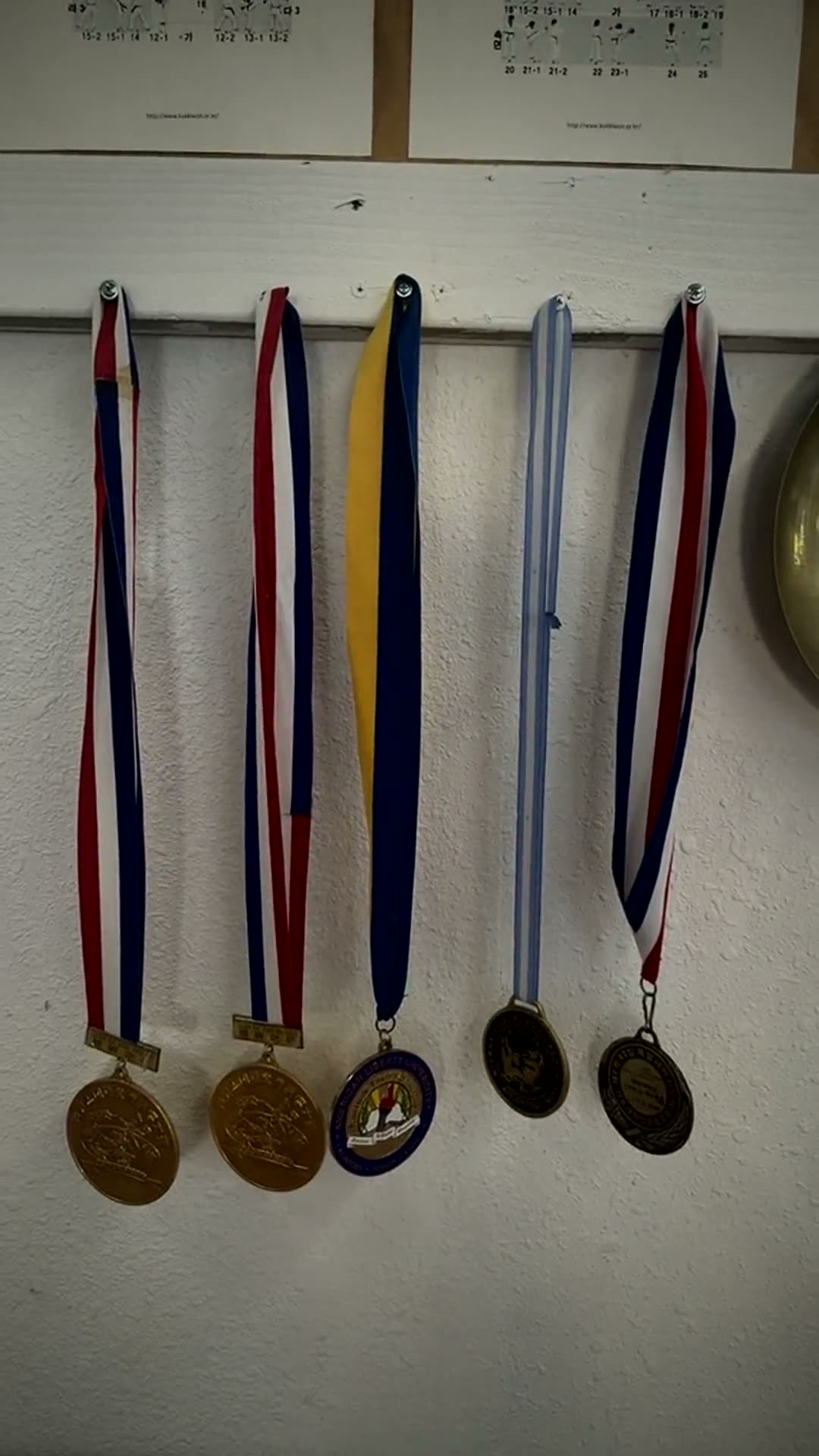
Grand Master Hwang took gold at the 10th Wushu World Cup in Milan in 2005, and the academy holds titles at the U.S. National Open Championships. Preparation is supervised by someone who has competed at the top, not read about it.
Start with a free class
Every competitor started somewhere ordinary. Your first class is free, and new students receive a free uniform and white belt.
Call (408) 243-1001 for an honest assessment of where a student currently stands.
Train where the standard is real
Competitors are coached personally by a World Cup gold medalist and 8th Dan Grand Master who trained at the source of the art in 1971.
Visit us: 2181 El Camino Real, Santa Clara, CA 95050
Frequently asked questions
How do athletes qualify for Taekwondo at the LA 2028 Olympics?
The top five athletes per weight category on the Olympic rankings published in January 2028 qualify automatically, alongside continental and national qualification routes.
What changed in World Taekwondo's ranking system?
The Olympic ranking cycle moved from four years to a two-phase, two-year cycle, effective 1 June 2024, with the first period running June 2024 to May 2026.
When is Olympic seeding decided?
Seeding is based on the June 2028 rankings, so results between January and June 2028 still affect the draw.
Are the weight categories changing for LA 2028?
No. The events and weight category composition are confirmed as unchanged from Paris 2024.
Where is KIMOO Martial Arts in Santa Clara?
We are at 2181 El Camino Real, Santa Clara, CA 95050. Call (408) 243-1001.
Train with a champion
Book your free trial class at KIMOO Martial Arts in Santa Clara and train under a World Cup gold medalist.
Keep reading