Styles Explained
Dakar 2026 Wushu: What the Youth Olympic Competition Showed
Dakar 2026 wushu brought a traditional martial art to the Youth Olympic Games programme for the first time, with taolu competition held from November 1 to 3. The official Olympics coverage describes taolu as choreographed routines scored by judges. For martial arts students and curious viewers, the event offers a timely way to understand how competitive wushu presents athletic movement and technique, while remembering that a major international competition is very different from an introductory local class.
This is a guide to the event format reported by Olympics.com and the International Wushu Federation (IWUF), not a claim about what an individual beginner will experience in training. Event facts below are attributed to those official sources; the questions for choosing a local program are practical suggestions.
What made the event notable
Olympics.com reported that wushu taolu was included on an Olympic programme for the first time at Dakar 2026. The competition took place at the Dakar Expo Center in Senegal, from November 1 through 3, with 48 athletes expected, according to its preview. The IWUF similarly described the competition as wushu's debut as an official sport at a Youth Olympic Games event.
That milestone increased the sport's visibility, but it is useful to be precise about the format. Dakar's wushu event featured taolu, rather than every practice or competition form associated with the wider wushu umbrella. The Olympics preview described taolu as athletes performing choreographed routines assessed by judges. It is best understood as a formal competitive presentation, not a universal template for every school or class.
How the combined events worked
The Olympics.com preview listed four medal events: men's and women's changquan combined, and men's and women's taijiquan combined. Each combined event paired two routines. Changquan combined paired changquan with gunshu, while taijiquan combined paired taijiquan with taijishan. Scores from the two routines were combined to determine the final placing, and the preview said the top eight in each event advanced from preliminary rounds to finals.
The source distinguishes the movement qualities. Changquan is described as a northern Chinese form combining speed, kicks, jumps, and acrobatics. Taijiquan is described as involving precise, flowing, controlled movement. For a viewer, this helps explain why two routines within one sport can look so different while both are judged performances.
Do not infer that a school teaches every competition event, weapon routine, or elite-level technique because it offers wushu. Curriculum and class content vary. Ask the instructor which areas are currently included and what is appropriate for a new student.
What viewers can learn from watching
A competition can make details easier to notice: balance during transitions, timing, body control, clear direction of movement, and the relationship between speed and precision. These are observations to guide attention, not a promise that watching alone teaches technique. A filmed elite routine is not a safe practice plan for a beginner.
The Olympics.com coverage of the debut also recorded athletes describing the importance of representing their countries and sharing wushu's values with wider audiences. Those personal accounts are theirs, rather than evidence that all students will have the same experience. The broader takeaway is that sport can carry both technical and cultural meaning, and that competitors may bring years of preparation to a short performance.
If you are new to martial arts, use a competition as inspiration, then learn the basics under qualified instruction. Ask how beginners build foundational movement, how techniques are taught progressively, and what equipment or safety expectations apply. Do not try advanced jumps, weapons, or acrobatic movements based only on a video.
Connecting the event to local learning
KIMOO Martial Arts is in Santa Clara and lists Wushu among its disciplines. The academy's general program is not assumed to mirror Dakar's elite competition format. If you are interested after following the event, contact the school to ask what current Wushu classes cover, whether they suit your experience, and whether a free trial is available.
For parents, ask how the instructor introduces unfamiliar movements and sets expectations for students at different stages. For adult beginners, ask which classes accept newcomers and what a first session involves. In either case, confirm the current schedule, participation requirements, attire, and any costs directly with the academy. Those details are not established by the Olympic event coverage.
Frequently asked questions
What was the wushu format at Dakar 2026?
Olympics.com reported that the event featured taolu, where athletes perform choreographed routines scored by judges.
What does changquan combined include?
The Olympics.com preview describes the combined events as two routines. Changquan combined paired changquan with gunshu.
What does taijiquan combined include?
Taijiquan combined paired taijiquan with taijishan, according to the official Olympics.com preview.
Does every Wushu school teach the Dakar competition events?
No such assumption is warranted. Ask a school what its current curriculum includes and which classes are suitable for beginners.
Does KIMOO offer Wushu in Santa Clara?
Wushu is listed among KIMOO's disciplines. Contact the academy to confirm current classes and introductory options. For current Wushu program details or to arrange a free trial, contact KIMOO Martial Arts at (408) 243-1001.
Train with a champion
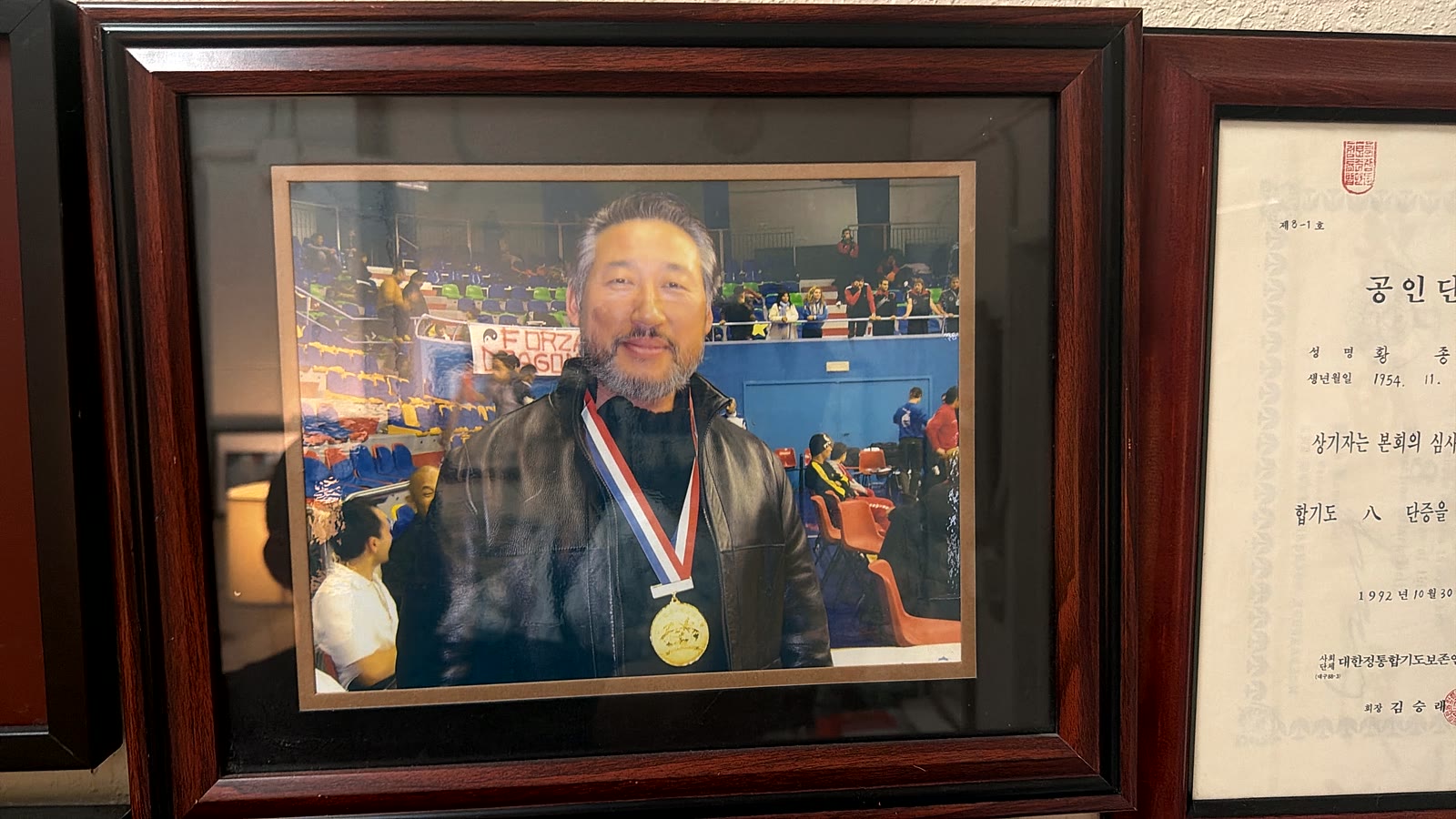
Book your free trial class at KIMOO Martial Arts in Santa Clara and train under a World Cup gold medalist.
Keep reading