Training Tips
Guided Discovery in Martial Arts Training: A Practical Guide
Guided discovery martial arts training gives students a more active role in learning. Instead of receiving every answer immediately, a student may be asked to notice an opportunity, try a controlled variation, or explain what changed. The instructor still sets the purpose and boundaries. The student learns to pay attention within them.
This approach is not a replacement for clear instruction. It is a way to connect explanation with exploration. Used thoughtfully, it can help students understand why a movement matters rather than memorising a sequence without context.
What guided discovery means
Guided discovery begins with a clear task. An instructor might ask a student to find a balanced position, recognise a change in distance, or choose a safe response within a controlled drill. The question should be specific enough to focus attention and open enough to invite observation.
The instructor can shape the task by changing one factor at a time. That factor might be the starting position, the speed, the available direction, or the information a student must notice. The goal is not to make practice confusing. It is to make the learning problem visible.
Keep the purpose clear
Exploration works best when students know what they are trying to learn. Before a drill, ask what the key idea is. Is the focus balance, timing, distance, control, awareness, or communication? A short explanation gives the practice a useful frame.
After a repetition, describe what you noticed without rushing to judge it. You might say that a movement felt more stable when your base stayed organised, or that a decision became easier after you looked earlier. Specific observations help the instructor decide what to adjust next.
Use constraints with care
A constraint is a deliberate limit that shapes a task. It can help a student focus on one decision instead of trying everything at once. For example, a drill might limit the available direction or require a pause before the next action. The exact constraint should come from the instructor and match the student's experience.
Constraints are not tricks and they are not a promise of automatic improvement. They are tools for making a training problem easier to explore. If the task becomes too difficult, ask for a simpler version. If it becomes too easy, the instructor may add a new challenge.
Ask better questions
Questions can guide attention without giving away every answer. Useful prompts include: What did you notice first? Where was your balance? What changed when the pace changed? What choice gave you more control? How could you make the next repetition clearer?
There is no need to ask every question at once. Choose one prompt that relates directly to the task. A short, well-timed question is often more useful than a long explanation after every attempt.
Combine discovery with direct teaching
Students need direct teaching for safety, essential structure, and unfamiliar movements. An instructor may demonstrate a basic position, explain a boundary, or correct an unsafe habit immediately. Guided discovery can follow once the student understands the foundation.
This balance matters in Hapkido, Taekwondo, self-defence, and competition training. Each area may require different explanations and different levels of control. Ask the instructor how a drill connects to the broader purpose of the discipline rather than assuming the same method fits every lesson.
Make feedback actionable
Feedback should help a student decide what to try next. Instead of collecting a long list of corrections, focus on one change that can be tested in the next repetition. Afterward, ask whether the change affected balance, timing, awareness, or control.
Students also have a role in receiving feedback. Listen without trying to defend every attempt. If a correction is unclear, ask for a demonstration or a simpler cue. The goal is not to prove that the previous repetition was reasonable. The goal is to make the next repetition more informative.
Put the method in the KIMOO context
KIMOO Martial Arts offers Hapkido, Taekwondo, self-defence, and competition training in Santa Clara, California. If you are curious about guided discovery, ask an instructor how questions and controlled variations are used in the area that interests you. The best method depends on the task, the student's experience, and the purpose of the lesson.
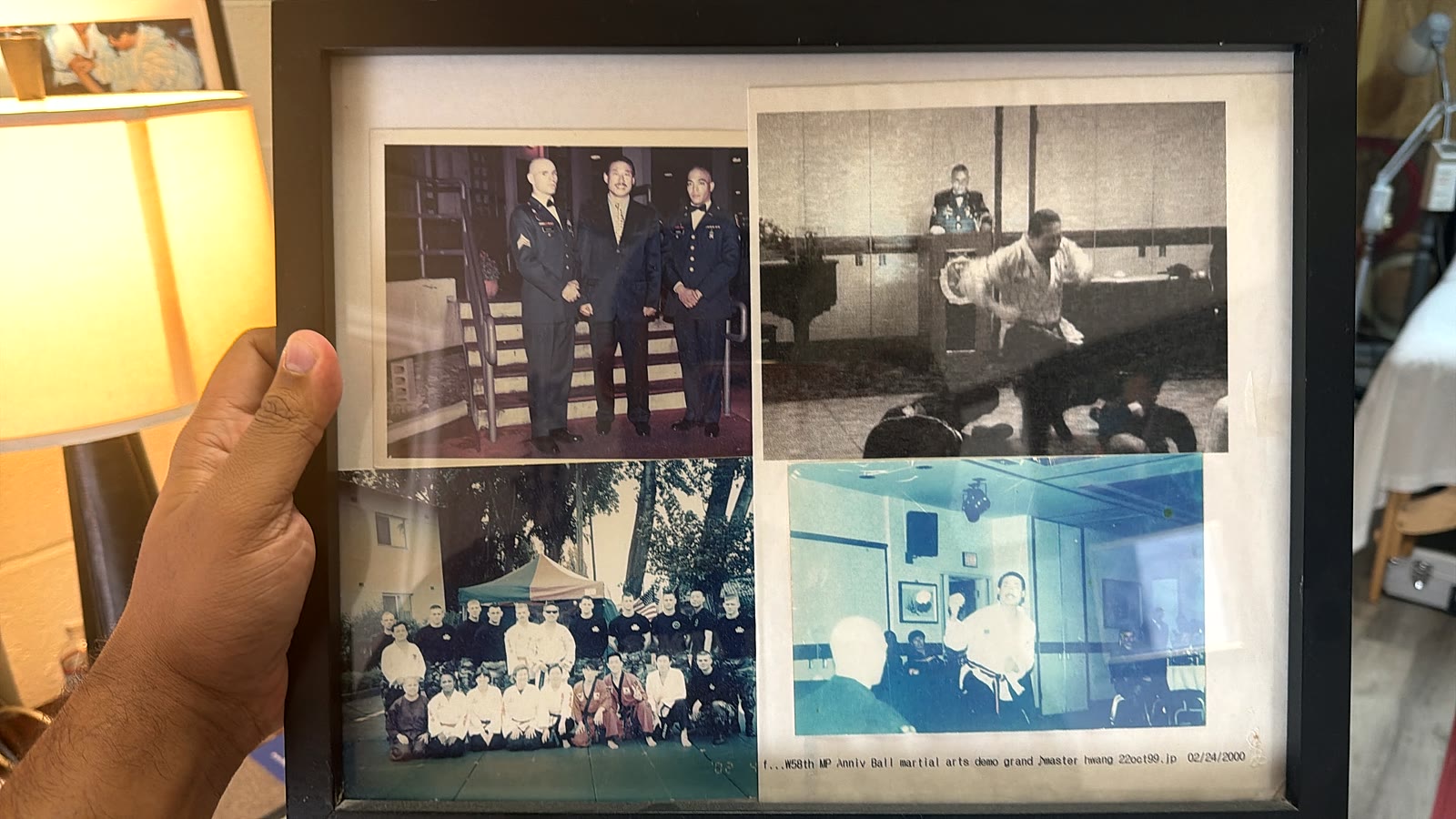
KIMOO is led by Grand Master Jong Yeon Hwang, who trained at the Korea Hapkido Headquarters Dojang from 1971 and holds 8th Dan Hapkido. He won Gold at the 10th Wushu World Cup in Milan in 2005. He received the President's Volunteer Service Award, a White House honor, in 2023. KIMOO received Santa Clara District 2 Business of the Year in 2019.
Those are verified facts about leadership and recognition. They do not guarantee a particular training outcome. A direct conversation about goals and teaching approach remains the best way to decide whether an academy is right for you.
Practise ownership responsibly
Ownership does not mean training without guidance. It means becoming more attentive to the task, communicating clearly, and using feedback to make a thoughtful adjustment. A student can take ownership while respecting the instructor's boundaries and the safety of a partner.
Try one small experiment in your next lesson: identify the goal, notice one detail, and ask one useful question. That simple process can turn repetition into active learning.
Frequently asked questions
Is guided discovery the same as being left to figure everything out?
No. The instructor sets the task, boundaries, and safety expectations. Questions and controlled variations help students explore within a clear learning structure.
Does this method replace demonstrations?
No. Demonstrations and direct instruction are important for foundations, safety, and unfamiliar movements. Guided discovery can help students understand and apply what they have been shown.
What is a training constraint?
It is a deliberate limit that shapes a practice task, such as reducing available directions or changing the pace. An instructor should choose constraints that match the lesson and the student.
What should a student do when a question feels confusing?
Ask for the goal in simpler language or request a demonstration. Clarity matters more than pretending to understand.
Can beginners use guided discovery?
Yes, when the task is appropriate and the instructor provides enough structure. A beginner should not be expected to solve an advanced problem without suitable guidance.
How do I learn more about KIMOO's approach?
Contact KIMOO Martial Arts, share your training goal, and ask what a free trial class involves. The instructor can explain the current next step. Book a free trial class at KIMOO Martial Arts in Santa Clara or call (408) 243-1001 to explore a more purposeful way to train.
Train with a champion
Book your free trial class at KIMOO Martial Arts in Santa Clara and train under a World Cup gold medalist.
Keep reading