Training Tips
Martial Arts Cross-Training: How to Combine Skills with Purpose
Martial arts cross-training can broaden your practice, but adding more disciplines is not automatically better. The most useful approach begins with a clear purpose. Decide which skill you want to develop, keep your fundamentals visible, and give each practice session a defined objective. With that structure, different training experiences can complement one another instead of competing for your attention.
Start with one clear reason
Cross-training may mean studying a second martial art, adding self-defence practice to a technical routine, or exploring a different movement method. Before you add anything, write down the reason. You might want to understand a new set of techniques, develop better movement awareness, or compare how two disciplines solve different training problems.
A specific reason helps you avoid collecting exercises without understanding them. It also gives you a useful question for an instructor: what should I keep, what should I adapt, and what should I leave alone for now?
KIMOO Martial Arts in Santa Clara offers Hapkido, Taekwondo, self-defence, and competition training. Speak with the academy about your interests before trying to combine disciplines on your own.
Protect your fundamentals
Every discipline has basic positions, movement patterns, timing, and terminology. When you start cross-training, continue practising the fundamentals of your primary discipline. Do not replace careful repetition with a constant search for something new.
At the beginning of a session, identify one foundational detail to protect. It might be balance during footwork, a stable stance, controlled distance, or the way you return to a ready position. If a new exercise makes that detail unclear, slow down and ask for guidance.
Fundamentals are not obstacles to variety. They are the reference points that help you understand whether a new movement is useful for your stated purpose.
Separate learning goals by session
A simple session plan can prevent confusion. Give each block one goal, such as learning a sequence, refining footwork, practising awareness, or reviewing a partner drill. Avoid changing the objective every few minutes.
Use a short reflection after each block. What did you learn? Which detail felt inconsistent? What question should you ask the instructor? This keeps cross-training analytical rather than impulsive.
When combining Hapkido and Taekwondo, for example, do not assume that a similar-looking movement has the same purpose or mechanics. Ask the instructors to explain the context. A technique can look familiar while requiring different timing, distance, or body position.
Communicate with instructors and partners
Cross-training is easier when everyone understands what you are practising. Tell the instructor when you are bringing experience from another discipline and ask how that background should be used in the lesson. The instructor can explain which habits transfer and which need to remain distinct.
Partner drills require even more clarity. Confirm the roles, sequence, pace, and expected contact before you begin. Do not add an unplanned variation to prove a point or test a partner. If the drill becomes confusing, pause and reset.
Good communication protects the learning environment. It also gives you a better understanding of how different disciplines approach timing and response.
Keep intensity under control
New skills require attention. If speed, fatigue, or force becomes the main focus, you may reinforce a movement before you understand it. Begin at a pace that allows accurate position, balance, breathing, and a controlled finish.
If a technique feels awkward, do not force it into a familiar pattern. Ask whether the instructor wants a smaller range of motion, a slower repetition, or a different starting position. Respect pain and unusual discomfort by stopping safely and speaking with the instructor.
Cross-training should expand understanding, not encourage reckless experimentation. Quality is more important than the number of combinations you can perform.
Decide what belongs together
Some skills can support one another, while others need separate practice. Awareness, posture, footwork, and communication may be useful themes across multiple classes. Specific technical details may depend on the discipline, training objective, or partner exercise.
Create a simple map with three columns: primary skill, supporting practice, and questions. For example, if your primary skill is footwork, supporting practice might involve a carefully chosen movement drill. Your question could be how distance changes between disciplines.
Review the map periodically. Keep what serves your purpose and remove what adds clutter. Cross-training is a process of informed selection, not an obligation to do everything.
Learn from experienced instruction
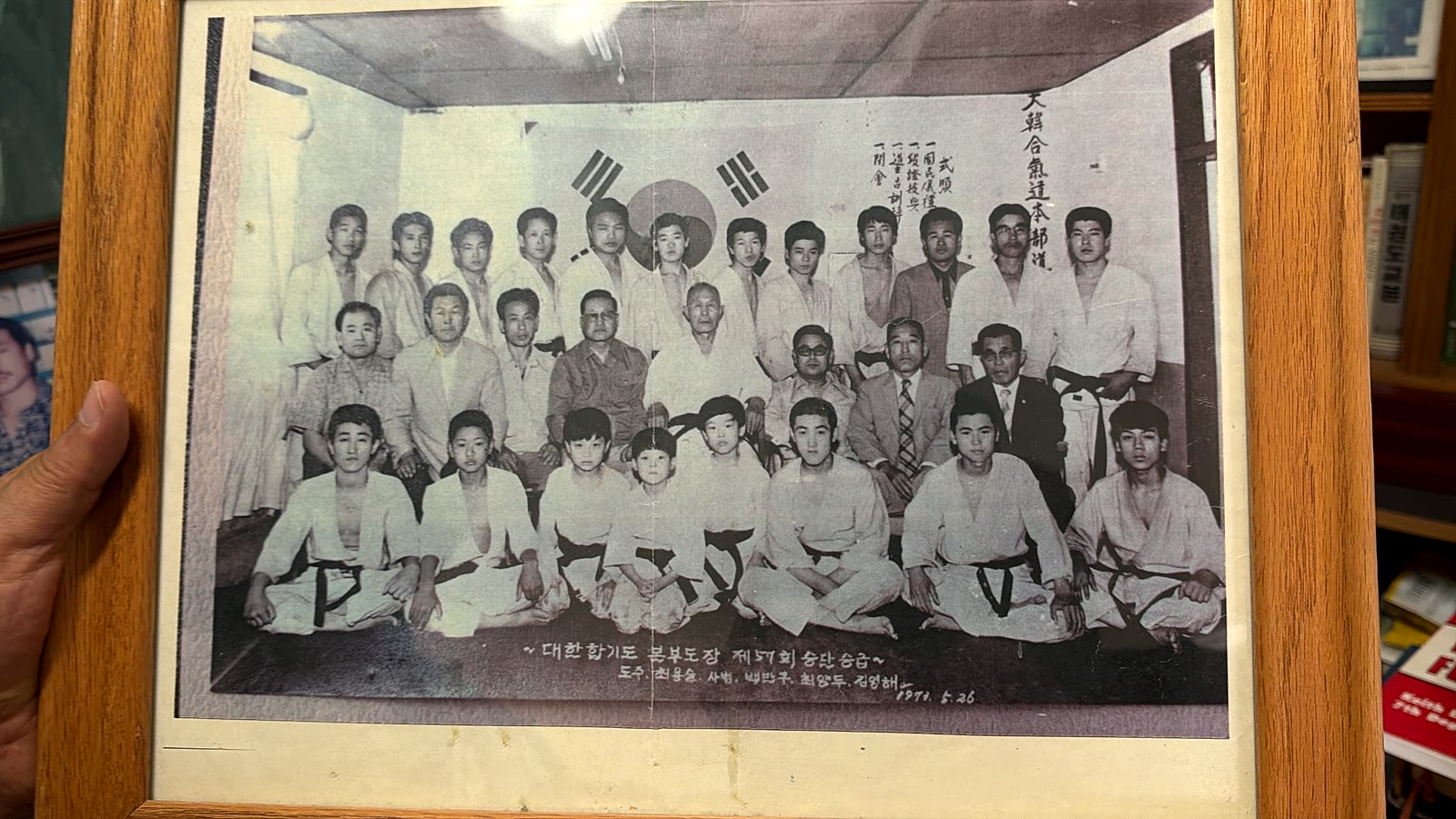
Grand Master Jong Yeon Hwang trained at the Korea Hapkido Headquarters Dojang from 1971 and holds 8th Dan Hapkido. He won Gold at the 10th Wushu World Cup in Milan in 2005. KIMOO also received the President's Volunteer Service Award, a White House honor, in 2023.
This verified background provides context for KIMOO's martial arts heritage. Your own cross-training plan should still be shaped through direct instruction, honest questions, and careful practice. An instructor can help you understand how Hapkido, Taekwondo, self-defence, and competition training differ in purpose.
Frequently asked questions
What does martial arts cross-training mean?
It means practising more than one discipline, method, or training focus with an intentional plan. The goal is to develop understanding rather than simply accumulate techniques.
Should I learn two martial arts at the same time?
There is no universal answer. Discuss your current experience, goals, and available attention with an instructor. Protecting fundamentals should remain a priority.
Can Hapkido and Taekwondo be combined?
They can be studied as different disciplines, but you should not assume their techniques have identical purposes or mechanics. Ask instructors how movements should be understood in context.
How can I avoid confusion while cross-training?
Give each session a clear objective, keep notes, separate technical details that do not transfer, and ask questions whenever a movement feels inconsistent.
Is more intensity better for learning a new skill?
Not usually. A controlled pace lets you focus on position, balance, timing, and a safe finish. Add intensity only when the instructor considers it appropriate. Ready to explore a focused approach to martial arts cross-training? Book a free trial class at KIMOO Martial Arts in Santa Clara, or call (408) 243-1001.
Train with a champion
Book your free trial class at KIMOO Martial Arts in Santa Clara and train under a World Cup gold medalist.
Keep reading