Choosing a Dojo
Martial Arts Belt Testing in Santa Clara: What to Ask
When families and adult beginners search for martial arts belt testing in Santa Clara, they are often looking for more than a ceremony. They want to understand how an academy defines progress, teaches technique, and prepares students for the next stage. A belt can mark a milestone, but the quality of the learning process matters more than the color around it.
Testing systems vary by discipline and academy. Before joining, ask for an explanation of the standards, the preparation process, and the instructor’s approach to feedback. Clear answers help you choose a training environment with confidence without relying on promises or assumptions.
Ask what the belt represents
A rank should connect to skills and training habits, not simply attendance. Ask what a student is expected to demonstrate at each stage. The answer might include technical fundamentals, forms, controlled partner work, terminology, or the ability to follow instructions. The right details depend on the discipline and the academy’s curriculum.
You should also ask how an instructor decides whether a student is ready. A thoughtful explanation gives you a window into the academy’s standards. It should make clear that progress is built through learning and practice rather than purchased through a guarantee.
Understand the preparation process
A well-explained test should not feel like a surprise. Ask how students learn the material, how they receive corrections, and how they can prepare between lessons. Find out whether an instructor gives a checklist, demonstrations, or opportunities to review skills. Do not assume that every academy uses the same process or timeline.
Preparation is also a chance to practise composure. Students can learn to listen carefully, reset after an error, and continue with control. These habits are useful whether someone trains for personal development, self-defence, or competition.
Look for useful feedback
The most valuable result of a test is information. Ask what happens after a student demonstrates a skill. Does the instructor explain what was strong and what needs more work? Can the student ask questions? Is the next step understandable?
Good feedback is specific and respectful. “Practise more” is less useful than an explanation of which detail needs attention. A premium academy can maintain high standards while making corrections feel constructive and achievable.
Compare the atmosphere, not only the system
Two academies may both use belts while creating very different training experiences. During a visit, observe whether students listen when others are practising, whether partners treat one another with care, and whether the instructor explains safety expectations. Notice how mistakes are handled. A learning environment should allow people to improve without unnecessary embarrassment.
Testing should reinforce respect, patience, and responsibility. It should not encourage students to rush, ignore a partner’s boundaries, or treat rank as permission to stop learning.
Match testing to the discipline
KIMOO Martial Arts offers Hapkido, Taekwondo, self-defence, and competition training in Santa Clara, California. Each path may emphasise different techniques and training priorities. If you are comparing Hapkido and Taekwondo, ask how the academy describes progress in the specific programme you are considering.
You can also ask how self-defence or competition training relates to the broader curriculum. A clear answer helps you understand what a lesson is designed to develop. It is better to choose a path that matches your purpose than to select a belt system based only on appearance.
Consider instructor background
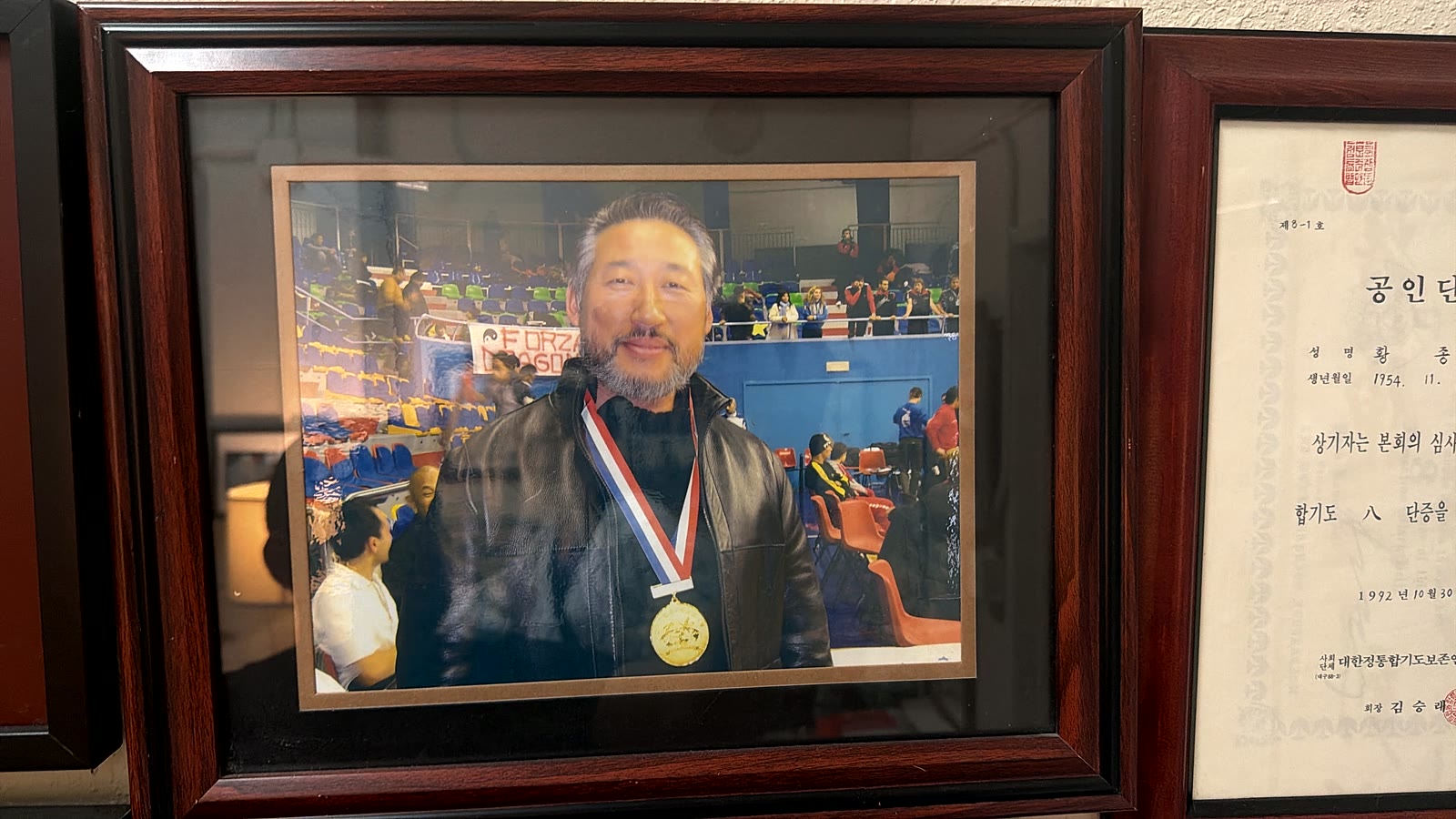
An instructor’s experience provides important context, although it should be considered alongside the quality of the current teaching. Grand Master Jong Yeon Hwang trained at the Korea Hapkido Headquarters Dojang from 1971 and holds 8th Dan Hapkido. He won Gold at the 10th Wushu World Cup in Milan in 2005. He received the President’s Volunteer Service Award, a White House honor, in 2023. KIMOO received Santa Clara District 2 Business of the Year in 2019.
These verified facts are part of KIMOO’s background. A visit gives you the opportunity to ask how that experience shapes instruction, standards, and the student journey.
Prepare for a first conversation
Before visiting, write down your goals and any questions about the programme. You might ask what a beginner learns first, how feedback is delivered, and what a student can expect during a free trial class. You can also ask how the academy communicates its current training details.
After the visit, reflect on whether the explanation was clear and whether the atmosphere felt respectful. A good choice should leave you with a realistic understanding of the work involved and the support available as you learn.
Frequently asked questions
Does every martial arts academy use belt testing?
No. Rank systems and testing methods vary. Ask each academy how it measures progress rather than assuming that every school follows the same structure.
What should a belt test measure?
It should measure skills and habits relevant to the discipline, such as technique, control, forms, listening, or partner awareness. Ask the instructor for the academy’s specific standards.
How can a beginner prepare for a first test?
Start by learning the fundamentals, listening closely, and asking for feedback. Confirm the academy’s own preparation guidance instead of relying on a generic checklist.
Is a higher belt proof that someone can handle every situation?
No. Rank recognises progress within a particular training system. It is not a guarantee of outcomes, and continued learning remains important.
What if a student is not ready to test?
Ask how the instructor explains the next steps. Constructive feedback can identify the skills to practise and make the path forward clear.
Can I ask about belt testing during a free trial class?
Yes. A trial visit is a good opportunity to ask about standards, feedback, and the training path before deciding whether an academy fits your goals. Explore purposeful martial arts training at KIMOO Martial Arts in Santa Clara. Book a free trial class, or call (408) 243-1001.
Train with a champion
Book your free trial class at KIMOO Martial Arts in Santa Clara and train under a World Cup gold medalist.
Keep reading