Self-Defence
How to Choose Self-Defence Classes for Beginners in Santa Clara
Choosing self-defence classes for beginners in Santa Clara is an important decision, but it does not need to feel intimidating. The best first step is to look for instruction that makes awareness, control, and responsible practice understandable. You should be able to ask questions, learn fundamental movements, and understand the purpose behind each exercise.
A beginner does not need to arrive with experience or a perfect fitness plan. Start by identifying what you want from training, then compare how an academy teaches the basics. This guide will help you make that first conversation more useful.
Begin with your reason for training
Self-defence can mean different things to different students. You may want to learn how to recognise changing situations, practise personal boundaries, develop confidence in movement, or explore a structured martial arts discipline. You may also be interested in Hapkido, Taekwondo, or broader martial arts training.
Write down your main reason before contacting an academy. A clear goal helps an instructor explain how beginners are introduced to class material. It also helps you avoid judging a programme only by dramatic techniques or fast-paced demonstrations.
Look for awareness before action
Responsible self-defence training begins with awareness and decision-making. Ask how the class addresses posture, distance, communication, and the choice to leave an unsafe situation when possible. These subjects can make technique more meaningful because students learn when and why a response may be appropriate.
A strong beginner lesson should not encourage unnecessary confrontation. It should present practice as a way to develop better judgment and controlled movement. Ask how an instructor separates training exercises from real-life claims and whether the lesson makes those limits clear.
Check how fundamentals are taught
Observe whether the instructor demonstrates a movement, explains its purpose, and gives students a chance to practise at an appropriate pace. Beginners should have time to understand balance, positioning, and control before adding complexity.
Useful instruction also includes corrections. Listen for feedback that addresses a student’s movement rather than simply telling them to try harder. Clear cues help a new student notice what to change and how to repeat the skill with more precision.
Ask about partner training and safety
Many self-defence classes use partner drills. Ask how partners communicate, how contact is controlled, and how a new student is introduced to an exercise. You can also ask how the instructor handles different experience levels during shared practice.
Safety is part of self-defence skill. Training should develop control and respect for the person practising with you. During a visit, notice whether students listen to directions, maintain appropriate space, and understand when an exercise should slow down.
Compare the training environment
Look for a focused, welcoming environment where questions are treated as part of learning. Confidence should come from understanding and practice, not from pressure or exaggerated promises. Be cautious of any academy that guarantees a particular outcome or suggests that one technique makes someone completely safe.
You can also consider whether the academy offers a broader path. KIMOO Martial Arts offers Hapkido, Taekwondo, self-defence, and competition training in Santa Clara, California. Ask how the available disciplines relate to your goal and which fundamentals a beginner should explore first.
Consider the instructor’s background
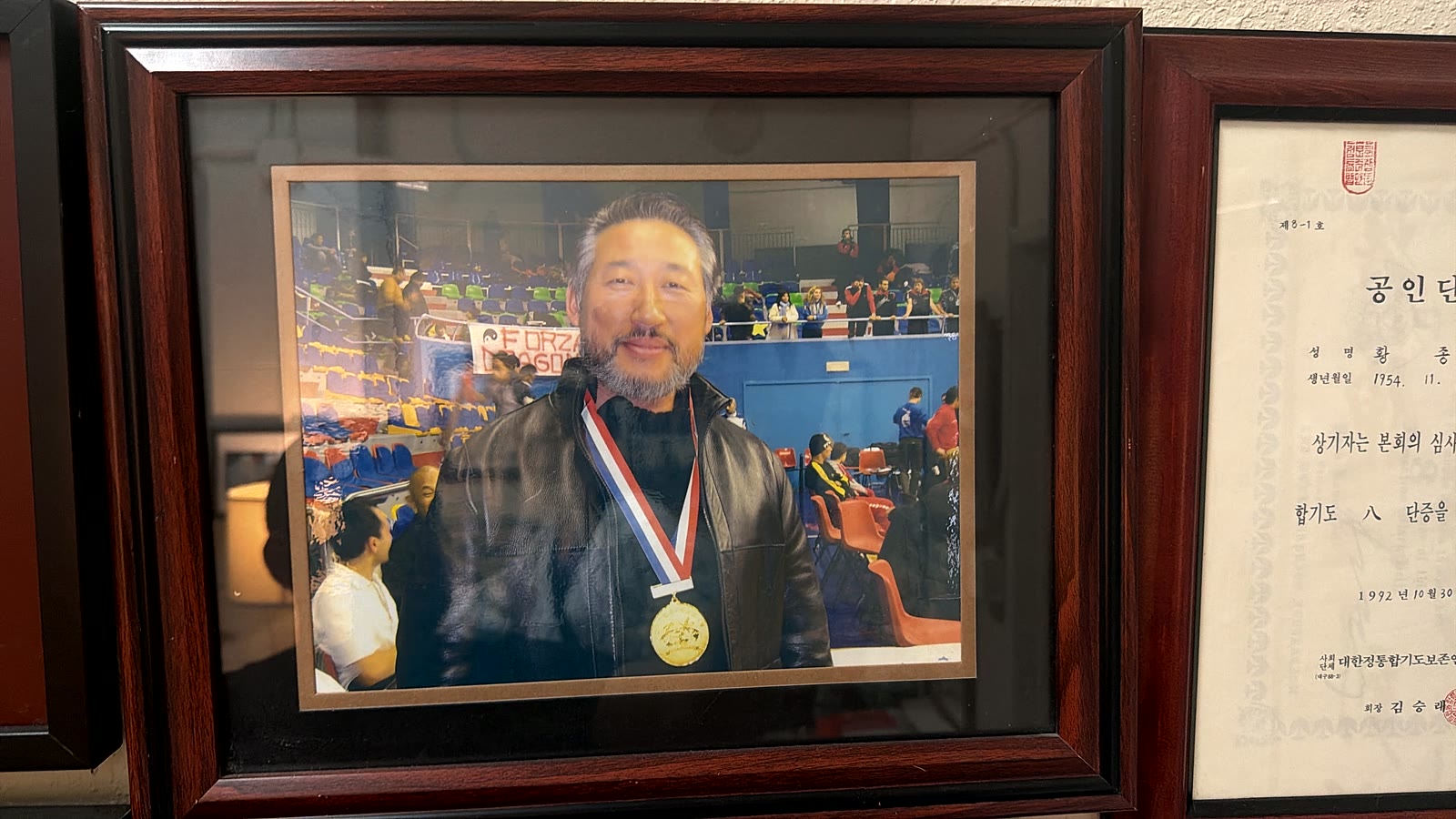
An academy’s history can provide useful context. Grand Master Jong Yeon Hwang trained at the Korea Hapkido Headquarters Dojang from 1971 and holds 8th Dan Hapkido. He won Gold at the 10th Wushu World Cup in Milan in 2005. He received the President’s Volunteer Service Award, a White House honor, in 2023.
KIMOO received Santa Clara District 2 Business of the Year in 2019. These are verified details about the academy and its leadership. They should complement, not replace, your own observation of the teaching environment and your questions about beginner instruction.
Make a first visit a learning experience
Before attending a free trial class, ask what a new student should expect and what to bring. During the lesson, notice whether the instructor explains the purpose of each drill and whether the pace allows you to remain attentive.
Afterward, reflect on four questions. Did the class match your reason for training? Were the instructions clear? Did partner practice feel controlled and respectful? Could you ask a question without pressure? Your answers will help you compare options with more confidence.
Build a responsible practice mindset
Self-defence training is not a promise that every situation can be predicted or controlled. It is an opportunity to practise awareness, movement, communication, and disciplined decision-making. Progress comes from listening carefully and returning to fundamentals.
Choose an academy that treats those principles seriously. A premium training experience should make you feel supported while also asking you to practise with attention and respect.
Frequently asked questions
Are self-defence classes suitable for complete beginners?
A beginner-focused class should explain fundamentals clearly and introduce drills progressively. Ask how new students are welcomed and how the instructor adapts explanations when a movement is unfamiliar.
What should a beginner learn first?
Start with awareness, balance, distance, communication, and controlled movement. An instructor can explain how those foundations connect to the academy’s self-defence approach.
Is self-defence the same as learning a martial art?
Self-defence is a training goal, while Hapkido and Taekwondo are martial arts disciplines with their own methods and traditions. Ask how an academy connects its disciplines to your objective.
What safety questions should I ask before joining?
Ask how partner drills are introduced, how contact is controlled, and how students communicate during practice. Clear answers show that safety is part of the learning process.
Can a trial class help me choose?
Yes. A trial class lets you observe instruction, practise fundamentals, and decide whether the environment suits your goals. Use it to ask questions rather than trying to prove anything.
What should I avoid when comparing classes?
Avoid choosing only by dramatic claims or pressure to commit immediately. Look for clear instruction, responsible practice, and an academy that explains what beginners can expect. If you are ready to begin with purpose, book a free trial class at KIMOO Martial Arts in Santa Clara or call (408) 243-1001.
Train with a champion
Book your free trial class at KIMOO Martial Arts in Santa Clara and train under a World Cup gold medalist.
Keep reading