Training Tips
Open-Skill Martial Arts Training: Why Adaptability Matters
Open-skill martial arts training asks you to do more than repeat a movement in a fixed setting. It invites you to notice changing information, make an appropriate decision, and carry out a response with control. The task can remain simple while still helping you learn how to adapt.
This approach does not mean every class must be unpredictable or intense. Effective practice has a purpose, clear boundaries, and a level of challenge that matches the student. Understanding those elements can help you participate with greater attention and ask better questions.
What makes a skill open?
A closed practice task tends to keep important conditions stable. An open-skill task includes changes that require attention. A cue may arrive from a different direction, a starting distance may vary, or a partner may offer more than one reasonable option.
The point is not to create confusion. The point is to preserve information that matters to the task. If the goal involves managing distance, for example, the drill should give you a chance to notice distance and respond appropriately within agreed boundaries.
Start with one meaningful decision
A beginner does not need a dozen options at once. Begin with one clear question: Where is the cue? Can I stay balanced? Which direction gives me space? Can I maintain control while the task changes?
Ask the instructor what decision the drill is designed to develop. When you know what to look for, you can distinguish useful information from background movement. That makes practice more focused and keeps a variation from becoming random.
Progress from stable to variable
Skill learning benefits from a sensible progression. An instructor may first demonstrate a movement in a stable situation, then add a small change. The student can learn the basic action while gradually developing the ability to recognise a cue and select a response.
A good variation should be understandable. If the task becomes too difficult, ask whether one condition can be simplified. The goal is not to prove that you can handle confusion. The goal is to find the next challenge that helps you learn.
Make partner practice clear
Open tasks need especially clear communication between partners. Before beginning, establish the pace, distance, contact level, and signal to pause. Everyone should understand what is being practised and what is outside the boundary of the drill.
Safety and adaptability support each other. A student who feels able to pause and ask a question can pay closer attention to the task. A student who is unsure about the rules may focus on guessing what is allowed instead of learning the skill.
Use outcome-based feedback
Feedback is most useful when it connects an action to a result. An instructor may ask whether you saw the cue, stayed balanced, maintained distance, or completed the response with control. That information can guide the next attempt.
Technical details still matter. If a position affects safety or the quality of a movement, the instructor can explain the correction. Ask how a detail connects to the larger purpose. Understanding that relationship makes it easier to apply feedback when the situation changes.
Reflect after a variation
After a drill changes, pause for a brief review. What information did you notice? What did you decide? What happened when your first response did not fit the situation? Reflection does not need to be lengthy. One clear observation can improve the next repetition.
You can keep a small training note with the name of the task, the cue you noticed, and one question for the instructor. This creates a useful record without turning practice into a test or a performance report.
Explore this approach at KIMOO
KIMOO Martial Arts offers Hapkido, Taekwondo, self-defence, and competition training in Santa Clara, California. Open-skill practice may look different across these areas because the goals and training tasks differ. Ask an instructor how a particular exercise relates to the discipline you want to study.
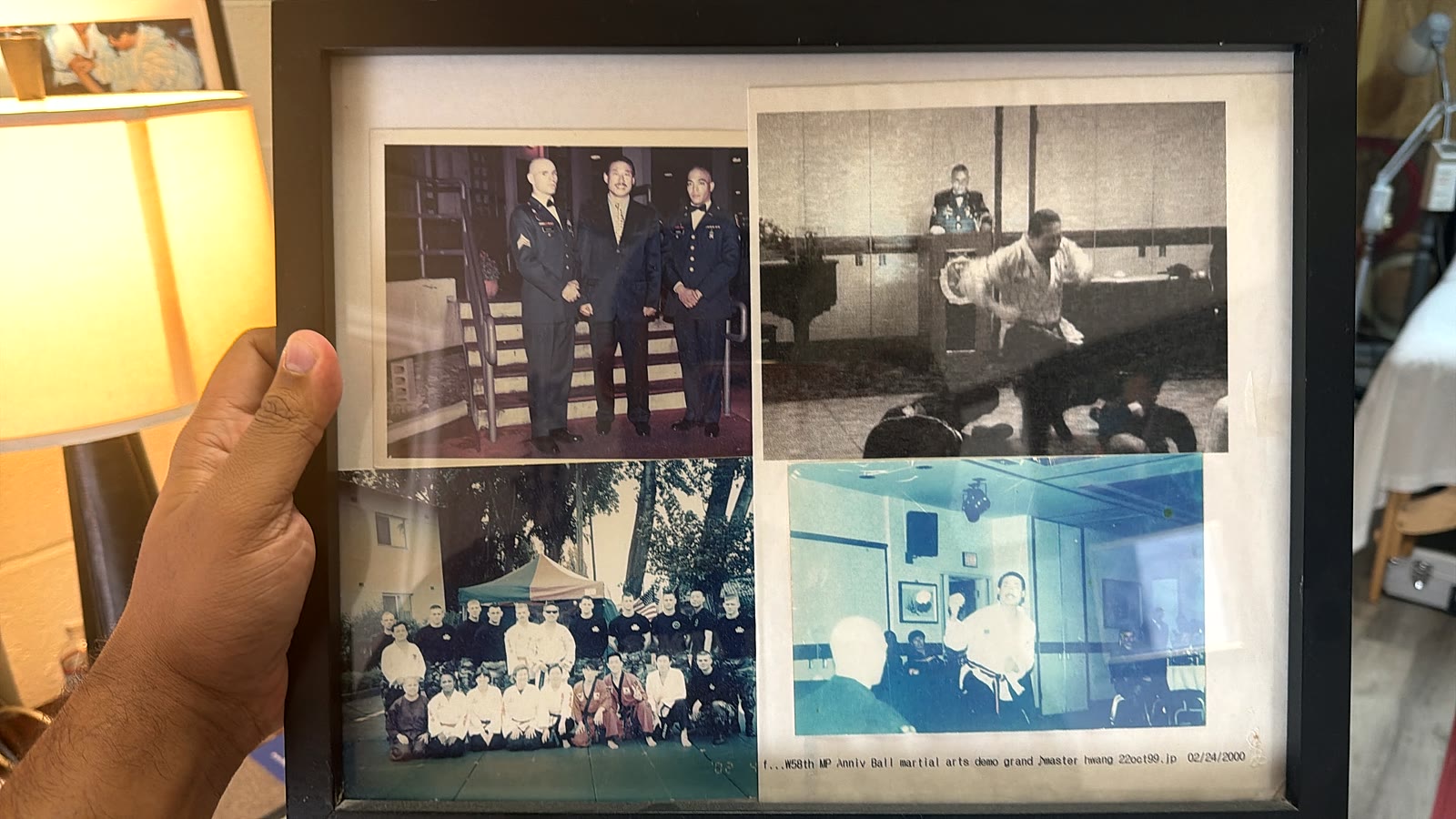
KIMOO is led by Grand Master Jong Yeon Hwang, who trained at the Korea Hapkido Headquarters Dojang from 1971 and holds 8th Dan Hapkido. He won Gold at the 10th Wushu World Cup in Milan in 2005. He received the President's Volunteer Service Award, a White House honor, in 2023. KIMOO received Santa Clara District 2 Business of the Year in 2019.
These are verified facts about KIMOO's leadership and recognition. They do not promise an individual result or describe every class. A direct conversation remains the best way to understand the teaching approach and the next step for your goals.
Keep adaptability responsible
Adaptability is not the same as rushing. Stay within the pace and boundaries established by the instructor. If a task feels unclear, pause. If a health concern or injury affects your participation, communicate that appropriately and seek professional guidance when needed.
The best practice challenge is one you can understand, perform with control, and revisit with useful feedback. Over time, carefully introduced changes can help you pay attention to what a task is asking rather than relying only on a memorised pattern.
Frequently asked questions
What is open-skill martial arts training?
It is practice that includes changing information or conditions, asking the student to notice a cue and select an appropriate response within controlled boundaries.
Does open-skill practice replace basic technique?
No. Stable technical practice can introduce a movement, while carefully added variations help a student learn when and how to use it.
How can I tell if a drill has a clear purpose?
Ask what the drill is designed to teach and which cue or decision you should notice. The instructor should be able to explain the task plainly.
How should partners keep a variable drill safe?
Clarify pace, distance, contact, and the signal to pause before beginning. Stop whenever the conditions or purpose are unclear.
What should I do when a variation feels too difficult?
Ask the instructor to simplify one condition or demonstrate the task again. Appropriate challenge supports learning better than unnecessary confusion.
Can I explore open-skill practice at KIMOO?
Contact KIMOO Martial Arts in Santa Clara, share your training goals, and ask what a free trial class involves. The instructor can explain the current next step. Book a free trial class at KIMOO Martial Arts in Santa Clara or call (408) 243-1001 to explore focused, adaptable martial arts training.
Train with a champion
Book your free trial class at KIMOO Martial Arts in Santa Clara and train under a World Cup gold medalist.
Keep reading