Training Tips
Strength Training for Martial Artists: A Balanced Guide
Strength training for martial artists is not about turning every session into a contest of maximum force. Used thoughtfully, strength work can support posture, control, stable movement, and the ability to practise technique with attention. It should complement martial arts instruction, not compete with it.
The best approach starts with the purpose of the martial arts lesson. Build a simple foundation, respect recovery, and ask an instructor how additional strength work fits your training path.
Understand what strength should support
Martial arts asks you to coordinate the body while responding to a task. Strength can help you maintain a position, control a movement, or stay organised as technique becomes more demanding. It is useful when it serves those qualities rather than becoming a separate identity for training.
Think in terms of movement qualities. Can you keep a balanced stance? Can you move with control? Can you produce effort without losing posture? These questions are more relevant to martial arts practice than a number lifted in isolation.
Build a practical foundation
A balanced strength routine can include patterns such as sitting and standing, pushing, pulling, carrying, bracing, and controlled rotation. The exact exercise selection depends on your experience, equipment, and instructor guidance. Start with movements you can perform with consistent form.
Quality matters more than novelty. A simple exercise performed with attention can teach you how to organise your body. A complicated exercise performed while tired may add distraction. Keep the connection to martial arts clear and choose a level that lets you remain in control.
Protect technique quality
Hard strength work immediately before technical practice may leave you fatigued. Fatigue can make it harder to listen, balance, and perform a movement carefully. If martial arts is the priority for the session, protect the attention needed to learn.
You can separate strength and martial arts sessions, or place strength work after technical practice when appropriate. There is no single arrangement for every student. Ask your instructor how to organise effort around the lesson rather than copying a generic plan.
Use control instead of momentum
Martial arts strength is not only about moving a heavy object. Slow, controlled positions can challenge stability and awareness without requiring maximal load. Pauses, deliberate transitions, and clean alignment can make a familiar exercise more meaningful.
Avoid using speed to hide a loss of control. If your posture changes, your breathing becomes disorganised, or your range of motion becomes uncomfortable, reduce the challenge and review the movement. A composed repetition is more useful than a rushed one.
Pair strength with mobility and recovery
Strength and mobility are partners. Include comfortable mobility work that supports the positions used in your martial arts practice, and do not force a range that creates pain.
Recovery also belongs in the plan. Pay attention to how you feel during training and allow time for rest when your body needs it. A sustainable routine leaves room for the next technical lesson. More work is not automatically better work.
Keep breathing and attention steady
Breathing can help you notice unnecessary tension. During a strength exercise, avoid treating every repetition as a test of willpower. Maintain a steady rhythm that lets you stay aware of posture and control. If you cannot breathe comfortably or maintain form, adjust the challenge.
The same principle applies in martial arts class. Attention is a skill. Strength work can reinforce it when you use each repetition to observe alignment, tempo, and effort rather than simply chase exhaustion.
Coordinate strength with martial arts goals
KIMOO Martial Arts offers Hapkido, Taekwondo, self-defence, and competition training in Santa Clara, California. The appropriate supporting work depends on the discipline and the lesson. Someone exploring self-defence may prioritise control and efficient movement. Someone preparing for competition may need a more carefully coordinated plan guided by an instructor.
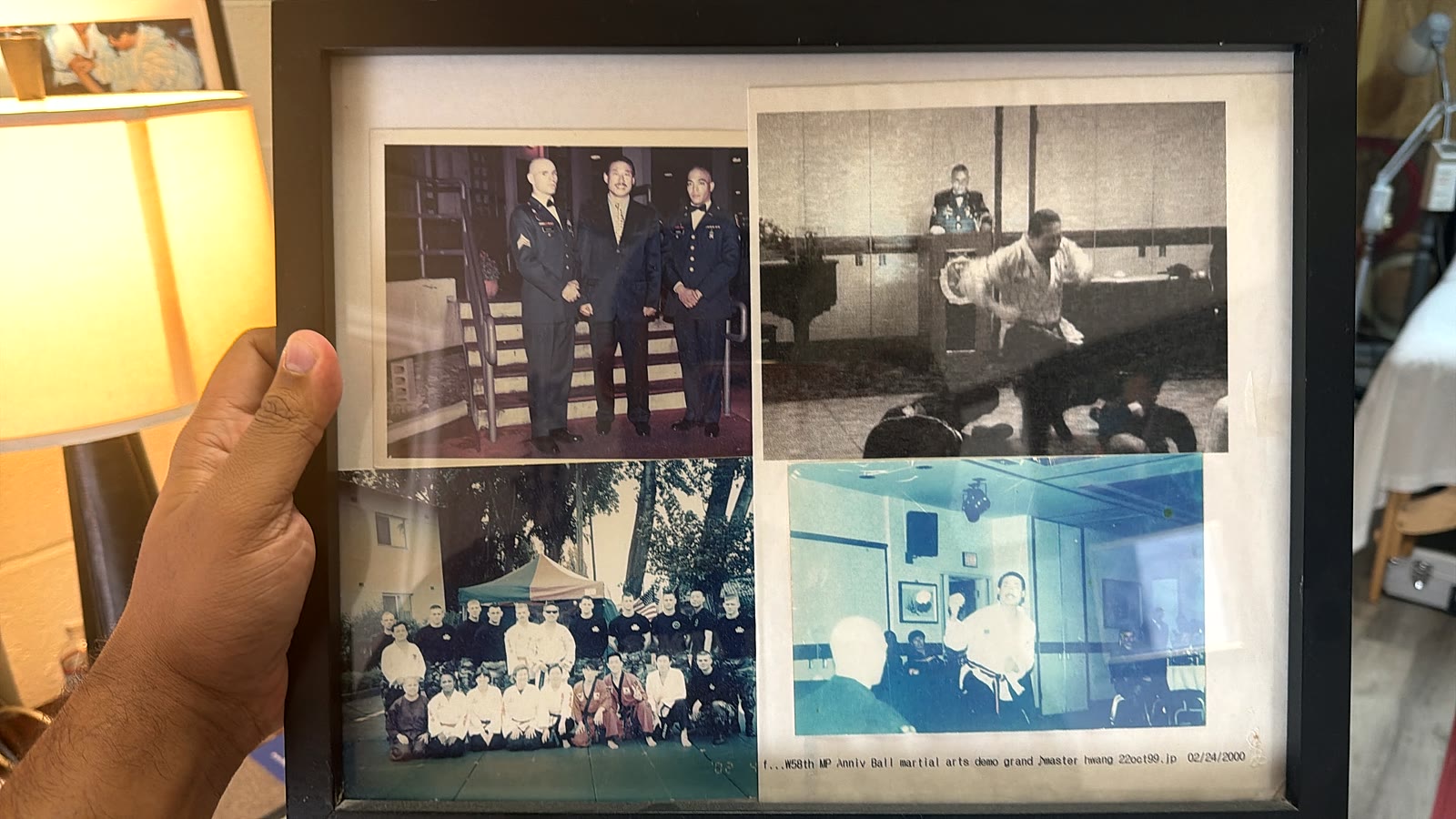
Grand Master Jong Yeon Hwang trained at the Korea Hapkido Headquarters Dojang from 1971 and holds 8th Dan Hapkido. He won Gold at the 10th Wushu World Cup in Milan in 2005. He received the President’s Volunteer Service Award, a White House honor, in 2023. KIMOO received Santa Clara District 2 Business of the Year in 2019.
Discuss your goals and current practice before adding demanding strength work.
Track useful signals
A training note can help you evaluate whether strength work is supporting martial arts. Record the exercise focus, how controlled the movement felt, and whether you could bring attention to your next technical session. Do not rely only on a heavier load or a larger number of repetitions.
If technique remains composed, recovery feels manageable, and you understand the purpose of the work, you are collecting useful information. If martial arts practice becomes less attentive, change the plan and seek guidance.
Common mistakes to avoid
Avoid treating soreness as proof of a successful session. Avoid adding intensity every time you train. Avoid copying an athlete’s routine without understanding its purpose. Most importantly, do not let strength work replace technical learning, partner communication, or careful instruction.
Build gradually, keep your movements clear, and let your martial arts goals lead the decision. Strength is valuable when it makes practice more controlled and intentional.
Frequently asked questions
Why is strength training useful for martial artists?
It can support posture, stability, controlled movement, and the ability to maintain attention during practice. Its value depends on how well it complements technical training.
Should I lift before martial arts class?
That depends on the session and your goals. Fatigue may reduce technical attention, so ask your instructor how to arrange strength work around martial arts practice.
Do martial artists need heavy weights?
Not always. Strength can be developed through controlled movement, appropriate resistance, and consistent form. Choose a challenge that supports your purpose rather than chasing a particular number.
How can I combine strength and mobility?
Use strength exercises through comfortable, controlled ranges and include mobility work that relates to your practice. Do not force a range that causes pain or loss of control.
What should I track in a training journal?
Note the movement focus, control, breathing, effort, and how you felt during your next martial arts session. These observations are more useful than a single metric.
Does competition training require a separate plan?
Competition training may call for closer coordination between technical practice and conditioning. Ask your instructor to align supporting work with the discipline and training objective. Build stronger, more thoughtful practice at KIMOO Martial Arts in Santa Clara. Book a free trial class, or call (408) 243-1001.
Train with a champion
Book your free trial class at KIMOO Martial Arts in Santa Clara and train under a World Cup gold medalist.
Keep reading