Adult Program
Coming Back to Martial Arts After Years Away
You trained as a teenager, or for two years in your twenties, and then life happened. Now you are thinking about going back.
Here is what to expect, including the mistake nearly everyone makes.
What comes back fast
Motor patterns. This is the good news, and it is substantial. Movement skills are stored unusually durably. A side kick you drilled a thousand times at nineteen is still in there at thirty-eight — rusty, but present. Within a few weeks it will look much more like it used to than you expect.
Terminology and etiquette. You will find yourself bowing at the right moment without thinking.
Pattern recognition. You will read what is about to happen in a drill faster than a true beginner, even if your body is slower to respond.
What does not come back fast
Conditioning. This is the honest one. Cardiovascular fitness and muscular endurance decay thoroughly, and they do not care that you used to be fit.
Flexibility. Usually the biggest loss, especially if the intervening years involved a desk.
Impact tolerance. Your joints and connective tissue have not been loaded in this way for years, and they adapt more slowly than muscle does.
The mistake almost everyone makes
Training to the standard of your memory rather than your current body.
Your technique remembers what you could do. Your conditioning does not. You attempt the kick you used to throw, at the speed you used to throw it, with tissue that has not done it in a decade — and you strain something in week two.
This is by far the most common way a return ends before it starts.
Train to where your body is now and let the old technique catch up. It will, faster than your fitness.
Do you keep your old rank?
Usually not automatically, and this is normal rather than an insult.
Most schools will assess you and place you where your current ability sits, which may be below your old belt. Some will restore rank once you have demonstrated the standard again.
Either way, expect to be assessed rather than transferred. A school that hands back a rank without seeing you move is telling you something about its standards.
Rank also does not transfer cleanly between organisations in any case — the systems genuinely differ, as the belt order guide explains.
How to restart sensibly
- Tell the instructor your history and your gaps. Including every old injury.
- Start in a beginner class even if it feels beneath you. Two or three weeks there will save you two or three months of recovery.
- Two sessions a week to begin with. Not four.
- Expect weeks one to three to feel discouraging. Your brain knows what good looks like and your body cannot deliver it yet. That gap closes.
- Stretch seriously. This is where the real work is for returning adults.
The part that surprises returners
Most people come back expecting to chase who they used to be, and find after a couple of months that they prefer training now — with more patience, better understanding of why techniques work, and no ego about winning every round.
If you are returning after a long gap and over forty, this guide covers the physical side in more detail.
Come back with a free class
No contract, no equipment, no assumptions about where you should be. New students receive a free uniform and white belt.
Call (408) 243-1001 and mention your background and any injuries when you book.
Train where the standard is real
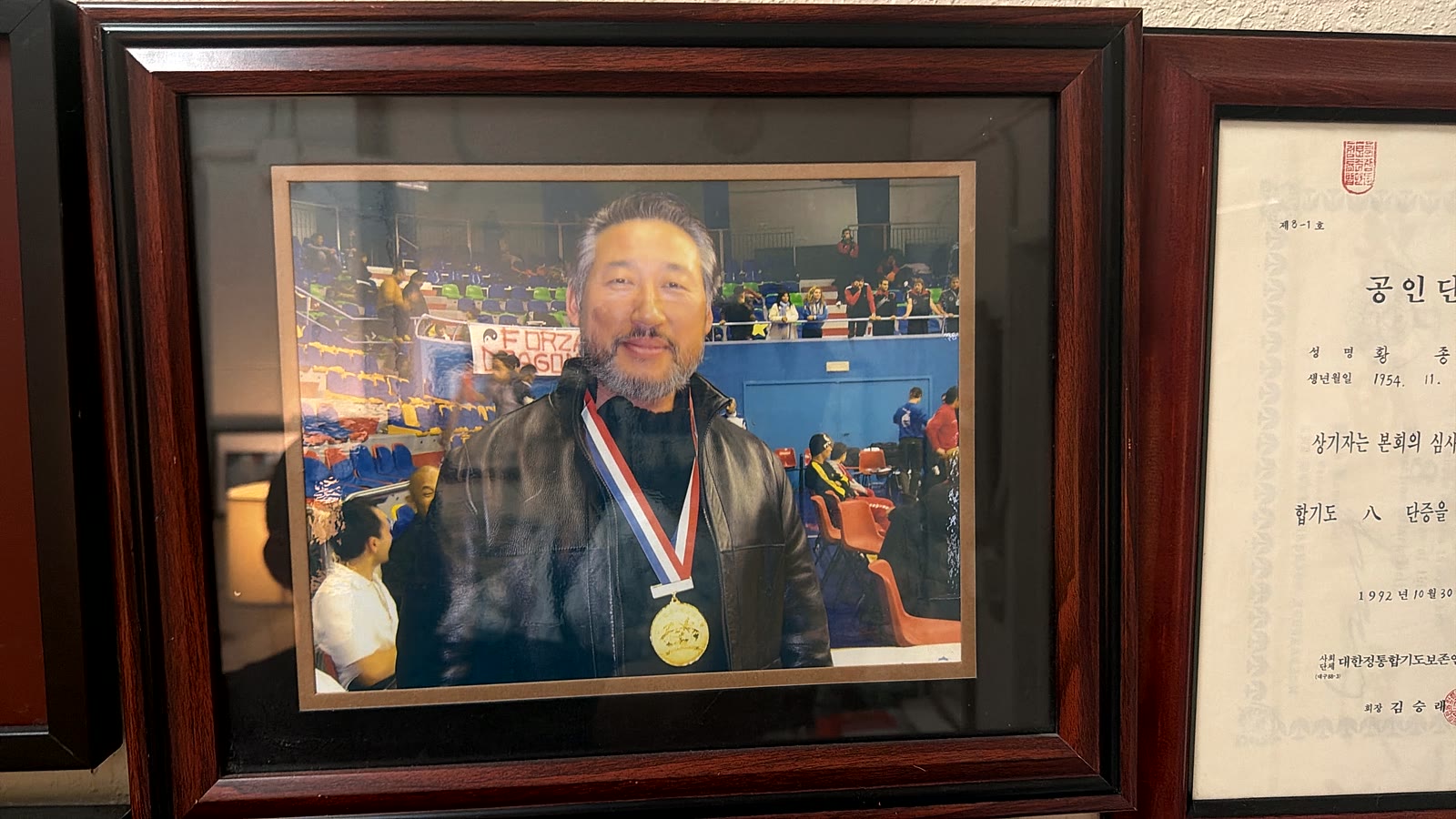
You are assessed and corrected personally by an 8th Dan Grand Master who has trained since 1971 and knows exactly how to restart an experienced body safely.
Visit us: 2181 El Camino Real, Santa Clara, CA 95050
Frequently asked questions
Do I keep my belt if I return to martial arts?
Usually you are assessed and placed according to current ability rather than automatically restored. Some schools reinstate rank once the standard is demonstrated again.
How quickly does martial arts technique come back?
Motor patterns return surprisingly fast, often within weeks. Conditioning and flexibility take considerably longer.
What is the biggest risk when returning to martial arts?
Training to the standard you remember rather than your current conditioning. That mismatch causes most early injuries in returning students.
Should I start in a beginner class again?
Yes, for the first few weeks. It lets conditioning catch up to technique and dramatically reduces injury risk.
Where is KIMOO Martial Arts in Santa Clara?
We are at 2181 El Camino Real, Santa Clara, CA 95050. Call (408) 243-1001.
Train with a champion
Book your free trial class at KIMOO Martial Arts in Santa Clara and train under a World Cup gold medalist.
Keep reading