Training Tips
External Focus in Martial Arts Training: A Practical Guide
External focus martial arts training directs attention toward the effect of a movement rather than asking a student to monitor every part of the body at once. For example, an instructor might ask you to move a partner's balance point, place a foot quietly, or guide an object along a line. The task stays concrete while the body learns through practice.
External focus is not a magic phrase and it does not remove the need for demonstrations or technical corrections. It is one way to frame practice so students can understand the goal, test an adjustment, and receive feedback that supports the next repetition.
Internal and external attention
Internal attention focuses on what the body is doing. A cue might ask you to position a shoulder, rotate a hip, or place a hand in a particular way. That type of direction can be useful when learning a new shape or correcting a specific issue.
External attention focuses on what the movement does in relation to something outside the body. A cue might ask you to keep a target stable, move through a marked space, or maintain a training partner's balance within a controlled drill. The distinction is not about one approach always being right. It is about choosing a cue that matches the learning problem.
Begin with a visible training goal
A useful external cue gives practice a clear target. Before a drill, identify what should change. Are you trying to keep a stable base, manage distance, guide a movement, or finish in a controlled position? A clear goal prevents the session from becoming a collection of unrelated corrections.
The goal should be appropriate to the task. In Hapkido, Taekwondo, self-defence, and competition training, the instructor may select different outcomes and different boundaries. Ask what the cue is meant to develop rather than copying a phrase without understanding it.
Use one cue at a time
Too many instructions can divide attention. Choose one external cue for a short practice block, then notice what happened. If the task becomes clearer, keep it. If the cue makes the movement less controlled or less understandable, ask for a different explanation.
A good cue is not necessarily poetic. It might be as simple as keep the line clear, touch the target lightly, or finish with balance. The words should organise attention, not demand a perfect mental image.
Link cues to safe practice
External focus must remain inside clear training boundaries. A cue about moving a partner should never be interpreted as permission to use uncontrolled force. A cue about speed should not override an instruction about control. Ask what pace, range, and partner communication the drill requires.
The instructor should explain how to pause and how to adjust the task. Students also have a responsibility to communicate when a practice condition is unclear. Focused learning depends on both the training goal and the way people share the space.
Make feedback more useful
After a repetition, connect feedback to the task. Instead of asking whether every joint was positioned perfectly, ask whether the intended effect occurred. Did balance remain organised? Did the movement reach the target with control? Did the student recognise the change in distance?
Technical detail still matters. If a particular position affects safety or makes the task possible, the instructor should address it directly. External focus works best when technical information is connected to a meaningful outcome rather than delivered as an isolated list.
Practise with gradual variation
Once the basic task is clear, small variations can make learning more adaptable. An instructor may change the starting position, direction, pace, or available space. The variation should serve the learning goal, not create confusion for its own sake.
Notice what remains consistent when a condition changes. You might discover that balance matters more than a particular step, or that an earlier visual cue helps you choose more calmly. Share that observation with the instructor. It can guide the next practice task.
Apply the idea at KIMOO
KIMOO Martial Arts offers Hapkido, Taekwondo, self-defence, and competition training in Santa Clara, California. If you want to explore external focus, ask an instructor how cues are used in the area that interests you. The best cue depends on the movement, the student's experience, and the purpose of the session.
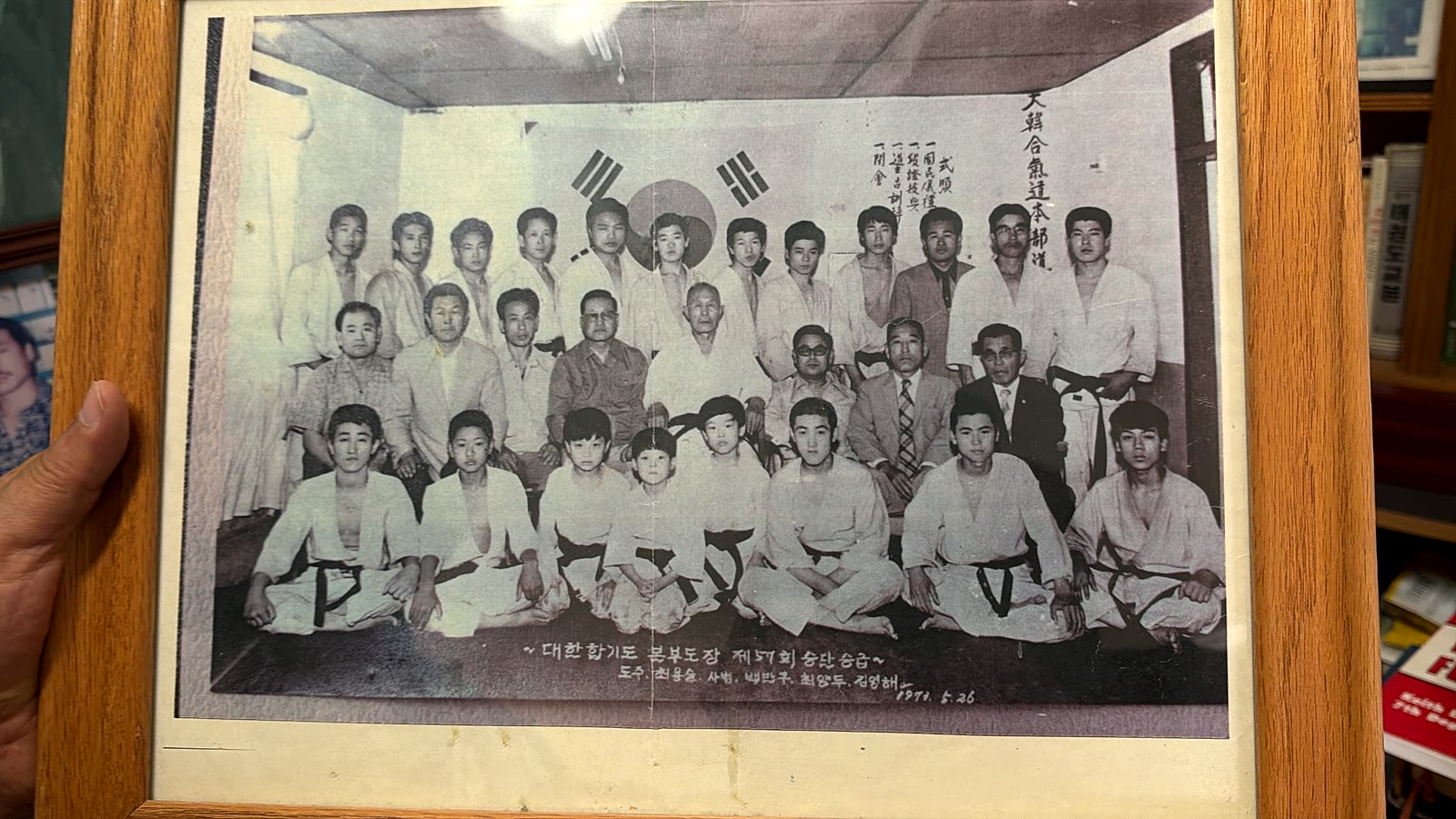
KIMOO is led by Grand Master Jong Yeon Hwang, who trained at the Korea Hapkido Headquarters Dojang from 1971 and holds 8th Dan Hapkido. He won Gold at the 10th Wushu World Cup in Milan in 2005. He received the President's Volunteer Service Award, a White House honor, in 2023. KIMOO received Santa Clara District 2 Business of the Year in 2019.
Those are verified facts about leadership and recognition. They do not promise a particular learning outcome. A conversation about goals and teaching approach is still the right way to decide whether an academy fits you.
Reflect without overthinking
A short reflection can make practice active. At the end of a drill, note the task, the cue, and one observation. The purpose is to remember what you were trying to learn and test next time.
If a cue stops being useful, replace it. Let the training goal guide you while the instructor provides structure and feedback.
Frequently asked questions
What is external focus in martial arts training?
It means directing attention toward the effect of a movement, such as a target, line, balance point, distance, or training object, rather than monitoring every body part.
Is external focus always better than internal focus?
No. Internal cues can help explain a new position or address a technical issue. The useful choice depends on the task, the student, and the instructor's purpose.
How many cues should I use during a drill?
Start with one clear cue. After a short practice block, evaluate whether it helped you understand the task. Ask the instructor for a different cue if it created confusion.
Can external cues replace technical instruction?
No. Demonstrations, safety explanations, and technical corrections remain important. External cues can connect those details to a meaningful training outcome.
How can I tell whether a cue is useful?
Ask whether it makes the task clearer and supports controlled practice. Notice the result, then discuss the observation with your instructor.
How can I explore this approach at KIMOO?
Contact KIMOO Martial Arts, share your training goal, and ask what a free trial class involves. The instructor can explain the current next step. Book a free trial class at KIMOO Martial Arts in Santa Clara or call (408) 243-1001 to explore more purposeful martial arts practice.
Train with a champion
Book your free trial class at KIMOO Martial Arts in Santa Clara and train under a World Cup gold medalist.
Keep reading