Training Tips
Martial Arts and Cognitive Engagement: What Recent Research Says
Martial arts cognitive engagement is attracting attention because training can involve movement, attention to instruction, and decisions about how to respond. A 2026 review in Frontiers in Psychology considers martial arts exercise in relation to mental health and cognitive vitality in older adults. Its discussion is timely, but it should be read with care: a research review is not a guarantee that any individual student will experience a particular outcome.
Here is a practical way to understand the topic, distinguish a research question from a promise, and think about what an engaging training session can involve.
What the 2026 review examines
The review, “Neural mechanisms and social support for mental health in old age by martial arts exercise,” describes martial arts as an activity that can combine physical movement, cognitive engagement, and social interaction. It considers possible relationships with cognitive and psychosocial outcomes among older adults.
The authors discuss proposed mechanisms and promising findings, while also noting limitations in the existing studies. Those include differences between martial arts styles, short intervention durations, and variable methods. The review therefore presents an area of research, not a settled prescription for every person or training program.
Understand what cognitive engagement means
In a class, cognitive engagement can describe the attention and decisions involved in learning. A student might listen to an instruction, observe a movement, recall a sequence, respond to a cue, or adjust an action after feedback. What any individual activity involves depends on the lesson and the teaching approach.
This plain-language description is not a medical claim. It simply explains why some researchers study martial arts as more than physical movement alone. It also gives students a useful question to ask: what is this exercise intended to help me notice or practise?
Separate research findings from individual promises
A review may gather studies with different participants, durations, styles, and measures. Its conclusions can help researchers identify patterns and questions, but they do not show that every academy offers the same intervention or that each student will have the same experience.
Be especially cautious with claims that use words such as “prevents,” “treats,” or “guarantees.” The Frontiers review describes potential and emphasizes limitations in the evidence. It does not establish that joining a particular class will prevent cognitive decline, treat a condition, or produce a guaranteed change.
If you are making decisions related to health, discuss them with a qualified health professional. A martial arts instructor can explain the training activity, but should not be treated as a substitute for clinical guidance.
Ask what a class actually asks you to do
Rather than relying on broad labels, ask an instructor to explain the purpose of a class exercise. Does it focus on learning a movement, remembering a sequence, responding to a cue, working with a partner, or developing another skill? Clear answers can help you decide whether the activity matches your interests.
Also ask how instructions are demonstrated, how practice is adjusted for a participant's experience, and how students can pause or request clarification. A class that is understandable and appropriately structured makes it easier to participate attentively. Do not assume every martial arts school or discipline uses the same methods.
Keep practice safe and personally appropriate
Attention is easier when you understand the rules of an exercise. Before a partner drill, clarify pace, distance, contact, and how to stop. If you are uncertain about a movement, ask for a demonstration or explanation instead of guessing.
Consider your own circumstances as well. If an injury, health condition, or other concern could affect physical activity, seek appropriate professional guidance and communicate relevant information to the instructor. You can ask what a first visit involves before taking part.
Explore training at KIMOO
KIMOO Martial Arts offers Hapkido, Taekwondo, self-defence, and competition training in Santa Clara, California. These disciplines have their own aims and practice methods. Ask the academy what a free trial class involves and which training area is most relevant to your interests.
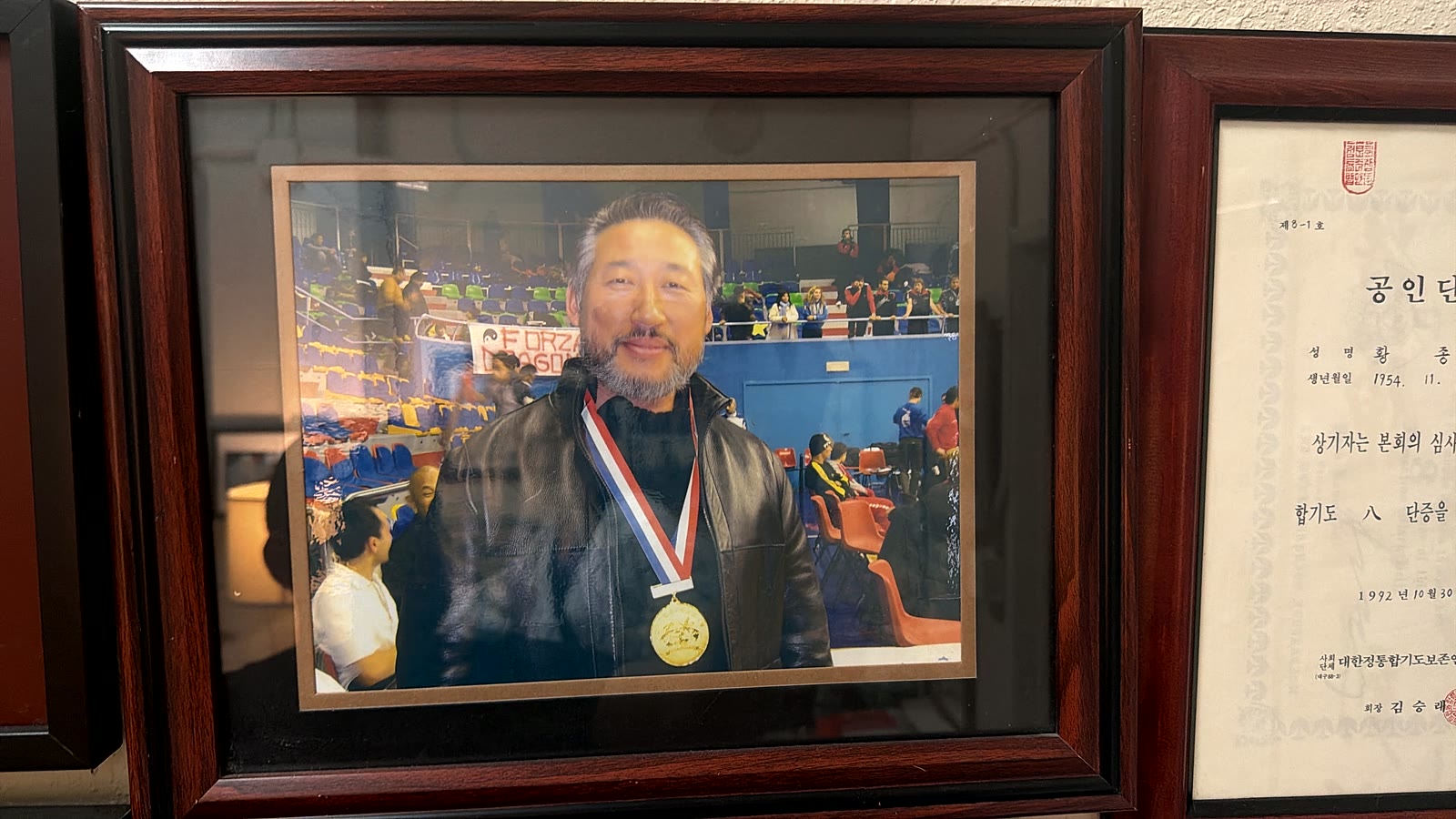
Grand Master Jong Yeon Hwang trained at the Korea Hapkido Headquarters Dojang from 1971 and holds 8th Dan Hapkido. He won Gold at the 10th Wushu World Cup in Milan in 2005. He received the President's Volunteer Service Award, a White House honor, in 2023. KIMOO received Santa Clara District 2 Business of the Year in 2019.
These verified details provide context about KIMOO's leadership and recognition. They are not clinical evidence about student outcomes. For an informed decision, ask about the current class experience and consider your goals and circumstances.
A reader's checklist for research claims
When you see a headline about martial arts and cognition, check who was studied, what activity was examined, and what outcome was measured. Look for the length of the intervention and whether the authors discuss limitations. A review focused on older adults cannot automatically answer a question about every age group, martial arts style, or individual.
Most importantly, distinguish association, proposed mechanisms, and demonstrated effects. These are not interchangeable. The 2026 review offers an overview of potential relationships and research needs. Its conclusion supports continued study, not sweeping guarantees.
Frequently asked questions
What does cognitive engagement mean in martial arts?
It refers broadly to the attention, memory, and decisions a person may use while learning or practising movements. The exact demands depend on the exercise.
What did the 2026 review study?
It reviewed martial arts exercise in connection with mental health and cognitive vitality in older adults, including possible neural and social mechanisms.
Does the research prove martial arts prevents cognitive decline?
No such guarantee should be inferred. The review notes limitations in existing research, including differences in styles, study durations, and methods.
Does the review apply to every martial arts class?
No. A review of research cannot establish that every class, school, discipline, or student has the same experience or outcome.
How can I learn what a KIMOO class involves?
Contact KIMOO Martial Arts in Santa Clara and ask which discipline fits your interests and what a free trial class involves. Confirm current details directly.
Where can I read the review?
The open-access article is available from *Frontiers in Psychology*: “Neural mechanisms and social support for mental health in old age by martial arts exercise” (2026), https://www.frontiersin.org/journals/psychology/articles/10.3389/fpsyg.2025.1733310/full. Book a free trial class at KIMOO Martial Arts in Santa Clara or call (408) 243-1001 to ask about training.
Train with a champion
Book your free trial class at KIMOO Martial Arts in Santa Clara and train under a World Cup gold medalist.
Keep reading