Training Tips
Martial Arts Distance Management: Train Position with Purpose
Martial arts distance management is the skill of understanding space and using position with purpose. It affects when you can reach, when you should move, how you communicate with a partner, and whether a technique can be practised with control. Distance is not a fixed measurement. It changes as people move, turn, and respond.
Learning to manage space does not require dramatic speed. It requires attention. By combining footwork, posture, observation, and carefully structured drills, students can make their practice more precise and more useful.
Understand the main distance questions
During a drill, ask four questions. Where am I now? Where is my partner moving? What can I do from this position? What space do I need to stay safe and controlled? These questions turn distance from an abstract idea into an observable training problem.
You can also notice whether the space is closing, opening, or shifting sideways. A student who recognises those changes has more information before attempting a movement. The goal is not to rush toward an answer, but to read the situation before responding.
Start with posture and balance
Distance management begins with a stable base. If your posture collapses as you move, it becomes harder to stop, change direction, or practise a technique with control. Keep your movement organised enough that you can listen, adjust, and remain aware of your partner.
A useful beginner drill may involve stepping forward, stepping back, or moving at an angle while maintaining balance. The pace should allow you to feel where your weight is and whether your feet are ready for the next action. Precision matters more than covering space quickly.
Make footwork purposeful
Footwork is not simply a way to move from one place to another. It helps you create a better position. Practise moving without crossing your feet unnecessarily, turning your body with control, and keeping your eyes available to observe what changes.
When practising, choose one footwork question at a time. You might focus on staying balanced while retreating, or on using an angle without losing posture. Limiting the focus gives you clearer feedback and keeps the drill connected to a real training purpose.
Learn timing through controlled interaction
Timing develops when movement meets another person’s movement. Partner drills can teach you to notice rhythm, pauses, and changes in direction. The emphasis should remain on communication and control rather than surprise or excessive force.
Ask a partner to work at a pace that lets both people respond. Begin with predictable movement, then introduce small variations when the basic pattern is understood. This makes it easier to identify whether an error came from distance, timing, posture, or attention.
Connect distance to awareness
Distance management is relevant to self-defence practice because space affects choices. A responsible lesson can explore how to notice an approaching movement, preserve room to respond, and communicate a boundary. It should also make clear that training drills cannot predict every real situation.
Awareness is more than watching one point. Notice your surroundings, your partner’s position, and your own ability to move. The purpose is better decision-making, not a guarantee that every problem can be controlled through technique.
Use progression instead of rushing
A sensible progression might move from solo footwork to cooperative partner patterns, then to drills with simple choices. Each stage should preserve the ability to stop, reset, and receive feedback. If the task becomes too fast for accurate movement, slow it down.
Progression also means changing one challenge at a time. Increase distance, pace, direction changes, or decision-making, but avoid changing everything at once. Clear practice produces better information about what you actually need to improve.
Explore the skill across disciplines
KIMOO Martial Arts offers Hapkido, Taekwondo, self-defence, and competition training in Santa Clara, California. Ask an instructor how distance and footwork appear in the discipline you want to study. The terminology and exercises may differ, but the need for balance, awareness, control, and timing remains important to purposeful practice.
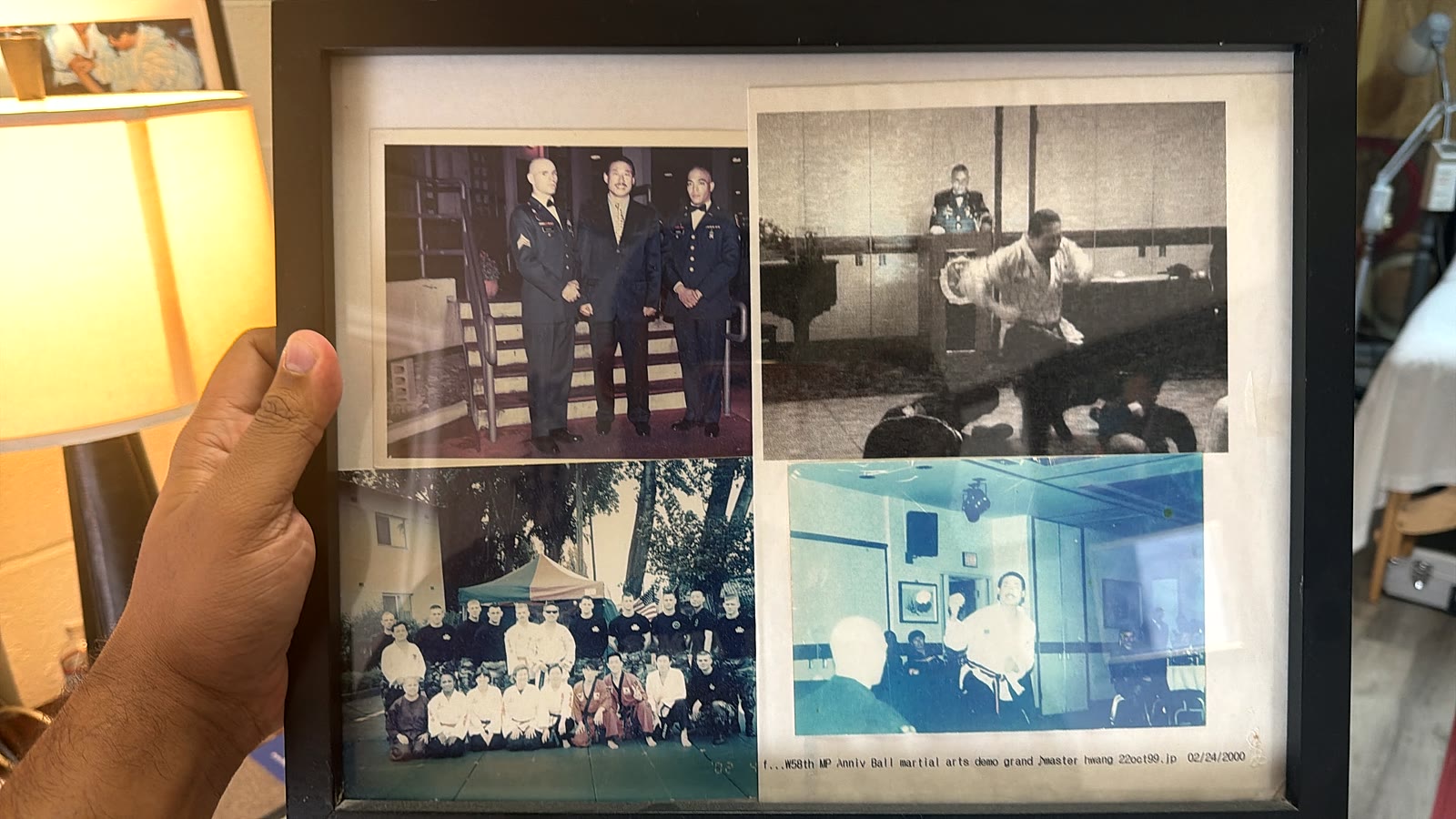
Grand Master Jong Yeon Hwang trained at the Korea Hapkido Headquarters Dojang from 1971 and holds 8th Dan Hapkido. He won Gold at the 10th Wushu World Cup in Milan in 2005. He received the President’s Volunteer Service Award, a White House honor, in 2023. KIMOO received Santa Clara District 2 Business of the Year in 2019.
That background offers context for the academy’s leadership. Your own progress should still be evaluated through clear instruction, careful practice, and useful feedback in class.
Review what your feet are telling you
After a drill, reflect on your movement. Could you stop without losing balance? Did you move early because you were uncertain, or late because you did not see a change? Did your eyes remain available while your feet moved?
Write down one observation and choose one adjustment for the next practice. A short review turns repetition into learning. It also gives an instructor a more specific question than simply asking how to get faster.
Frequently asked questions
What is martial arts distance management?
It is the practice of reading and adjusting space so that movement, technique, and decision-making remain controlled. It includes footwork, posture, timing, and awareness.
Why does footwork matter for distance?
Footwork changes your position while helping you maintain balance. Purposeful steps can create space, close space, or move you to a more useful angle.
How can beginners practise distance safely?
Start with solo stepping and simple cooperative partner drills. Use a pace that allows both people to communicate, stop, and reset when needed.
Is distance management only for competition training?
No. It can support Hapkido, Taekwondo, self-defence, and competition practice. Ask an instructor how the skill is applied in the discipline you are exploring.
Should distance drills be fast?
Speed is only one possible challenge. Slow, precise practice can help you understand posture, balance, timing, and the reason behind each movement before adding pace.
How do I know what to improve next?
Review whether you could observe, move, stop, and respond with control. Share one specific observation with your instructor and ask for a focused adjustment. Build sharper movement and better awareness at KIMOO Martial Arts in Santa Clara. Book a free trial class or call (408) 243-1001.
Train with a champion
Book your free trial class at KIMOO Martial Arts in Santa Clara and train under a World Cup gold medalist.
Keep reading