Poomsae vs Kyorugi: How Taekwondo Competition Formats Differ
October 9, 20266 min readKIMOO Martial Arts
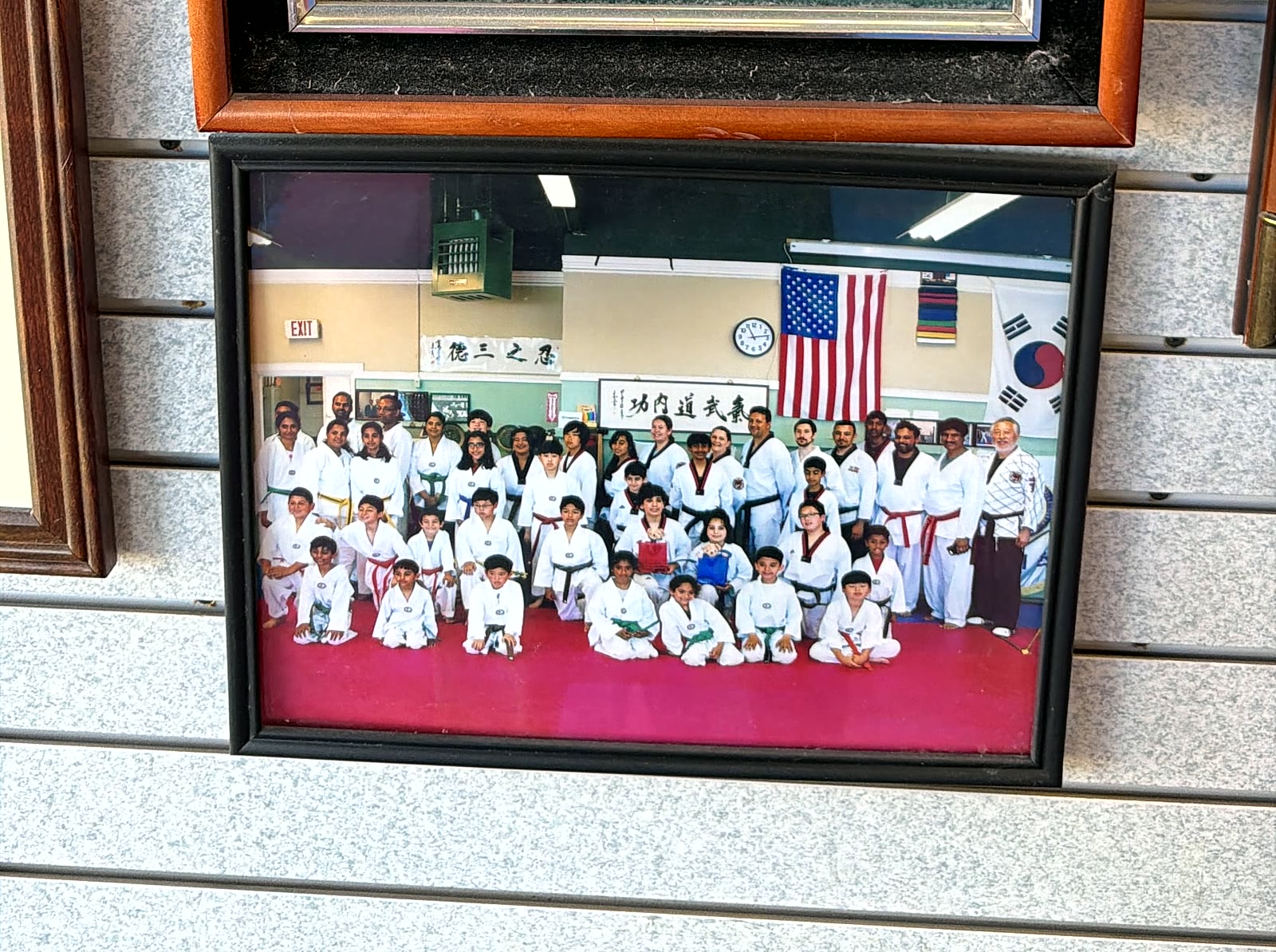
Martial arts students gathered for a class photo

Taekwondo competitions can look very different depending on the event format. Poomsae vs Kyorugi is a useful distinction to understand: Poomsae competition focuses on performing forms, while Kyorugi is the sparring format governed by its own contest rules. Both sit within Taekwondo, but they ask athletes and viewers to pay attention to different things.

What is Poomsae?

Poomsae is a sequence of Taekwondo movements performed as a structured form. In competition, athletes may perform recognized Poomsae or freestyle Poomsae. The two formats are related, but the scoring criteria differ. The 2026 USA Taekwondo Poomsae Competition Rules describe how judges evaluate them at USATKD-sanctioned events.

For recognized Poomsae, the rules divide scoring between accuracy and presentation. Judges consider the accuracy of basic movements and form details, along with balance. Presentation criteria include speed and power, rhythm and tempo, and expression of energy. In practical terms, an observer can watch both how correctly movements are performed and how clearly the sequence is presented.

How freestyle Poomsae differs

Freestyle Poomsae uses Taekwondo techniques with music and choreography, according to the 2026 USATKD rules. Its scoring separates technical skill from presentation. Judges assess factors such as foot-technique difficulty and basic movement, as well as creativity, harmony, energy, music, and choreography.

This distinction helps explain why a freestyle performance may look more choreographed than a recognized form. It is still governed by specific competition criteria, not simply judged as a dance or as an unstructured demonstration. Event rules set the requirements for the competition in question, so viewers should check the organizer's rules before assuming formats are identical across tournaments.

What is Kyorugi?

Kyorugi is the sparring format that many viewers recognize from Taekwondo tournaments. Rather than performing a form for judges, two contestants compete under an event rule set. The World Taekwondo Competition Rules, in force from June 1, 2026, specify permitted techniques, target areas, scoring, contest duration, and penalties for World Taekwondo competitions.

Under those rules, straight punches and foot techniques are permitted in defined areas. For example, the rules identify the protected trunk as a target for both fist and foot techniques, while only foot techniques are permitted to the head area. The current World Taekwondo rules also describe how valid points are awarded and how match outcomes are decided. This is why an audience should treat the competition rulebook as essential context rather than assuming that every Taekwondo sparring event uses the same scoring system.

Compare the formats without ranking them

Poomsae and Kyorugi test different competition tasks. Poomsae asks a performer or team to demonstrate a prescribed or composed sequence according to form-specific criteria. Kyorugi asks contestants to compete under rules that govern legal techniques, targets, scoring, and conduct. One format should not be treated as a universal measure of ability in the other.

For students exploring Taekwondo, that difference is a prompt for useful questions. Ask whether a program focuses on forms, sparring, general skills, or competition preparation. Ask how the specific class approaches practice and whether participation in competition is optional. A school's description of a program is more informative than assuming that the art name alone tells you what a class covers.

KIMOO Martial Arts in Santa Clara, California, offers Taekwondo and competition training, among other programs. Those verified offerings do not specify whether a particular class focuses on Poomsae, Kyorugi, or both. Contact the academy to ask about its current program if one format interests you.

Frequently asked questions

Is Poomsae the same as sparring?

No. Poomsae competition evaluates a form performance, while Kyorugi competition uses sparring rules for contestants. Each format has distinct criteria and event rules.

What do judges score in recognized Poomsae?

The 2026 USATKD rules divide the score between accuracy and presentation. These criteria include movement accuracy, balance, speed and power, rhythm and tempo, and expression of energy.

Does freestyle Poomsae include music?

Yes. The 2026 USATKD rules describe freestyle Poomsae as based on Taekwondo techniques with music and choreography, assessed under technical-skill and presentation criteria.

Are Kyorugi rules identical at every tournament?

Not necessarily. Organizers may use event-specific rules. Check the current rules or event outline for the competition you are following.

Does a Taekwondo class always include competition training?

Do not assume so. Ask the academy how its current Taekwondo program is structured and whether the class includes competition preparation. To explore Taekwondo or another program, book a free trial class at KIMOO Martial Arts in Santa Clara or call (408) 243-1001 to discuss your interests.

Train with a champion

Book your free trial class at KIMOO Martial Arts in Santa Clara and train under a World Cup gold medalist.

What to Wear to a Martial Arts Class in Santa Clara: Trial Guide→Non-Contact Martial Arts Classes in Santa Clara: Questions to Ask→K41 vs K44 Para Taekwondo: How Classification Shapes Competition→Martial Arts Classes for Parents and Teens in Santa Clara: What to Ask→Hapkido vs Aikido: Key Differences and How to Compare Training→Taekwondo Change-of-Direction Testing: What a 2026 Review Found→Martial Arts Classes for Focus in Santa Clara: Questions to Ask→Martial Arts School Culture in Santa Clara: What to Look For→Kids World Open Taekwondo Championships 2026: What to Know→Self-Defence or Competition Training in Santa Clara: How to Choose→Martial Arts Practice at Home: A Focused Guide to Solo Training→World Taekwondo Grand Prix Paris 2026: Dates and Format→Martial Arts Classes for Introverts in Santa Clara: A First-Visit Guide→Martial Arts and Nonviolence: Training with Restraint→Changing Martial Arts Schools in Santa Clara: Questions to Ask→Martial Arts Flexibility Training: Build Range with Control→Accessible Martial Arts Classes in Santa Clara: What to Ask→Martial Arts Membership in Santa Clara: Questions Before You Join→Martial Arts and Bullying Prevention: A Responsible Guide for Families→Martial Arts Gear in Santa Clara: What to Ask Before You Buy→Hydration for Martial Arts Training: A Practical Guide→De-escalation and Self-Defence Training in Santa Clara: What to Ask→Martial Arts Training Journal: A Simple Post-Class Guide→Poomsae vs Kyorugi: Two Taekwondo Competition Formats→Martial Arts Class Size in Santa Clara: What to Ask→Virtual Taekwondo at Asian Games 2026: How It Works→Hapkido Instructor in Santa Clara: What Credentials Can Tell You→Martial Arts Training Plateau: How to Find a Productive Next Step→Hapkido Self-Defence in Santa Clara: Questions to Ask Before You Choose→Taekwondo at LA 2028: Events, Classes, and What to Know→Adult Taekwondo Classes in Santa Clara: How to Choose→Martial Arts and Cognitive Engagement: What Recent Research Says→Martial Arts Classes for Caregivers in Santa Clara: What to Consider→Open-Skill Martial Arts Training: Why Adaptability Matters→Martial Arts Classes for Teachers in Santa Clara: A Thoughtful Guide→Representative Martial Arts Training: A Practical Guide→Martial Arts Classes for Shift Workers in Santa Clara: What to Ask→Travel Safety Martial Arts Classes in Santa Clara: What to Ask→External Focus in Martial Arts Training: A Practical Guide→Kids Martial Arts Classes in Santa Clara: A Parent's Guide→Guided Discovery in Martial Arts Training: A Practical Guide→Martial Arts Resilience Training: Build a Steadier Practice→Martial Arts for Personal Safety in Santa Clara: What to Ask→Deliberate Practice in Martial Arts: A Smarter Way to Train→Adult Hapkido Training in Santa Clara: What to Ask→Private Martial Arts Lessons in Santa Clara: Questions to Ask→Ecological Dynamics in Martial Arts Training: A Practical Guide→Martial Arts Interoception: Learn to Notice Your Body→Martial Arts Classes for New Residents in Santa Clara→Martial Arts Social Connection: How Shared Practice Works→Martial Arts Classes for Seniors in Santa Clara: What to Ask→Martial Arts Classes for Parents in Santa Clara: A Practical Guide→Martial Arts Breakfall Training: Why Safe Falling Matters→Martial Arts Classes for Adults Returning to Exercise in Santa Clara→Embodied Martial Arts Training: Learn Through Movement→Martial Arts Prehab: A Smarter Way to Prepare for Training→How to Choose Martial Arts Classes for Runners in Santa Clara→Martial Arts Video Analysis: Use Recording with Purpose→How to Choose Martial Arts Classes for Tech Professionals in Santa Clara→Martial Arts Coaching Feedback: How to Improve with Purpose→How to Choose Martial Arts Classes for College Students in Santa Clara→Martial Arts Warm-Up Drills for Focused, Safer Practice→How to Choose Martial Arts Classes for Couples in Santa Clara→How to Choose Taekwondo Competition Training in Santa Clara→Augmented Reality Martial Arts Training: What Students Should Know→Martial Arts Peripheral Vision Training: A Practical Guide→How to Compare a Martial Arts Class Schedule in Santa Clara→How to Choose Self-Defence Classes for Beginners in Santa Clara→Martial Arts Distance Management: Train Position with Purpose→Martial Arts Training Load Management: Train with Purpose→How to Choose Martial Arts Classes Near Me in Santa Clara→Strength Training for Martial Artists: A Balanced Guide→How to Choose Martial Arts Classes Near Santa Clara→Martial Arts Training Apps: A Smart Guide for Students→How to Choose a Martial Arts Instructor in Santa Clara→Martial Arts Rhythm Training: Build Better Timing→Martial Arts Class Cost in Santa Clara: Questions to Ask→Martial Arts Skill Retention: How to Remember What You Learn→Back-to-School Martial Arts in Santa Clara: A Family Guide→Wearable Technology for Martial Arts: A Smart Training Guide→Martial Arts Belt Testing in Santa Clara: What to Ask→How to Choose Martial Arts Classes After Work in Santa Clara→Gamification in Martial Arts Training: Use Play with Purpose→Martial Arts Classes for Stress Relief in Santa Clara: How to Choose→AI Martial Arts Training in 2026: What Technology Can Do→Martial Arts Coordination Classes in Santa Clara: What to Look For→Constraint-Led Martial Arts Training: A Practical Introduction→Slow Martial Arts Practice: Why Precision Comes First→Martial Arts Training Goals in Santa Clara: Find Your Fit→Self-Defence Training for Commuters in Santa Clara→Martial Arts Situational Awareness: A Practical Training Guide→Martial Arts Decision-Making Under Pressure: Train the Process→Your First Martial Arts Class in Santa Clara: A Simple Guide→Martial Arts Footwork Training: Build Better Movement Habits→Martial Arts Classes for Teens in Santa Clara: A Parent's Guide→Martial Arts Training Recovery: A Smarter Way to Practise→Adult Martial Arts Training in Santa Clara: How to Choose Well→Martial Arts School Comparison in Santa Clara: A Practical Guide→Martial Arts Motor Learning: How Skills Become More Precise→Martial Arts Proprioception Training for Better Body Awareness→How to Choose a Korean Martial Arts Academy in Santa Clara→Martial Arts Self-Regulation: Train Attention with Purpose→How to Choose Martial Arts for Confidence in Santa Clara→Choosing Taekwondo Self-Defence Training in Santa Clara→Martial Arts Goal Setting for More Purposeful Training→How to Choose Taekwondo Fitness Training in Santa Clara→Martial Arts Mental Rehearsal for More Focused Practice→How to Choose Martial Arts for Fitness in Santa Clara→Martial Arts Cross-Training: How to Combine Skills with Purpose→How to Choose Women's Self-Defence Classes in Santa Clara→Martial Arts Injury Prevention: Safer, Smarter Training Habits→Martial Arts Etiquette for Beginners: A Practical Guide→Family Martial Arts in Santa Clara: How to Choose a Dojo→How to Choose a Martial Arts Trial Class in Santa Clara→Martial Arts Partner Drills: How to Train with Purpose→Martial Arts Forms Training: How to Practise with Purpose→Hapkido Classes in Santa Clara: A Guide for New Students→What to Look for in Taekwondo Classes in Santa Clara→Martial Arts Reaction Time Training: A Smarter Way to Practise→Martial Arts Breathing Techniques for Better Training→How to Find Beginner Martial Arts Training in Santa Clara→Martial Arts Mobility and Balance Training for Everyday Movement→How to Choose Competition Martial Arts Training in Santa Clara→How Martial Arts Builds Focus and Discipline→How to Choose Adult Self-Defence Classes in Santa Clara→Hapkido vs Taekwondo: Which Martial Art Is Right for You?→How to Choose the Best Martial Arts Dojo in Santa Clara→