Training Tips
Embodied Martial Arts Training: Learn Through Movement
Embodied martial arts training starts with a simple idea: technique is not only something you understand in words. It is something you learn through posture, timing, balance, breathing, and repeated movement. This approach can make practice more attentive because it asks you to notice how an instruction becomes an action.
Embodied learning is increasingly discussed in coaching. You can use the idea simply by treating each repetition as a chance to observe and adjust.
What embodied learning means
When an instructor explains a stance, the explanation gives your mind a starting point. Your body then has to organise feet, hips, hands, eyes, and weight in relation to the task. That process is embodied learning. You are not memorising a sentence alone. You are developing a connection between an idea and a movement.
Learning through movement does not mean ignoring technical detail. The detail becomes easier to study when you pay attention to how it feels and what changes when you make a small adjustment. Ask the instructor what the movement should accomplish, then observe how your position supports that purpose.
Use attention before adding speed
Speed can make a familiar movement feel exciting, but it can also hide confusion. Start slowly enough to recognise the sequence and the transitions. Notice where your feet go, how your balance changes, and when your hands or eyes should respond.
Once the movement is understandable, follow the instructor's direction about adding pace or complexity. Make the pathway clear enough to know what to practise next.
Study posture as a starting point
Posture is not a rigid shape that looks the same in every situation. It is a relationship between your base, alignment, balance, and the movement you are trying to perform. A useful question is whether your posture helps you stay aware and ready for the next instruction.
Ask for one specific correction at a time. You might focus on where your weight is placed or how you recover after a step. Small adjustments can teach you more than trying to fix every part of the body at once.
Learn timing through rhythm and response
Timing is easier to understand when you stop treating it as a mysterious quality. Listen for the cue, watch the partner or instructor, and notice the moment when a movement changes. Rhythm may be steady in one drill and responsive in another.
Avoid racing to match someone who has more experience. Stay with the task as it is taught. If you miss the cue, reset without frustration and identify which part of the sequence you lost. That observation gives you a practical question for the next repetition.
Make partner practice a conversation
Partner drills add information because another person changes distance, pace, and timing. They also require communication. Confirm the exercise, follow the instructor's boundaries, and use control rather than trying to overpower the drill.
A productive partner drill is not a test of who can force an outcome. It is a shared study of a movement. Listen to what your partner needs to understand the exercise, and speak up when you need the instruction repeated or the pace adjusted.
Connect awareness with feedback
Feedback becomes more useful when you can describe what you noticed. Instead of saying that a technique felt wrong, identify the moment that was unclear. Did your balance change during the step? Did you forget the direction of the turn? Did the timing change when your partner moved?
This kind of observation gives the instructor a clearer starting point. It also helps you remember the lesson after class. Write down one useful correction or one question to revisit, without turning practice into a demand for instant perfection.
Apply the idea across disciplines
Embodied learning can support different kinds of martial arts study. Hapkido may invite questions about balance, leverage, and response. Taekwondo may invite attention to stance, timing, and precise movement. Self-defence and competition training may place different demands on awareness and decision-making.
KIMOO Martial Arts offers Hapkido, Taekwondo, self-defence, and competition training in Santa Clara, California. Ask the instructor how the discipline you are exploring is taught and which movement details should receive your attention first.
Practise with patience and responsibility
Embodied training is not a promise of automatic improvement, and it is not a reason to ignore discomfort. Learn within the instruction provided, avoid forcing a position, and communicate when something is unclear. If you have a medical concern, seek advice from a qualified healthcare professional.
Patient practice gives you room to build understanding before asking the movement to become faster or more complex.
Learn about KIMOO Martial Arts
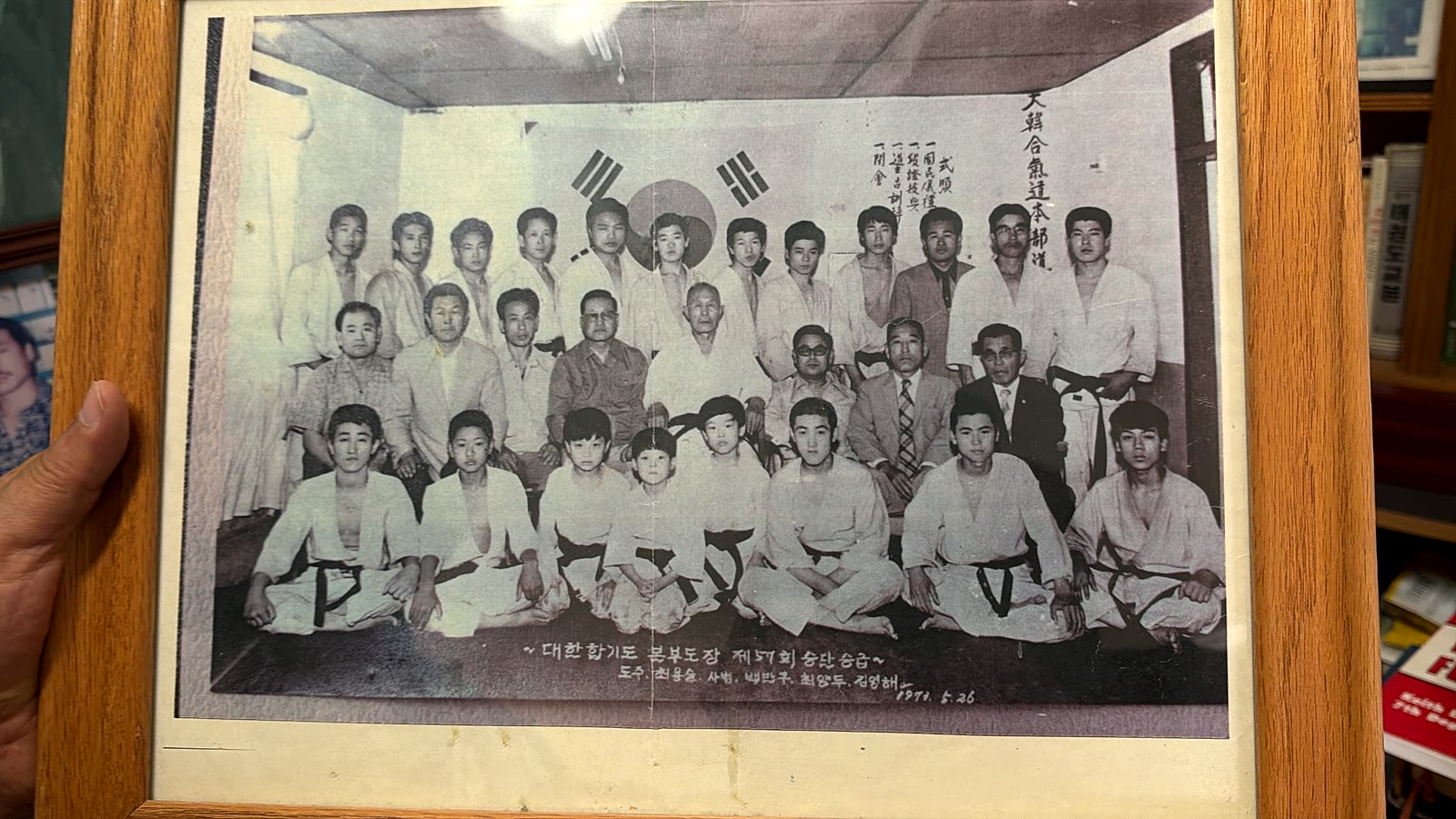
KIMOO Martial Arts is located in Santa Clara, California. Grand Master Jong Yeon Hwang trained at the Korea Hapkido Headquarters Dojang from 1971 and holds 8th Dan Hapkido. He won Gold at the 10th Wushu World Cup in Milan in 2005. He received the President's Volunteer Service Award, a White House honor, in 2023. KIMOO received Santa Clara District 2 Business of the Year in 2019.
These verified facts provide context about the academy and its leadership. A trial class can help you experience how movement, attention, and instruction come together in practice.
Frequently asked questions
Is embodied martial arts training a separate martial art?
No. It is a way to approach learning through attention to movement, posture, timing, and feedback. You can use the approach while studying the discipline offered by an academy.
How can a beginner practise embodied learning?
Slow down enough to understand the sequence, notice one detail at a time, and ask a clear question when you are uncertain. Follow the instructor's direction about pace and complexity.
Does embodied training require meditation?
Not necessarily. Focused attention during a stance, step, drill, or partner exercise is enough to begin. The important point is to observe the connection between instruction and action.
Why is partner communication important?
A partner changes the movement situation and adds responsibility. Clear communication helps both students understand the drill, maintain control, and reset when needed.
Should I train faster once I understand a technique?
Ask the instructor when to add speed or complexity. Understanding the basic pathway is a starting point, while controlled repetition helps you prepare for the next instruction.
What if a movement causes pain?
Stop and communicate with the instructor instead of forcing the movement. If the concern persists or is medical in nature, seek advice from a qualified healthcare professional. Ready to study martial arts through focused movement? Book a free trial class at KIMOO Martial Arts in Santa Clara or call (408) 243-1001.
Train with a champion
Book your free trial class at KIMOO Martial Arts in Santa Clara and train under a World Cup gold medalist.
Keep reading