Training Tips
Constraint-Led Martial Arts Training: A Practical Introduction
Martial arts practice does not have to be identical every time to be disciplined. Constraint-led martial arts training changes one condition of a drill so students must observe, decide, and move with purpose. The condition might involve space, timing, direction, or the goal.
This is not a shortcut around fundamentals or a reason to make practice chaotic. Small variations can help students understand a movement and adapt without losing control. Instructor explanation and a responsible training environment remain essential.
What “constraint-led” means
A constraint is simply a boundary or condition. In a martial arts drill, the instructor might limit the area, ask participants to start from a particular position, set a slow pace, or give one clear objective. The constraint narrows the problem enough that students can explore a specific skill.
A drill may focus on maintaining a stable stance while changing direction. Another may ask a partner for a predictable movement while the practitioner practises distance and timing. The point is to choose a condition that makes the lesson easier to see.
Begin with one training goal
Every variation should answer a question. Are you working on footwork? Balance? A controlled transition? Awareness of a partner’s position? If the goal is unclear, extra rules can create noise instead of learning.
Write the goal in a short sentence. Select one constraint that brings attention to it, and keep the drill simple enough to explain. A clear purpose makes feedback more precise because the instructor can discuss the chosen skill.
Use space to teach movement decisions
The available space changes how a person moves. A larger area may allow more room to step and reset. A smaller area can make foot placement and awareness of boundaries more noticeable. Neither condition is automatically better. Each simply highlights a different decision.
Use space responsibly. Mark the practice area clearly and leave enough room for controlled movement. If the exercise begins to feel crowded or confusing, stop and reset. A constraint should make attention sharper, not encourage unsafe rushing.
Adjust timing without chasing speed
Timing can be explored through pauses, predictable signals, slow repetitions, or a change in the moment an exercise begins. This does not require maximum speed. In fact, a slower pace often makes it easier to identify when a person loses balance, starts too early, or forgets the purpose of a transition.
Change only one timing variable at a time. If you alter the pace, the space, and the partner’s movement together, it becomes difficult to know what caused the result. Keep the rest of the drill familiar so students can compare one version with another.
Give partners clear roles and boundaries
Partner work benefits from explicit communication. Before a drill, agree on the objective, starting position, pace, and signal for pausing. One person may provide a predictable movement while the other practises a response. Then partners can switch roles so both understand the exercise.
The drill should not become a contest. Avoid surprise intensity, unnecessary contact, or improvised actions outside the instructor’s directions. If either partner is unsure, pause and ask. Respectful communication is part of technical training and helps keep the exercise focused.
Connect variations to fundamentals
Variation works best when students can return to a stable reference point. Practise the basic movement, introduce one condition, then compare the result with the original version. Ask what stayed the same and what needed to change.
This comparison helps prevent a common mistake: treating adaptability as abandoning form. A practitioner can adjust to space or timing while still respecting posture, balance, control, and the purpose of the technique. The fundamentals provide the structure that makes variation useful.
Apply the idea across martial arts paths
KIMOO Martial Arts offers Hapkido, Taekwondo, self-defence, and competition training in Santa Clara, California. Constraint-led ideas can be discussed in relation to any training path, but the exact drill should follow the discipline and the instructor’s direction. Ask which fundamental the exercise is intended to develop and why a particular condition was selected.
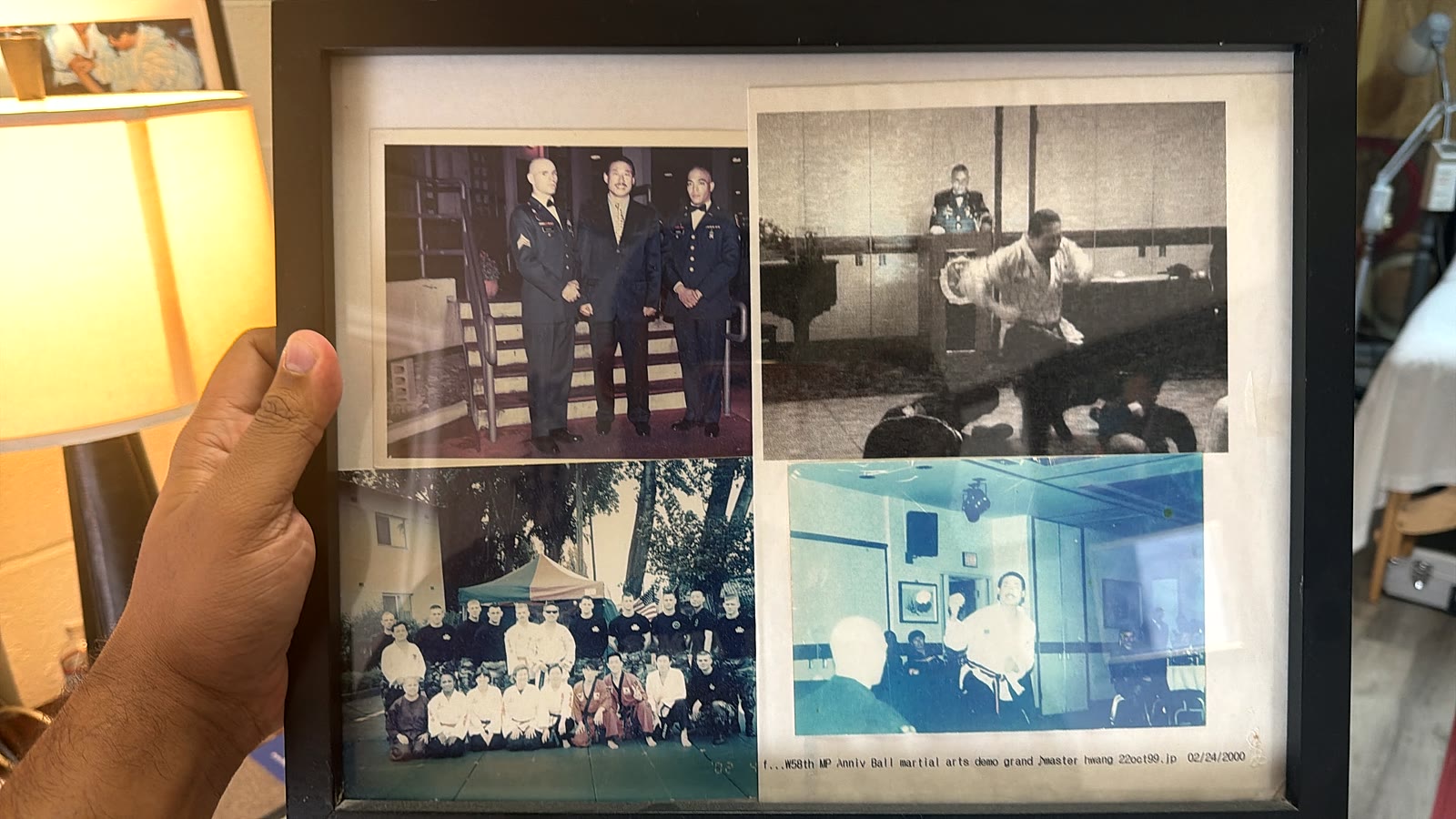
Grand Master Jong Yeon Hwang trained at the Korea Hapkido Headquarters Dojang from 1971 and holds 8th Dan Hapkido. He won Gold at the 10th Wushu World Cup in Milan in 2005. He received the President’s Volunteer Service Award, a White House honor, in 2023. KIMOO also received Santa Clara District 2 Business of the Year in 2019.
Review the result after each round
A short review turns a variation into a learning process. Ask three questions: What was the drill’s goal? What changed when the condition was introduced? What should be adjusted in the next round?
Keep the answer practical. You may need a slower pace, wider space, a clearer starting position, or another demonstration. The original movement may need more attention before another variation is useful.
Keep experimentation purposeful
Constraint-led training is most valuable when it remains structured. Choose one goal, one manageable condition, and one way to review the result. Preserve clear instructions, respectful partner work, and controlled movement throughout.
The method is not about making every practice novel. It helps students see choices inside a technique and makes fundamentals more meaningful.
Frequently asked questions
Is constraint-led martial arts training suitable for beginners?
It can be introduced in simple forms when an instructor sets clear boundaries and keeps the goal manageable. Beginners should first understand the movement and the purpose of the variation.
Does constraint-led training replace traditional fundamentals?
No. Fundamentals remain the reference point. A variation should clarify a technical idea, then connect students back to stable posture, balance, control, and purpose.
What is a safe first constraint to try?
A slow pace, a clearly marked practice area, or one simple technical objective can be a manageable starting point. Ask an instructor to choose the condition for your level and drill.
How can partners communicate during a variable drill?
Agree on the objective, pace, starting position, and pause signal before beginning. Stop whenever the instructions or movement become unclear, then reset together.
Should every martial arts practice include variations?
No. Some sessions benefit from repetition and consolidation. Use variations when they serve a clear learning goal, not simply to make a familiar drill feel different.
How do I know if a drill has become too complex?
If you cannot explain the goal, maintain control, or identify what changed, simplify the exercise. Return to the basic movement and ask the instructor for one clear next step. Explore thoughtful, disciplined training at KIMOO Martial Arts in Santa Clara. Book a free trial class, or call (408) 243-1001.
Train with a champion
Book your free trial class at KIMOO Martial Arts in Santa Clara and train under a World Cup gold medalist.
Keep reading