Styles Explained
What Actually Happens at a Belt Grading
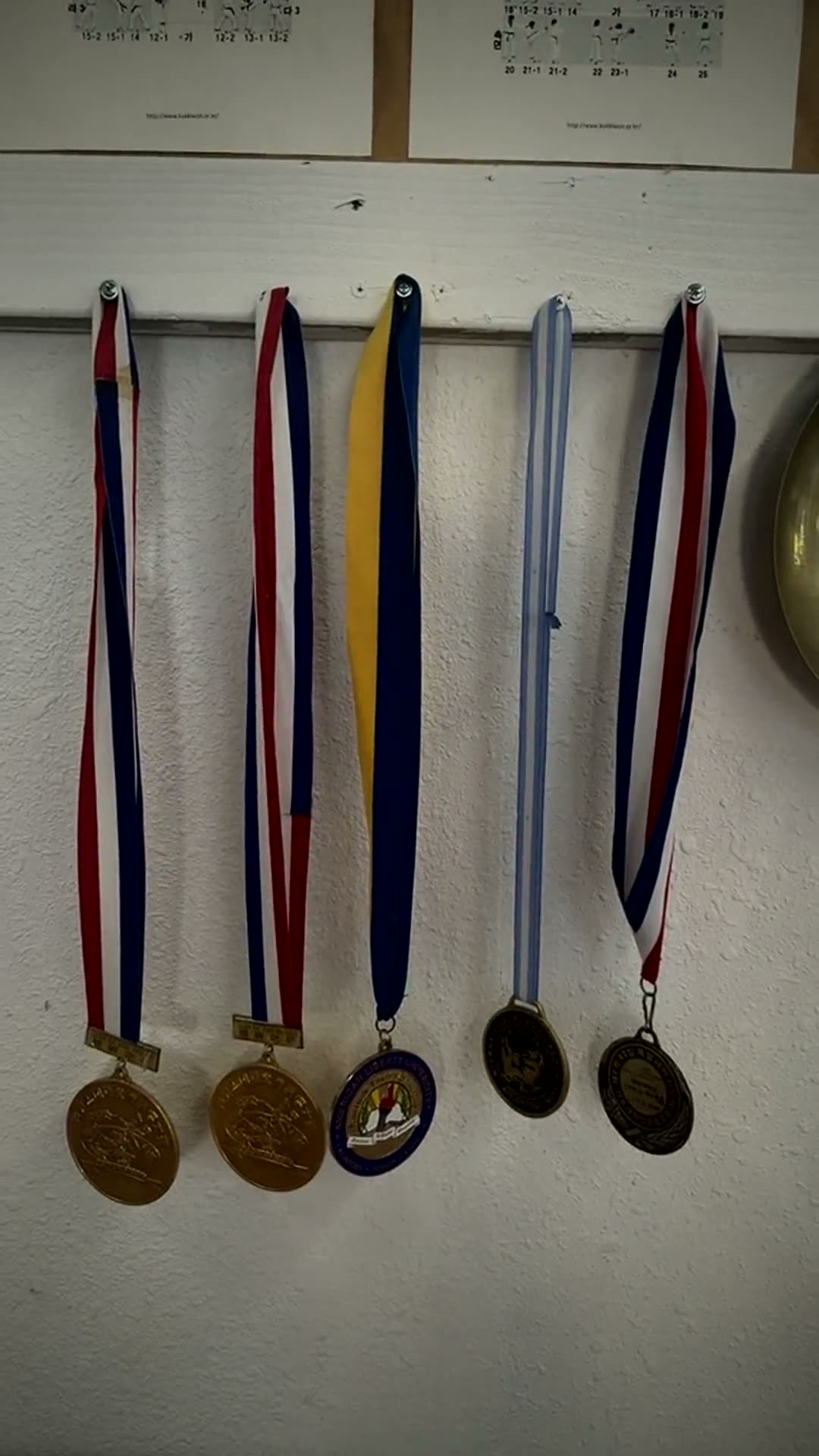
The first grading is nerve-wracking for students and often more so for parents. Here is what the day actually involves.
Before the day
You are invited, not entered. A student gradings when their instructor judges them ready. Being told "not this time" is not a punishment — it means the instructor would rather you passed properly next cycle than scraped through now.
The syllabus is not a secret. You will know which techniques, which form and which terminology are being examined. Nothing on the day should be a surprise.
The real work happened already. The grading confirms three months of training. Nobody passes by performing well on the day having trained badly before it.
What is examined
It varies by school and rank, but almost all gradings cover:
- Basic techniques — stances, blocks, strikes and kicks, performed on command.
- Forms (poomsae in Taekwondo, kata in Karate) — a set sequence demonstrating control and memory under pressure.
- Terminology — usually Korean commands and technique names, at lower grades.
- Self-defence or partner work — escapes, locks or controlled drills, depending on rank.
- Breaking, at some schools and ranks, with age-appropriate boards — more on how that works here.
- Sparring, usually only at higher grades and often optional for recreational students.
- Conduct. Quietly, throughout. How you behave while waiting is being observed.
How students are actually judged
Not against the best student in the room. Against the standard for that rank, and against what the examiner knows this particular student is capable of.
A nervous child who performs slightly below their usual standard but clearly knows the material will typically pass. A confident child who has not learned the form will not, however well they project.
Examiners are looking for control more than power, and consistency more than flair.
What if someone fails?
It happens, it should happen, and a school where nobody ever fails is not holding a standard.
If it happens to your child, the single most useful thing is your reaction. A failed grading is the most valuable teaching moment the activity offers — the first time effort alone has not guaranteed a reward. Handled well, it builds exactly the resilience you enrolled them for. Handled badly, it is the moment many children quit.
We wrote about that in why children quit and how to prevent it.
Also normal: a partial pass, or a pass with a note on what to fix before next time.
For parents on the day
- Arrive early. Rushing in raises their stress before they start.
- Sit where they can see you, and then be still. Mouthing the form along with them is extremely common and genuinely distracting.
- Do not coach from the side. Not even a whisper.
- Keep your own reaction small either way. Big celebration makes a future failure feel bigger.
- Afterwards, ask what was hard rather than what grade they got.
For adult students
The nerves are the same and slightly more embarrassing because you are an adult being tested in front of children who are better than you. Everyone has done it. Nobody is judging you, and the children are entirely focused on their own grading.
Start at white belt
Every grading starts with a first class. Yours is free, with no contract, and new students receive a free uniform and white belt. If you want the rank structure, the belt order guide is here.
Call (408) 243-1001.
Train where the standard is real
Gradings are assessed against a standard held personally by an 8th Dan Grand Master who trained at the Korea Hapkido Headquarters Dojang in 1971 — which is precisely what makes passing worth something.
Visit us: 2181 El Camino Real, Santa Clara, CA 95050
Frequently asked questions
What happens at a martial arts belt test?
Typically basic techniques on command, a form, terminology, partner or self-defence work, and sometimes breaking or sparring at higher grades. Conduct is observed throughout.
Can you fail a belt test?
Yes, and at a school holding a real standard some students do. Partial passes are also common.
How do I know if my child is ready to grade?
The instructor invites students when they judge them ready. Not being invited this cycle is a judgement about timing, not ability.
What should parents do during a grading?
Arrive early, sit still, do not coach from the sidelines, and keep your reaction measured either way.
Do adults take belt tests too?
Yes, against the same rank standards.
Where is KIMOO Martial Arts in Santa Clara?
We are at 2181 El Camino Real, Santa Clara, CA 95050. Call (408) 243-1001.
Train with a champion
Book your free trial class at KIMOO Martial Arts in Santa Clara and train under a World Cup gold medalist.
Keep reading