Training Tips
Martial Arts Training Apps: A Smart Guide for Students
Martial arts training apps are becoming more visible in the broader conversation about practice. A phone can hold a training journal, record a movement for review, or remind a student to revisit a lesson. These tools work best when they support disciplined instruction.
The right digital habit is simple: use technology to observe, organise, and reflect. Let a qualified instructor decide what should be corrected and how a technique should be practised safely.
Start with the purpose
Before downloading an app, decide what you want it to do. Are you trying to remember a lesson, organise questions, record personal observations, or review a video that your instructor has approved? A clear purpose prevents a collection of features from becoming a distraction.
A practice tool should make training more focused, not create pressure to chase scores or constant notifications. If an app encourages you to notice one technical detail and return to class with a useful question, it is serving a practical role.
Use a digital training journal
A journal is one of the simplest ways to use technology well. After practice, record the date, the main lesson, one point that felt clear, and one point that needs attention. Keep the notes factual and concise. You can also record questions for your instructor. For example, note where your balance changed during a transition or when you became tense. Bring the question to class rather than trying to solve every issue from a screen.
Treat video as a mirror, not a judge
Video can help you observe posture, foot placement, and the order of a movement. If recording is permitted, keep the clip short and focus on a specific drill. Review it with a calm mind. A single angle can hide important details, so do not assume that a recording tells the complete story.
Ask for permission before filming in an academy. Respect other students’ privacy and follow the instructor’s rules for recording and sharing. A private training clip should remain private unless everyone shown has agreed to its use.
Keep instructor feedback at the centre
An app can display a line, count a repetition, or highlight a visible pattern. It cannot fully understand the lesson’s purpose, the training context, or the individual factors an instructor considers. Automated feedback may be incomplete or misleading when it is separated from coaching.
Use digital feedback to generate observations, not final conclusions. Share relevant notes with your instructor and ask which correction matters most. Human guidance remains especially important when a movement involves a partner, speed, contact, or a change in intensity.
Choose useful features over novelty
Look for tools that are easy to use consistently. Helpful features may include simple notes, a private video library, reminders, and an export or backup option. A complicated interface can take attention away from practice.
Be cautious with claims about guaranteed improvement, perfect technique, or instant mastery. Martial arts skill develops through instruction, repetition, and responsible application. No app can replace the time and attention required to learn well.
Protect your privacy and training partners
Read an app’s privacy information before uploading personal videos or notes. Consider where files are stored, who can view them, and whether the service uses recordings for other purposes. Avoid uploading another person’s image or voice without clear permission.
In a class environment, courtesy matters as much as convenience. Keep phones away when they are not needed, do not interrupt a lesson to check a notification, and never let recording interfere with a partner’s concentration or safety.
Build a balanced practice loop
A useful digital practice loop has four stages. First, learn the movement in class. Second, write a brief note or make an approved recording. Third, review one detail without rushing to self-correct. Fourth, return to class and ask for feedback.
This loop keeps technology in its proper place. The academy provides the learning environment, the instructor provides context, and the app helps you remember what to revisit. A student can then measure progress through better awareness and consistency rather than through an arbitrary digital score.
Technology across martial arts training
KIMOO Martial Arts offers Hapkido, Taekwondo, self-defence, and competition training in Santa Clara, California. The most useful digital support may differ by discipline and lesson. Ask the instructor whether journaling, recording, or another tool fits the training objective.
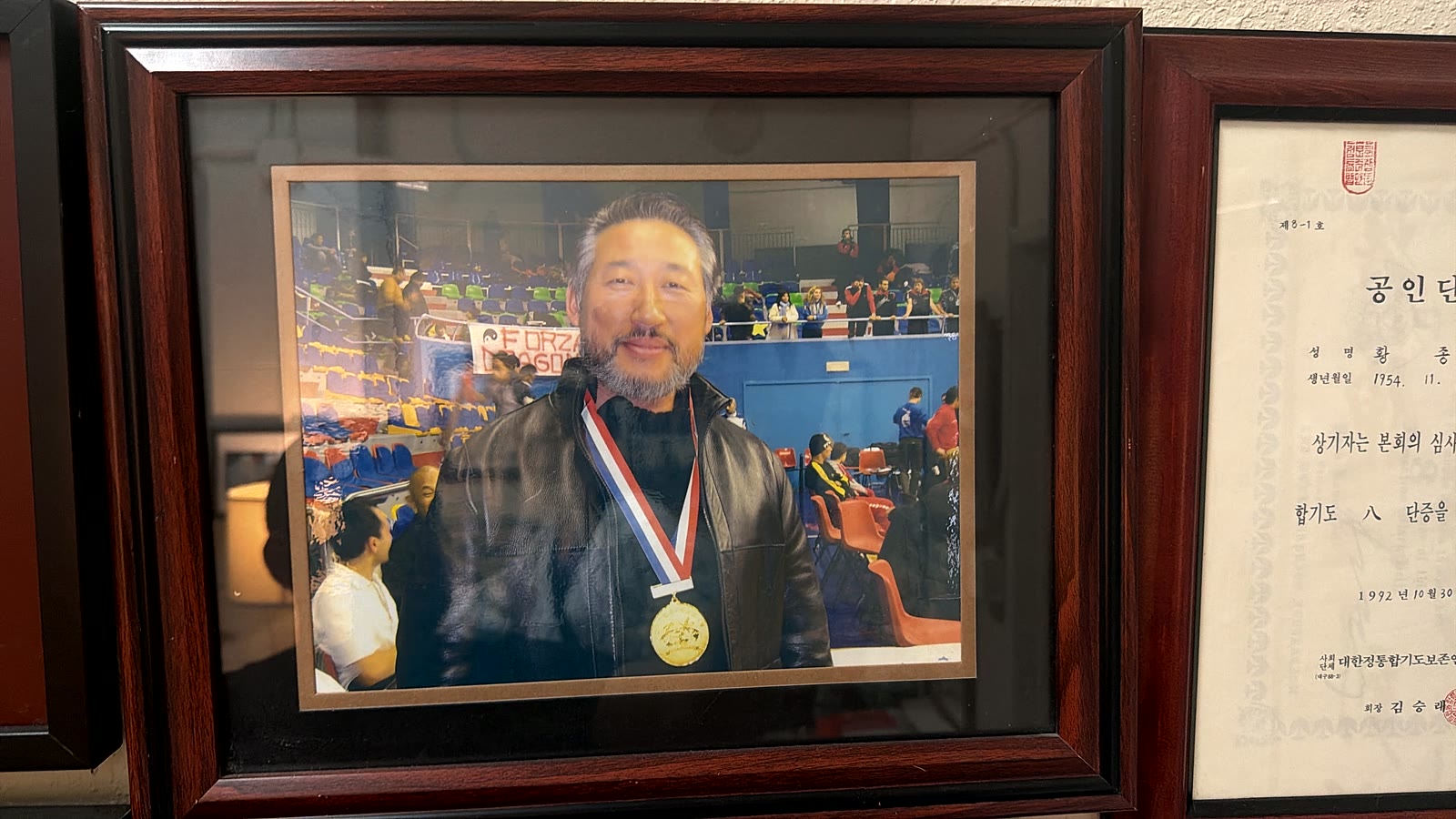
Grand Master Jong Yeon Hwang trained at the Korea Hapkido Headquarters Dojang from 1971 and holds 8th Dan Hapkido. He won Gold at the 10th Wushu World Cup in Milan in 2005. He received the President’s Volunteer Service Award, a White House honor, in 2023. KIMOO received Santa Clara District 2 Business of the Year in 2019.
A practical app checklist
Before using an app, ask five questions. Does it support a specific training goal? Can you use it without losing attention in class? Does it respect privacy? Can an instructor interpret its output? Will it encourage patient practice rather than unrealistic promises?
If the answers are clear, start small. Use one feature for a few weeks, review what it adds, and adjust with your instructor’s guidance. Premium training is not about having more technology. It is about making each tool serve better learning.
Frequently asked questions
Can an app teach martial arts by itself?
An app can provide reminders, notes, or visual information, but it cannot replace live instruction and context. Use digital tools as a supplement to responsible training.
Is recording practice always allowed?
No. Ask the instructor first and respect the academy’s rules. Protect the privacy and concentration of everyone in the training space.
What should I write in a training journal?
Record the lesson focus, one detail you understood, one question, and any instruction you want to revisit. Short, accurate notes are usually more useful than long entries.
How should I use automated technique feedback?
Treat it as an observation, not a final verdict. Discuss relevant feedback with your instructor before changing a movement or adding intensity.
Are paid apps automatically better?
Not necessarily. Judge a tool by whether it supports your goal, protects privacy, and remains simple enough to use consistently. Do not assume features equal quality.
Can technology help competition training?
It may help organise notes or review approved video, but the appropriate use depends on the instructor’s plan and the competition discipline. Coaching should guide the process. Bring thoughtful practice to KIMOO Martial Arts in Santa Clara. Book a free trial class, or call (408) 243-1001.
Train with a champion
Book your free trial class at KIMOO Martial Arts in Santa Clara and train under a World Cup gold medalist.
Keep reading