Choosing a Dojo
How to Choose a Martial Arts Instructor in Santa Clara
Choosing a martial arts instructor in Santa Clara deserves more attention than simply finding the nearest class. The instructor shapes how techniques are explained, how students receive feedback, and how the training environment feels from the first visit. A strong fit can make practice more purposeful and help you approach learning with confidence.
Bring a few thoughtful questions, observe the lesson, and consider whether the instructor’s approach matches what you want from martial arts.
Start with your reason for training
Before evaluating an instructor, identify your main reason for beginning. You may want to study a traditional discipline, develop self-defence skills, explore competition training, or build a more consistent movement practice. Your answer does not have to be permanent, but it gives the first conversation direction.
Ask the instructor how the programme supports that goal. A useful answer should explain the training focus without promising guaranteed results. It should invite questions about your goals.
Look for clear explanations
A capable instructor can make a complex idea understandable. During a class or conversation, listen for explanations that connect technique to purpose. Notice whether the instructor demonstrates a movement, breaks it into manageable parts, and gives students a chance to practise before adding complexity.
Clarity is not the same as using impressive language. The real test is whether students know what they are working on and how to make a sensible adjustment. If you leave with a clearer understanding of the lesson, that is a meaningful sign.
Pay attention to feedback
Feedback should be specific enough to use. Rather than offering only broad praise or criticism, an instructor might direct attention to posture, balance, foot placement, timing, or control. The correction should suit the student’s current level and the purpose of the drill.
Observe how feedback is delivered. A premium learning environment can be disciplined while still being respectful. Students should be able to ask questions and make corrections without feeling humiliated. The goal is better practice, not performance for the instructor.
Ask how safety is handled
Safety is part of good instruction, especially when training includes partners or changes in pace. Ask how a new student is introduced to drills, how partners communicate, and how students know when to stop. The instructor should be willing to explain how control and courtesy fit into practice.
During a visit, look for attention to space, technique, and communication. Do not treat intensity as proof of quality. A well-structured lesson can be challenging while still giving students appropriate guidance.
Explore the instructor’s background
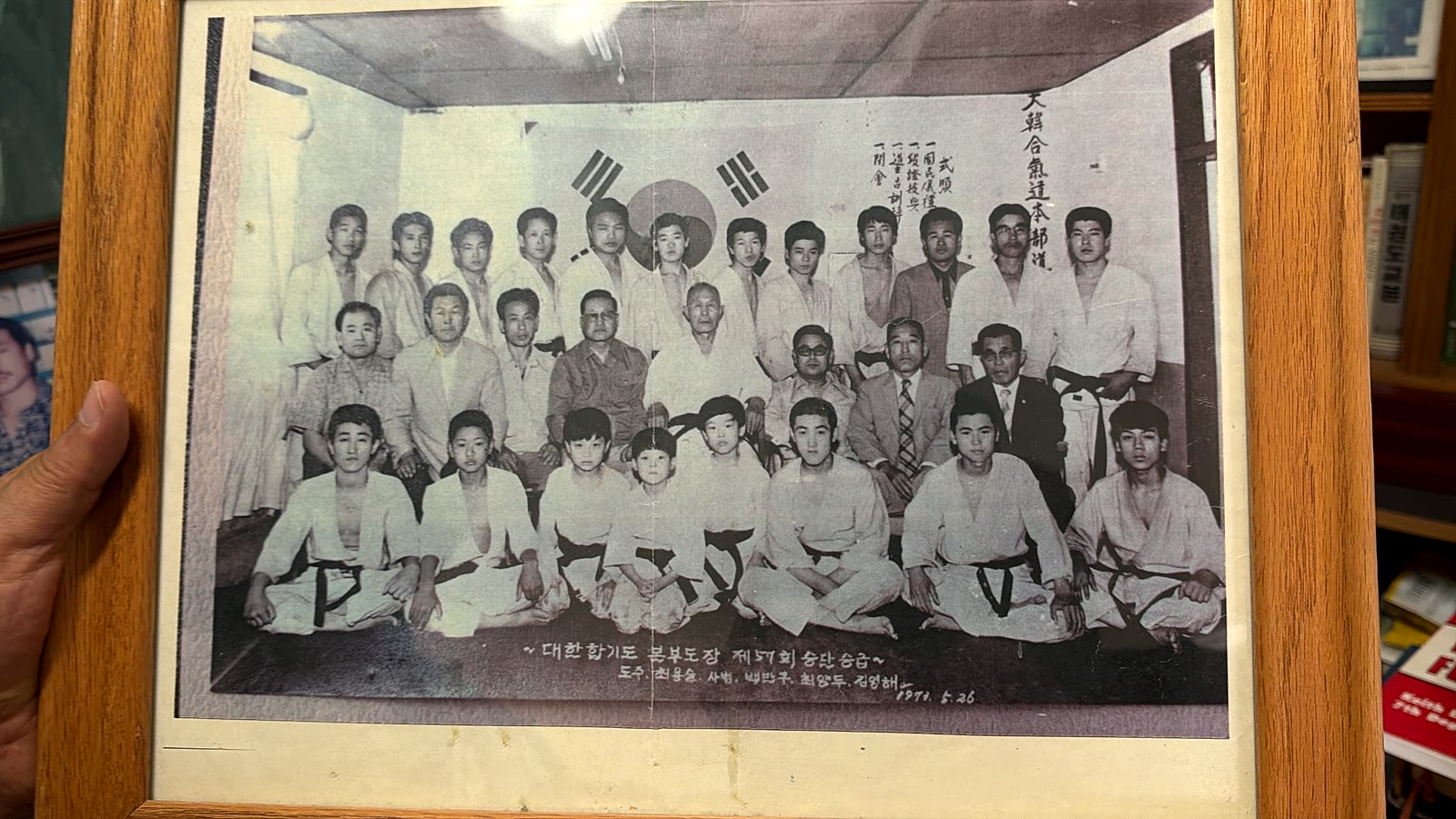
An instructor’s experience provides useful context, particularly when it can be described clearly and verified. Grand Master Jong Yeon Hwang trained at the Korea Hapkido Headquarters Dojang from 1971 and holds 8th Dan Hapkido. He won Gold at the 10th Wushu World Cup in Milan in 2005. He received the President’s Volunteer Service Award, a White House honor, in 2023.
KIMOO received Santa Clara District 2 Business of the Year in 2019. These facts do not replace observing instruction, but they help you understand the experience behind the academy’s approach. Ask how that background informs the way techniques, values, and training standards are taught.
Match the instructor to the discipline
KIMOO Martial Arts offers Hapkido, Taekwondo, self-defence, and competition training in Santa Clara, California. Each area can call for a different emphasis, so ask which instructor and programme best match your interest.
You can ask how a class balances fundamentals, applied practice, and feedback. If competition interests you, ask how preparation is introduced. If self-defence is your priority, ask how awareness, decision-making, and responsible practice are addressed. The purpose of these questions is to understand the teaching path, not to demand a particular promise.
Notice the learning culture
The instructor is central, but the surrounding culture matters too. Observe how students listen, practise with partners, and respond to corrections. Look for an atmosphere where concentration and respect are visible without unnecessary pressure.
Ask yourself whether you would feel comfortable returning with questions. A good fit is not about finding a personality that is identical to yours. It is about finding a teaching relationship that encourages attention, consistency, and responsible effort.
Use a trial class wisely
A free trial class gives you a chance to experience instruction rather than judge from advertising. Before attending, ask what you should bring and what the session will cover. During the class, focus on the instructor’s communication and the way the lesson is organised.
Afterward, write down what you noticed. Did the explanations make sense? Did you receive useful guidance? Were expectations clear? Did the environment support respectful practice? Compare your answers with your original goals before you decide.
Questions that lead to a better choice
Bring a short list when you visit. Ask how beginners learn fundamentals, how questions are handled, how partner drills are introduced, and how the instructor gives feedback. Ask which discipline is the best starting point for your stated goal.
You can also ask what progress means in the programme. A thoughtful answer will focus on learning, practice, and responsibility rather than unsupported statistics or guarantees. The more clearly an instructor answers, the easier it is to make an informed choice.
Frequently asked questions
What should I look for in a martial arts instructor?
Look for clear explanations, specific feedback, respectful communication, responsible safety practices, and experience that can be explained and verified. The instructor should also understand your training goal.
Should I choose an instructor based only on rank?
Rank and experience can provide context, but they are not the only factors. Observe how the instructor teaches, answers questions, and helps students practise with care.
What can I ask during a trial class?
Ask about the lesson focus, beginner fundamentals, partner safety, feedback, and which discipline best fits your goals. You can ask for clarification at an appropriate time.
How do I evaluate feedback?
Useful feedback is specific, respectful, and connected to the drill. It should give you something practical to notice or adjust without encouraging rushed or unsafe practice.
Does the instructor’s style need to match my personality?
Not exactly. The important question is whether the teaching approach helps you understand, practise, ask questions, and improve responsibly.
Can one instructor support different martial arts goals?
That depends on the academy and the training structure. Ask how Hapkido, Taekwondo, self-defence, and competition training are taught and which path suits your purpose. Meet the teaching approach at KIMOO Martial Arts in Santa Clara. Book a free trial class, or call (408) 243-1001.
Train with a champion
Book your free trial class at KIMOO Martial Arts in Santa Clara and train under a World Cup gold medalist.
Keep reading