Women's Self-Defence
Women's Self-Defence: What Actually Works, and What Is Theatre
There is a lot of self-defence content aimed at women that is closer to entertainment than instruction. Elaborate technique sequences, dramatic demonstrations, and very little that survives contact with real stress.
Here is a more honest framework.
The order the skills actually matter in
Most useful first, least useful last. This ordering is uncomfortable for schools that sell technique, which is why it is rarely presented this way.
- Awareness. The overwhelming majority of situations are avoided rather than won. Noticing earlier buys options; options are everything.
- Boundary setting. A firm, loud, early refusal ends far more incidents than any physical technique. Most people find this harder to practise than punching, which is precisely why it needs practising.
- Escaping a grab. The genuine physical core. Wrists, arms, clothing, from behind. This is where real training pays off.
- Creating distance and leaving. The goal is never to win. It is to not be there.
- Decisive counters. A very small number of simple, repeatable techniques that work when adrenaline has removed your fine motor control.
Notice that striking is near the bottom, and that the top two are not physical at all.
Why "simple and repeatable" matters so much
Under genuine stress, fine motor control degrades and complex sequences disappear. A technique you can perform beautifully in a calm class but not under pressure is not a self-defence technique — it is a demonstration.
This is the single best test of a self-defence class: how few techniques does it teach, and how many times do you repeat each one? A class teaching three escapes properly is worth more than one teaching twenty once.
Why leverage-based arts suit this problem
Hapkido was built around redirecting an attacker's force rather than meeting it, using joint locks, angles and escapes. That matters because it does not assume you are the stronger person — it assumes you are not.
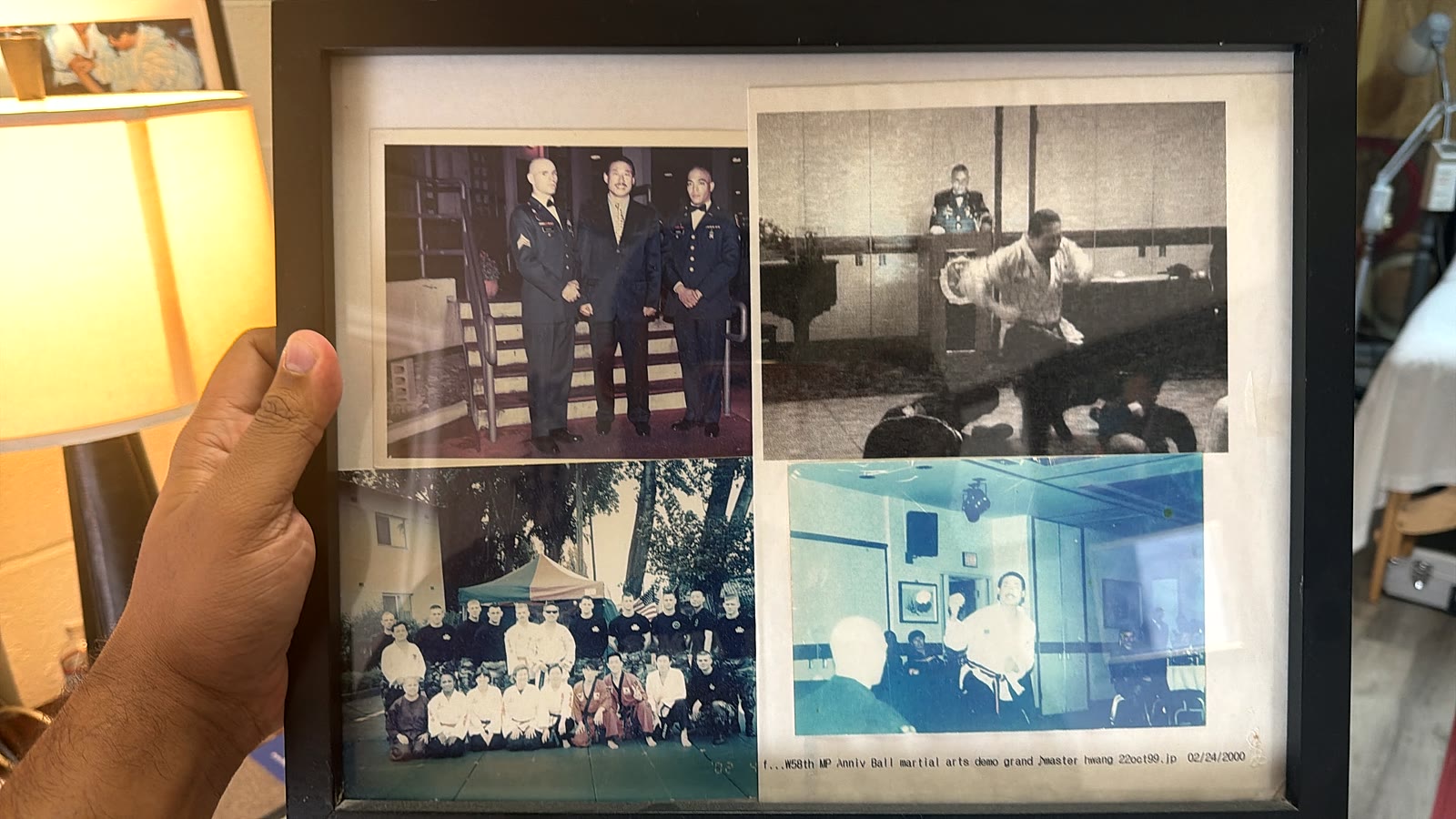
It is also the system Grand Master Hwang taught to the U.S. Army's 728th Military Police Battalion in Korea. Military police face an unusually honest version of this problem: controlling someone who does not want to be controlled, without excessive harm. Techniques that fail get discarded fast in that setting.
How to judge a class
- Does it teach awareness and verbal boundaries, or only physical technique? If it skips the first two levels entirely, it is selling the fun part.
- Are techniques repeated to the point of reflex? Or demonstrated once and moved past?
- Can you practise at your own intensity? Good instruction never requires being hurt to learn.
- Is it respectful? You should never be made to feel weak in order to be sold a solution.
- Is it a one-off seminar or ongoing training? A weekend course builds awareness. Reflexes take repetition.
What our students say
One put it simply: she joined for fitness and stayed for the confidence, and thinks the women's self-defence program should be mandatory for everyone.
The change students report most often is not technical. It is that they stopped walking to the car running through worst cases, because they now have a plan.
Start with a free class
No experience needed, no equipment, no contract. Your first class is free, and new students receive a free uniform and belt. Our full women's self-defence program is here.
Call (408) 243-1001. Bring a friend — most students do.
Train where the standard is real
You are taught personally by an 8th Dan Grand Master who trained at the Korea Hapkido Headquarters Dojang in 1971 and instructed military police — not by a weekend-certified seminar coach.
Visit us: 2181 El Camino Real, Santa Clara, CA 95050
Frequently asked questions
What self-defence techniques actually work for women?
Awareness and firm verbal boundaries prevent the most incidents. Physically, escapes from grabs and creating distance matter most, along with a small number of simple counters that survive stress.
Is a weekend self-defence seminar enough?
A seminar can build useful awareness, but reflexes require repetition over time. Ongoing training is what makes technique available under stress.
Do I need to be strong for self-defence?
No. Leverage-based systems such as Hapkido are built on angle and timing rather than strength, specifically for defenders who are not the larger person.
Will I get hurt learning self-defence?
You should not. Good instruction is controlled and lets you work at your own intensity.
Where is KIMOO Martial Arts in Santa Clara?
We are at 2181 El Camino Real, Santa Clara, CA 95050, serving Santa Clara, Sunnyvale, San Jose, Cupertino and Campbell. Call (408) 243-1001.
Train with a champion
Book your free trial class at KIMOO Martial Arts in Santa Clara and train under a World Cup gold medalist.
Keep reading