Training Tips
Martial Arts Footwork Training: Build Better Movement Habits
Martial arts footwork training is the quiet foundation beneath many visible techniques. Before a hand or leg reaches its target, the practitioner must manage stance, balance, distance, and direction. Better footwork does not mean rushing around the room. It means learning to move with enough control that each position supports the next decision.
This makes footwork valuable for Hapkido, Taekwondo, self-defence, and competition training, although the exact drills and applications vary. The principles below can help you understand what to practise and what to look for in a well-taught class.
Begin with a stable stance
A stance is more than a pose at the beginning of a technique. It is a starting relationship between your feet, hips, spine, and attention. If your feet are too close, you may feel unstable. If they are too wide, you may make the next movement unnecessarily difficult.
Ask your instructor to explain what the stance is supporting. Are you preparing to step, turn, strike, receive pressure, or change direction? The answer gives the position a purpose and helps you avoid copying the shape without understanding it.
Practise settling into a stance without locking your knees or holding your breath. A stable position should allow a controlled transition rather than trap you in place.
Move without losing balance
Good footwork keeps your centre of balance organised as you travel. Start with small steps. Move one foot, then allow the other foot to follow into a position you can control. Avoid crossing your feet until an instructor has explained why and when that action is appropriate.
Keep your eyes and attention available while moving. If you must look down constantly to find your feet, slow the drill and rebuild the pattern. The objective is not simply to complete a route. It is to remain aware of your posture, your surroundings, and the next technical choice.
Balance is also about stopping. Practise arriving quietly and settling before beginning the next action.
Understand distance as a training variable
Distance changes what a technique can do. A step may close space, create space, or place you at an angle. Rather than memorising a single ideal distance, learn to recognise how your position relates to a partner, a target, or the direction of movement in a drill.
Partner practice should be controlled and clearly explained. Ask what distance the exercise is teaching and what signal tells you to pause or reset. This turns movement from a vague rush into a technical conversation.
In self-defence training, distance awareness can be part of a broader process that includes noticing context, making decisions, and choosing a responsible response. It should never be presented as a guarantee of a particular outcome.
Practise direction and angles deliberately
Forward, backward, lateral, and turning steps each present different coordination demands. Work on one direction at a time before combining them. When you add a turn, reduce the speed enough to feel where your feet land and whether your posture remains organised.
Use a simple question after each repetition: Could I explain why I moved there? If the answer is no, ask for clarification. Understanding the reason behind a step helps you adapt when a drill changes.
An angle is useful only when it supports the technique or decision being taught. Do not add stylish movement for its own sake.
Add rhythm after control
Speed and rhythm should come after understanding. Begin slowly enough to distinguish the start, middle, and finish of a step. Then connect the actions while keeping the same quality. If the pattern falls apart, return to the slower version instead of forcing more repetitions.
A training partner can provide a helpful external rhythm, but both people must agree on the pace. Clear communication matters more than matching a fast count. The instructor may change timing to teach a specific reaction or transition, so listen for the reason behind the change.
This approach makes footwork a learning tool rather than a race.
Build useful solo drills
With instructor approval, you can practise basic footwork without a partner. Mark an imaginary centre point and take small steps away and back, keeping your posture comfortable. Practise stepping in one direction, stopping, and returning. Add a controlled turn only when the first pattern feels dependable.
Keep the session brief enough to maintain attention. Quality matters more than a large repetition count. Stop if you experience pain, dizziness, or unusual discomfort, and seek appropriate professional advice when needed.
Do not practise unfamiliar techniques from an online clip as though you have received personal instruction. Use solo work to reinforce patterns your instructor has already taught.
Put footwork in a disciplined tradition
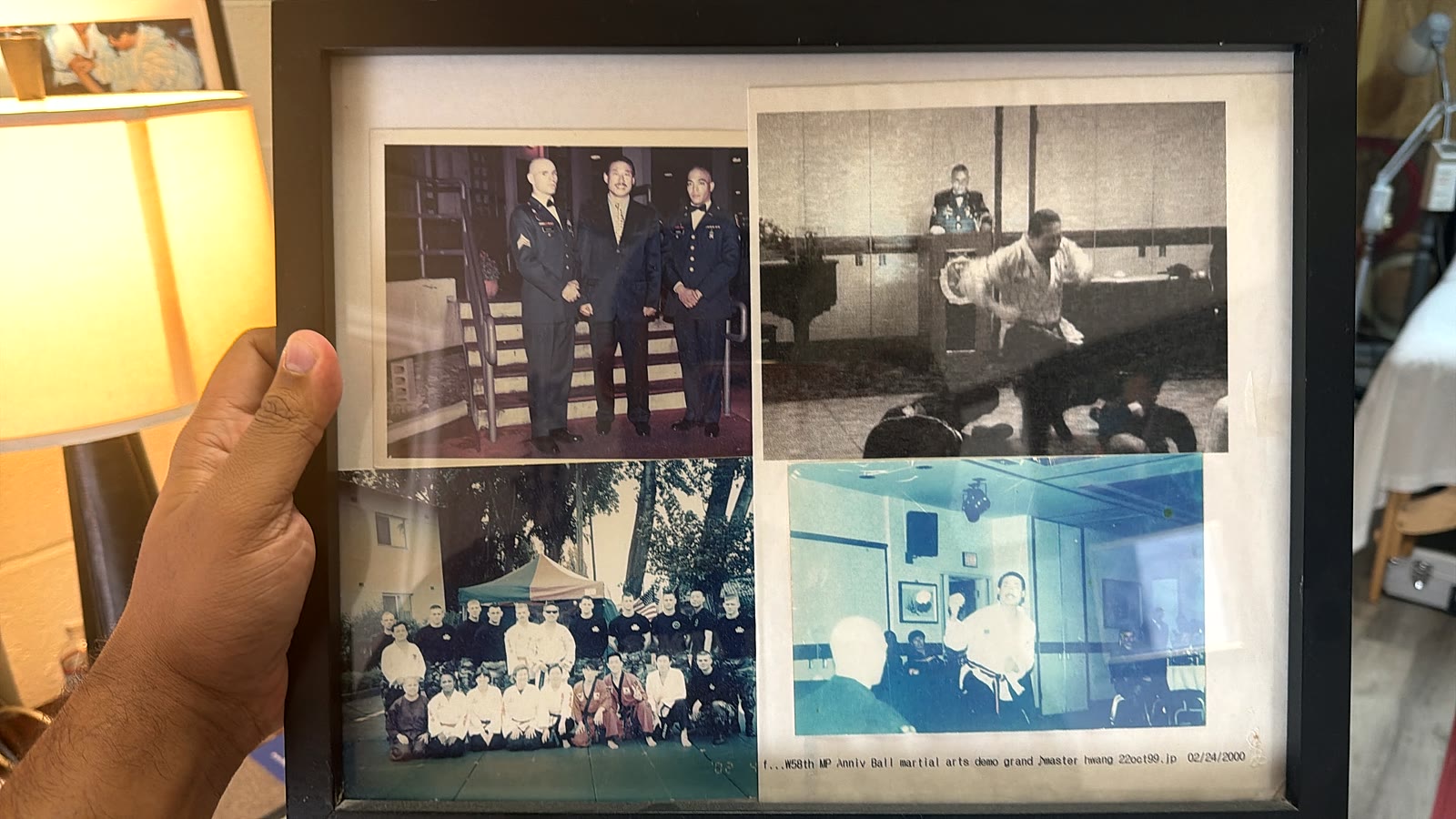
KIMOO Martial Arts is located in Santa Clara, California and offers Hapkido, Taekwondo, self-defence, and competition training. Grand Master Jong Yeon Hwang trained at the Korea Hapkido Headquarters Dojang from 1971 and holds 8th Dan Hapkido.
He won Gold at the 10th Wushu World Cup in Milan in 2005. Grand Master Hwang received the President’s Volunteer Service Award, a White House honor, in 2023. This background provides context for KIMOO’s leadership, while careful footwork practice gives students a practical way to develop technical awareness one step at a time.
Frequently asked questions
Why is footwork important in martial arts?
Footwork helps organise stance, balance, distance, direction, and timing. These elements support technique and decision-making across many forms of martial arts practice.
Should I practise footwork quickly?
Start at a pace that lets you understand each step and stop with control. Add speed only when the pattern remains accurate and your instructor considers the progression appropriate.
How can I improve my martial arts footwork training at home?
Practise only foundational patterns you have already been taught. Use small, controlled steps, maintain awareness, and stop when pain or unusual discomfort appears.
What is the difference between footwork and agility?
Footwork describes how you organise steps and positions for a purpose. Agility can describe the ability to change position or direction efficiently. Good footwork supports useful agility, but speed alone is not the goal.
Does better footwork guarantee success in self-defence?
No. Footwork is one training element and cannot guarantee a particular result. Context, awareness, communication, and responsible decisions also matter.
How does an instructor correct footwork?
An instructor may adjust stance, step size, posture, direction, or timing. Ask what the correction is intended to improve so you can apply it thoughtfully. Take your next step with clear instruction and purposeful practice. Book a free trial class at KIMOO Martial Arts in Santa Clara, or call (408) 243-1001.
Train with a champion
Book your free trial class at KIMOO Martial Arts in Santa Clara and train under a World Cup gold medalist.
Keep reading