Training Tips
Martial Arts Motor Learning: How Skills Become More Precise
Martial arts motor learning is the process of turning an explained movement into a skill you can perform with greater control. It involves more than remembering a sequence. You learn how to organise posture, timing, balance, attention, and response while the movement is happening. That is why thoughtful practice can be more valuable than simply doing more repetitions.
Motor learning is a useful way to understand training without making progress sound automatic. Skill develops through clear instruction, focused attempts, useful feedback, and time. Whether you practise Hapkido, Taekwondo, self-defence, or competition training, the same disciplined approach can make your sessions more purposeful.
Begin with one clear outcome
A practice session becomes easier to evaluate when you know what you are trying to improve. Choose one outcome for a drill. You might focus on keeping your base stable, returning to a ready position, coordinating a hand movement with a step, or maintaining awareness of distance.
Keep the goal narrow enough to notice. If you try to correct posture, speed, breathing, footwork, and timing all at once, it becomes difficult to identify what changed. One clear focus gives your mind a useful reference and gives your instructor a better opportunity to help.
A goal is not a demand for perfection. It is a question you bring to the next repetition: did the movement become more organised, and what detail should I try next?
Value quality feedback
Feedback works best when it is specific and connected to an action. “Stay relaxed” can be difficult to apply by itself. A more useful correction might point to a particular shoulder, foot position, or moment in the sequence. Listen for the detail, make one adjustment, and repeat the movement before changing anything else.
Your own awareness matters too. After a repetition, describe what you felt in simple terms. Did your weight move too early? Did your stance narrow? Did you lose sight of your partner? This information helps an instructor understand where the movement stopped making sense.
Do not interpret every correction as a setback. In technical training, correction is part of the learning process. It gives you a sharper map of the skill.
Use repetition without becoming mechanical
Repetition gives the nervous system an opportunity to recognise a pattern, but repetition alone does not guarantee quality. If you repeat an error without noticing it, you may make the error more familiar. That is why pace and attention matter.
Start slowly enough to preserve the shape and purpose of the movement. Pause when you need to reset. Once the pattern is clear, your instructor can help you decide when to add speed, a partner, or another layer of complexity.
The goal is not to make every repetition identical in a rigid way. The goal is to keep the essential principles stable while learning to perform them with control.
Learn through appropriate variation
Once you understand a basic movement, small changes can help you learn how to apply it rather than merely recite it. A different starting position, direction, rhythm, or partner cue may require you to recognise the same principle in a new setting.
Variation should be introduced deliberately. If a drill changes too many things at once, you may lose the original objective. Ask your instructor which element is changing and which element should remain consistent. This keeps practice challenging while preserving a clear connection to the foundation.
In self-defence training, responsible variation can also encourage awareness of space and decisions. Training remains controlled and instructional. It cannot guarantee how anyone will respond in every real situation.
Use reflection to improve the next attempt
Reflection does not need to be lengthy. At the end of a drill, answer three questions:
- What was the main purpose of the movement?
- Which detail became clearer?
- What question should I bring to the next session?
Writing one sentence or sharing a question with your instructor can keep learning active between classes. If a technique felt difficult, identify the specific moment that caused confusion instead of labelling the entire movement as impossible.
Reflection also helps you recognise progress that is easy to miss. You may not feel dramatically different, but you may now notice your balance earlier, recover your position more calmly, or understand why a correction matters.
Connect learning to a complete martial arts practice
Motor learning does not exist separately from respect, discipline, or safety. Good training asks you to listen, communicate with partners, and apply technique with control. These habits create the conditions for useful practice.
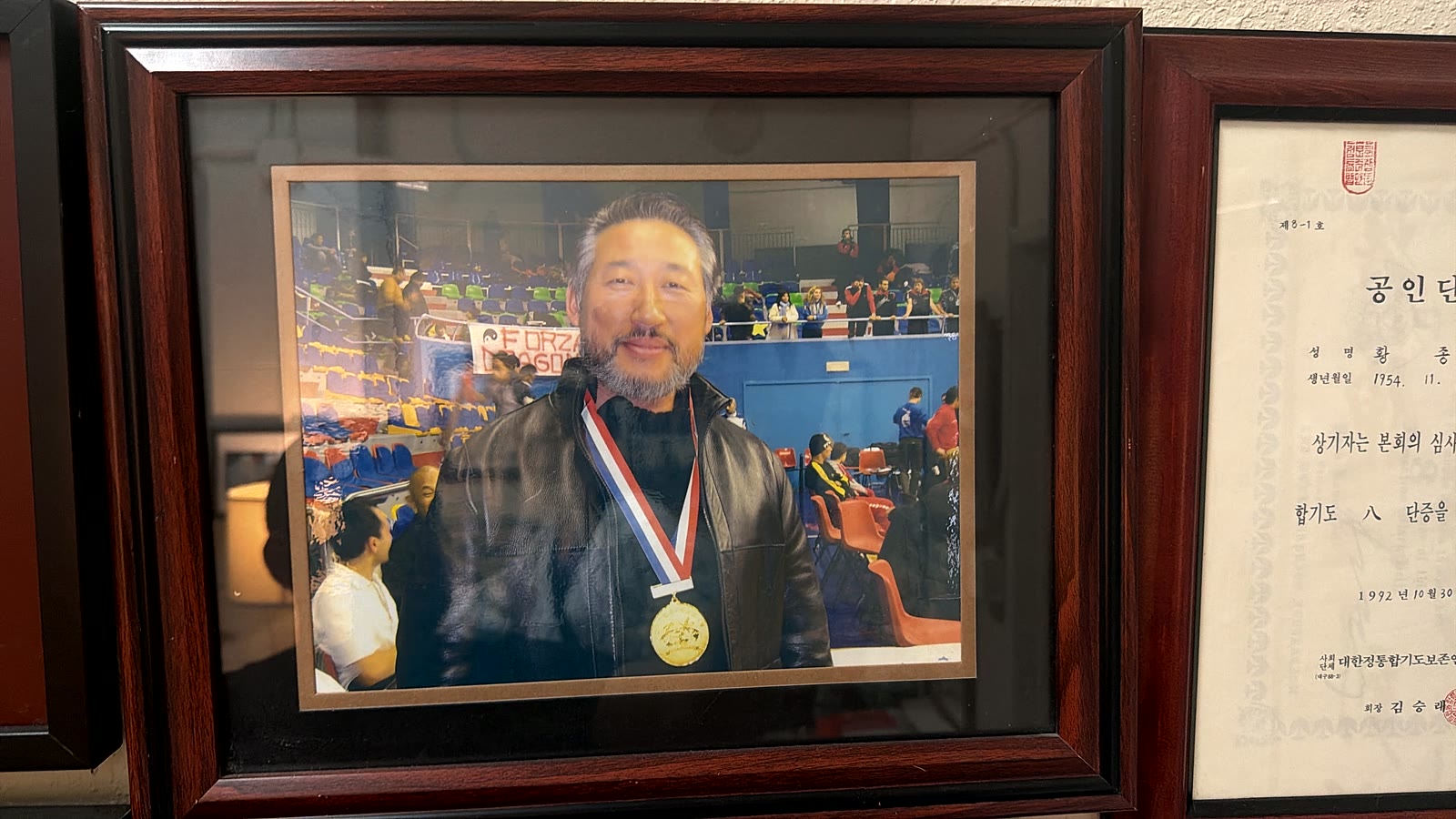
KIMOO Martial Arts in Santa Clara offers Hapkido, Taekwondo, self-defence, and competition training. Grand Master Jong Yeon Hwang trained at the Korea Hapkido Headquarters Dojang from 1971 and holds 8th Dan Hapkido. His background, including Gold at the 10th Wushu World Cup in Milan in 2005, provides verified context for KIMOO's leadership. Your own learning still develops one clear repetition and one useful adjustment at a time.
Frequently asked questions
What is motor learning in martial arts?
It is the process of developing a movement skill through instruction, practice, feedback, and adaptation. It includes coordination, posture, timing, balance, attention, and the ability to apply a principle with control.
Is more repetition always better?
No. Repetition is most useful when you can maintain attention and understand the purpose of the drill. Slow, accurate practice with feedback is often more productive than rushing through many attempts.
How should I respond to a correction?
Treat it as information. Apply one specific adjustment, repeat the movement, and notice what changed. If the correction remains unclear, ask the instructor to explain or demonstrate it again.
When should a drill become faster or more complex?
That decision should come from clear understanding and controlled execution. Ask your instructor when to add speed, a partner, or variation rather than forcing progression on your own.
Can motor learning guarantee martial arts performance?
No. Motor learning principles can make practice more purposeful, but outcomes vary. Consistent instruction, safe training, and individual effort all matter.
How can I practise between classes?
Review movements your instructor has already taught, use a clear space, and keep the pace controlled. Focus on one detail and stop if you are unsure about technique or safety. Ready to make your practice more purposeful? Book a free trial class at KIMOO Martial Arts in Santa Clara, or call (408) 243-1001.
Train with a champion
Book your free trial class at KIMOO Martial Arts in Santa Clara and train under a World Cup gold medalist.
Keep reading