Training Tips
Martial Arts Self-Regulation: Train Attention with Purpose
Martial arts self-regulation training is not about suppressing every emotion or trying to look calm at all times. It is the practical ability to notice what is happening, manage your attention, and choose an appropriate response during practice. A disciplined session gives you repeated opportunities to connect breath, posture, movement, and decisions without rushing the process.
Interest in self-regulation and martial arts has grown alongside broader conversations about attention, emotional control, and mindful movement. The most useful approach remains grounded in instruction. Rather than expecting a class to solve every challenge, treat training as a place to practise one deliberate response at a time.
Begin with a clear attention cue
Attention becomes easier to train when you know what to notice. At the beginning of a drill, choose one cue such as the position of your feet, the direction of your eyes, the quality of your breathing, or the moment you need to reset.
Do not try to monitor everything at once. A single cue gives your mind a manageable task. Once you understand it, your instructor can help you connect it to another detail. This is more useful than simply trying to concentrate harder.
During a form, you might observe posture and transitions. During partner practice, you might focus on communication and control. During a self-defence discussion, consider awareness and decision-making rather than physical speed.
Connect breath with movement
Breathing can provide a simple way to return attention to the present task. Let the breath remain natural and steady while you learn the movement. If you notice unnecessary tension, pause and ask whether you are holding your breath or tightening areas that do not need to work.
Controlled breathing is not a performance. It should support clear movement and safe practice. An instructor can help you understand when to breathe naturally, when to exhale through effort, and when to reset before repeating a drill.
Use breath as information. If your breathing becomes rushed because the technique is unclear, reduce the pace and ask a question. If a partner drill feels overwhelming, communicate and return to a controlled version. This is self-regulation in action: noticing a change and choosing a responsible adjustment.
Practise the pause between cue and response
Many martial arts drills involve a cue followed by a movement. The goal is not always to react as quickly as possible. You first need to understand what the cue means, keep a stable base, and choose the response that fits the exercise.
An instructor may begin with predictable cues and add complexity gradually. At each stage, pay attention to the pause. Can you identify the instruction? Can you keep control while deciding? Can you reset when the drill is complete?
This does not make a real-world promise about how anyone will respond outside class. It simply develops a thoughtful training habit. In self-defence practice, the pause may also include awareness, communication, creating space, and seeking safety.
Use controlled partner practice
Partner work reveals how attention changes when another person is moving. Before starting, confirm the drill's purpose, the pace, and the signal to stop. Look at your partner, listen to their feedback, and avoid adding intensity that has not been requested.
If you lose focus, reset rather than trying to force your way through. If your partner misses a cue, communicate clearly and return to the agreed starting position. These small choices protect the learning environment and make it easier to study timing, distance, and control.
Build a short reflection habit
After training, take a few minutes to review three questions:
1. What cue helped me stay present? 2. When did I lose attention or become tense? 3. What will I ask or practise next time?
Keep the answers concrete. Instead of writing that you had a bad session, note that you forgot to reset between repetitions or stopped listening when the pace changed. A specific observation gives you something to discuss with your instructor.
Reflection also helps you separate physical effort from technical learning. Being tired does not automatically mean that you understood the exercise. A useful review considers what you noticed, learned, and what still needs guidance.
Match self-regulation to each discipline
KIMOO Martial Arts in Santa Clara offers Hapkido, Taekwondo, self-defence, and competition training. Each training context can give attention a different job. Hapkido and Taekwondo practice may ask you to study technical details, posture, balance, and timing. Self-defence training may emphasise awareness, communication, decisions, and safety. Competition training may require you to follow a plan while responding to a demanding practice environment.
Ask your instructor which cue belongs to the session. The goal is not to force one formula into every discipline. It is to develop the ability to notice what the exercise requires and respond with control.
Learn from a disciplined heritage
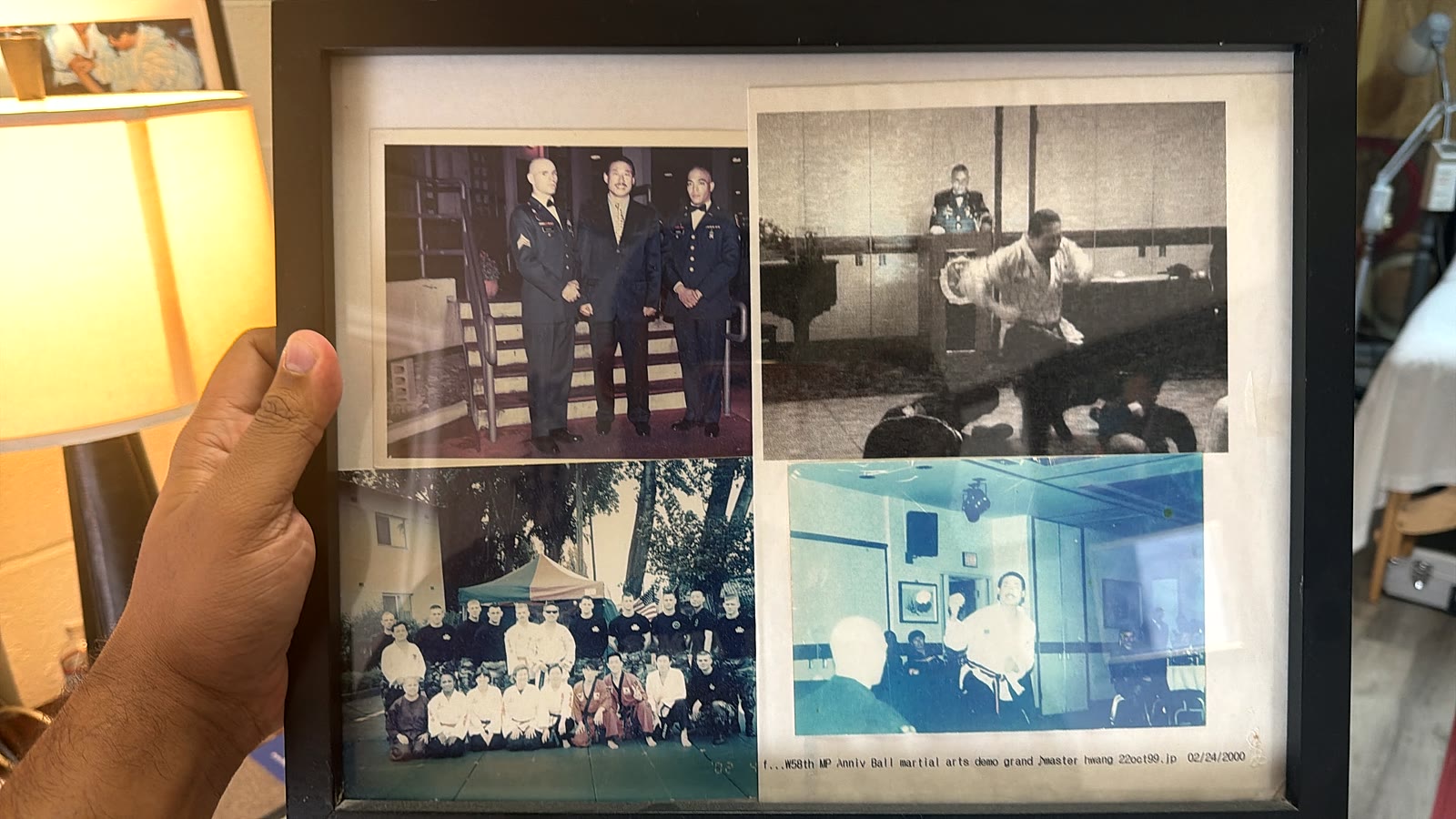
Grand Master Jong Yeon Hwang trained at the Korea Hapkido Headquarters Dojang from 1971 and holds 8th Dan Hapkido. He won Gold at the 10th Wushu World Cup in Milan in 2005 and received the President's Volunteer Service Award, a White House honor, in 2023.
KIMOO's verified background provides context for its martial arts heritage. Your own training should still be guided by direct instruction, clear boundaries, and honest reflection.
Frequently asked questions
What does self-regulation mean in martial arts?
It means noticing your attention, breathing, tension, and decisions, then making an appropriate adjustment during practice. It is a training habit, not a promise of constant calm.
Is self-regulation the same as meditation?
Not exactly. Martial arts self-regulation can include mindful attention, but it takes place within technical movement, partner drills, instructions, and practical decisions.
How can I train attention during a class?
Choose one cue, such as posture, foot position, breathing, or resetting. Focus on that detail until your instructor helps you connect it to another part of the exercise.
What should I do when a drill feels overwhelming?
Pause, communicate with your partner or instructor, and return to a slower or simpler version that has been approved. Do not force a movement or ignore a safety concern.
Does self-regulation guarantee better performance?
No. It can give you a more deliberate way to approach practice, but outcomes vary. Instruction, repetition, and appropriate progression remain important.
Which KIMOO programs can include attention training?
KIMOO offers Hapkido, Taekwondo, self-defence, and competition training. Ask the academy how attention and control fit the discipline you want to study. Ready to practise with purpose? Book a free trial class at KIMOO Martial Arts in Santa Clara, or call (408) 243-1001.
Train with a champion
Book your free trial class at KIMOO Martial Arts in Santa Clara and train under a World Cup gold medalist.
Keep reading