Training Tips
Martial Arts Goal Setting for More Purposeful Training
Martial arts goal setting gives your training a clear direction. Instead of arriving with a vague hope to get better, you can identify one skill, one question, and one behaviour to practise. Goals do not need to be dramatic to be useful. A precise target helps you notice details, communicate with your instructor, and make each session more intentional.
The strongest goals also stay honest. Martial arts development depends on instruction, practice, recovery, and context. A goal should guide your attention rather than promise a fixed result.
Start with the reason behind the goal
Before writing a target, ask why it matters. You might want to understand a Taekwondo combination, improve your balance during footwork, become more deliberate during partner drills, or explore self-defence principles. You may also be preparing for competition training or learning how Hapkido approaches movement.
The reason helps you choose a relevant action. If your goal is simply to be better, it is difficult to know what to do in class. If your goal is to keep a stable base while practising a specific movement, your attention has somewhere to go.
KIMOO Martial Arts in Santa Clara offers Hapkido, Taekwondo, self-defence, and competition training. Your goal should match the discipline and the kind of instruction you are receiving.
Choose one target at a time
A long list of goals can become a distraction. Select one primary focus for a training period, then keep one secondary question in reserve. For example, your focus might be maintaining posture through a basic sequence. Your question might be how to reset after the final movement.
A useful goal describes an action you can practise, not a label you hope to earn. Compare:
- I want to be better at Taekwondo.
- I will pay attention to my supporting foot during a specific movement and ask for one correction.
The second goal is narrower and easier to discuss. It does not guarantee improvement, but it gives you a practical way to participate in learning.
Turn broad intentions into observations
A goal becomes more useful when you can observe it. That does not require inventing a score or tracking statistics. You can note whether you remembered the instructor's cue, whether you returned to a ready position, or whether you kept your attention on the current drill.
Write down three elements before class:
1. The movement or training habit you want to examine. 2. The detail you will watch for. 3. The question you will ask if the detail is unclear.
After class, record what you understood and what needs more explanation. This creates a simple feedback loop. It also prevents you from judging a session only by how tired you feel.
Use instructor feedback as the reference point
Martial arts are technical disciplines, and an instructor's feedback provides context that self-evaluation cannot. You may think a movement feels correct while missing a detail in balance, timing, distance, or control. Invite a specific correction instead of asking only whether you did well.
Try questions such as:
- What is the first detail I should fix?
- Where should I reset after this movement?
- What should I notice when the pace increases?
- How can I practise this without losing control?
Listen to the answer and update your goal. Changing a target after receiving better information is not failure. It is a sign that your practice is responding to instruction.
Build goals around safe practice
A responsible goal includes boundaries. If you are working with a partner, your target might be communicating before contact, using a controlled pace, or pausing promptly when either person needs a reset. If you are practising a form, the target might be accuracy at a slower speed rather than intensity.
Never turn a goal into a reason to ignore discomfort, force a movement, or rush a technique you have not been taught. Ask for clarification and use the conditions your instructor provides. Safe training is not separate from progress. It is what allows learning to continue.
Self-defence goals deserve particular care. Focus on awareness, decision-making, communication, and seeking safety. Avoid goals based on overpowering a person or guaranteeing what will happen in a real incident.
Review without harsh self-judgment
At the end of a session, use a short review. What was the goal? What did you notice? What correction did you receive? What is the next small step? This approach gives you useful information without turning one class into a final verdict.
Some sessions will clarify a technique. Others may reveal a question you had not considered. Both are valuable. Keep the next goal connected to what you actually learned, and let your instructor help you choose an appropriate progression.
You can also distinguish between a practice goal and a long-term direction. Practising a stable stance today is a short-term action. Studying Taekwondo, Hapkido, self-defence, or competition training is a broader direction. Keeping both levels in view can make training feel purposeful without adding unnecessary pressure.
Learn from KIMOO's heritage
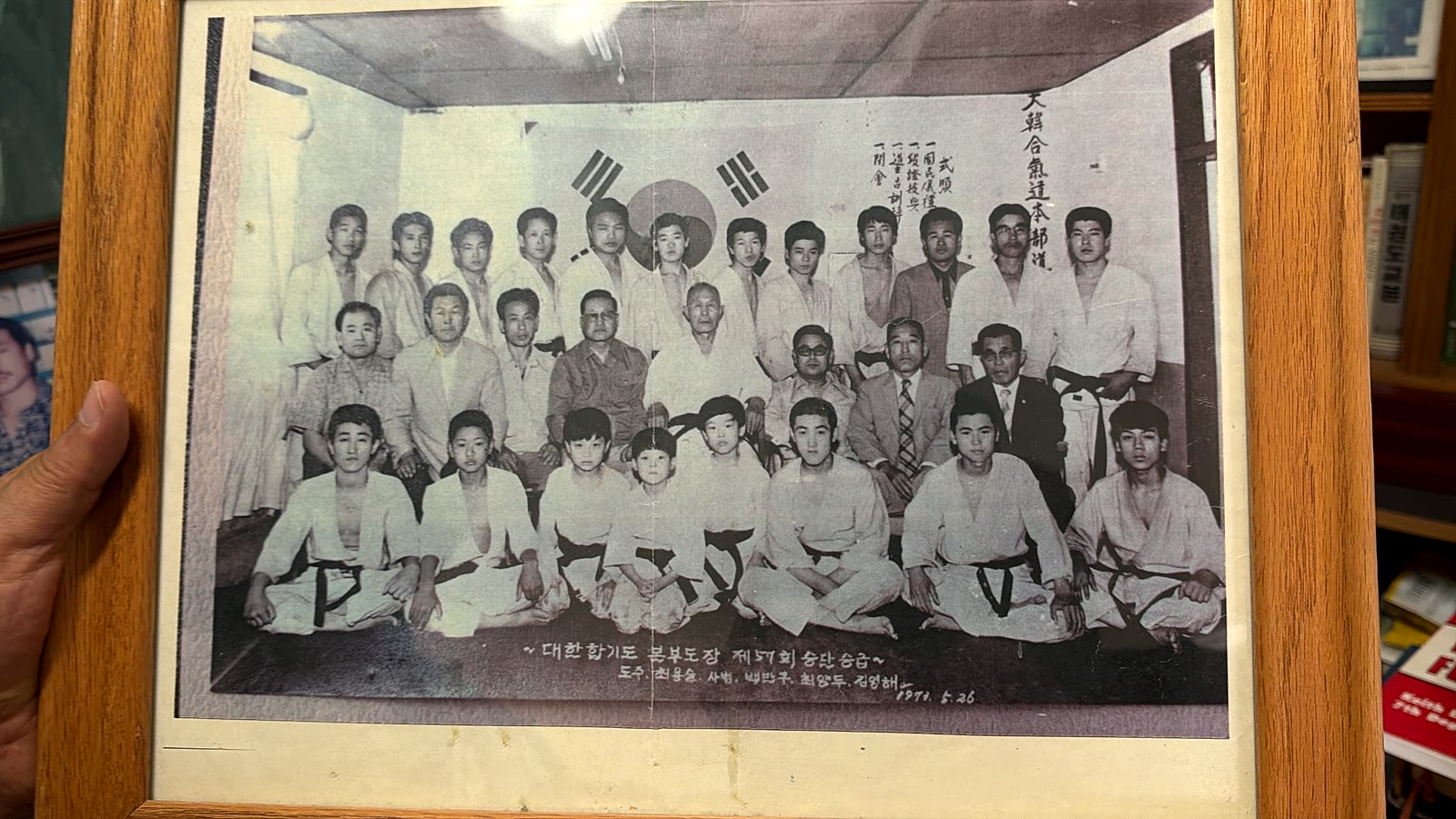
Grand Master Jong Yeon Hwang trained at the Korea Hapkido Headquarters Dojang from 1971 and holds 8th Dan Hapkido. He won Gold at the 10th Wushu World Cup in Milan in 2005 and received the President's Volunteer Service Award, a White House honor, in 2023.
KIMOO's verified history offers context, while your own goals shape how you engage with training. Bring thoughtful questions to the academy and let direct instruction guide your next step.
Frequently asked questions
What makes a martial arts goal useful?
A useful goal identifies a specific action or detail you can practise and observe. It should guide attention without promising a guaranteed outcome.
Should I set a different goal for every class?
Not necessarily. Keeping one goal across several sessions can help you notice details. Update it when instructor feedback gives you a clearer direction.
How can a beginner set a realistic goal?
Choose one basic movement, training habit, or question. Examples include listening for a posture correction, practising a controlled reset, or understanding the purpose of a drill.
Can goals include self-defence training?
Yes, but keep them grounded in awareness, communication, decision-making, and safety. Do not frame a goal as a promise to win or control a real confrontation.
What if I do not meet my goal in class?
Review what you learned and ask what to practise next. A session that reveals a correction or a better question can still move your training forward. Ready to train with clearer purpose? Book a free trial class at KIMOO Martial Arts in Santa Clara, or call (408) 243-1001.
Train with a champion
Book your free trial class at KIMOO Martial Arts in Santa Clara and train under a World Cup gold medalist.
Keep reading