Training Tips
Martial Arts Mental Rehearsal for More Focused Practice
Martial arts mental rehearsal is a quiet way to make practice more deliberate. It does not replace physical training, coaching, or safe partner work. Instead, it gives you a method for reviewing a movement, clarifying your intention, and returning to class with a sharper question. Used carefully, visualization can help you pay attention to the details that make a technique understandable.
What mental rehearsal is and is not
Mental rehearsal means calmly imagining a movement, sequence, or training decision without pretending that imagination is the same as execution. You picture the starting position, the direction of movement, the finish, and the reset. You can also rehearse listening for an instructor's key correction.
The purpose is not to create an unrealistic promise about performance. It is to organize your attention. If you cannot describe what you are trying to practise, visualization may reveal that you need a clearer explanation first.
Keep physical practice central. An imagined technique should be checked against qualified instruction before you try to increase speed, force, or complexity.
Choose one small skill
Begin with one manageable detail. You might choose a stance, a footwork pattern, a basic hand position, a controlled kick, or the first part of a sequence. Avoid trying to visualize an entire class at once.
Ask yourself three questions:
1. Where do I begin? 2. What is the most important action? 3. Where do I finish and reset?
If you cannot answer one of them, write down the question for your instructor. Mental rehearsal is most useful when it leads to clearer learning rather than confident guessing.
Use a slow, precise picture
Imagine the movement at a pace that lets you notice posture, balance, breathing, direction, and control. Do not rush through the picture because the movement looks simple. Technical details are easier to overlook when your imagined speed is too high.
Picture yourself receiving a correction and applying it. For example, you might imagine keeping a stable base, returning to a ready position, or maintaining awareness of distance. Keep the image practical and connected to what you actually learned.
If your visualization becomes vague, reduce the movement to an even smaller part. A clear beginning and finish are more valuable than an elaborate sequence you do not understand.
Rehearse attention, not just appearance
It is easy to imagine a movement as if you were watching a performance. A better approach includes the information you need while practising. Notice where your weight is, what your eyes are doing, how you communicate with a partner, and when you pause.
You can also imagine the moment something does not go perfectly. Rehearse returning to a safe position, listening for instruction, and asking for a reset. This keeps visualization connected to learning rather than to an idealized performance.
When reviewing a form or combination, picture the transitions between actions. Ask what changes in your stance, direction, or attention. The transition often deserves as much thought as the most recognizable movement.
Connect visualization to real instruction
Bring your mental notes into class. Tell the instructor which detail you reviewed and ask whether your understanding is accurate. This gives the instructor a useful starting point and prevents an imagined version from becoming a fixed habit.
KIMOO Martial Arts in Santa Clara offers Hapkido, Taekwondo, self-defence, and competition training. The same visualization principle can be adapted to different objectives, but the technical meaning of a movement belongs to its discipline and training context.
Do not combine techniques from different disciplines simply because they look similar. Ask how Hapkido and Taekwondo movements differ in purpose, distance, timing, or finish. Good instruction keeps variety connected to understanding.
Build a short rehearsal routine
A simple routine can take a few minutes. First, recall the instructor's main correction. Next, picture the movement slowly from your own perspective. Then, imagine the safe reset and one question to ask. Finish by deciding what you will observe during physical practice.
Keep your routine consistent enough to evaluate. If the image makes you tense or confused, stop and return to a simpler detail. Mental rehearsal should support calm attention, not create pressure.
You can record a brief note after physical practice: the skill, the correction, and the next step. Over time, this creates a practical learning record without inventing a score or promising a particular result.
Respect the difference between mind and body
Visualization has limits. It cannot tell you how a movement feels in your body, whether your balance is stable, or whether a partner can safely receive a drill. Those questions must be answered through supervised physical practice.
Move from imagination to action gradually. Start slowly, use the instruction you received, and stop if something feels wrong. Ask for clarification rather than forcing your imagined version onto a real training partner.
This balance keeps mental rehearsal useful. It prepares attention while allowing the instructor and the physical environment to provide the information imagination cannot provide.
Learn from KIMOO's martial arts heritage
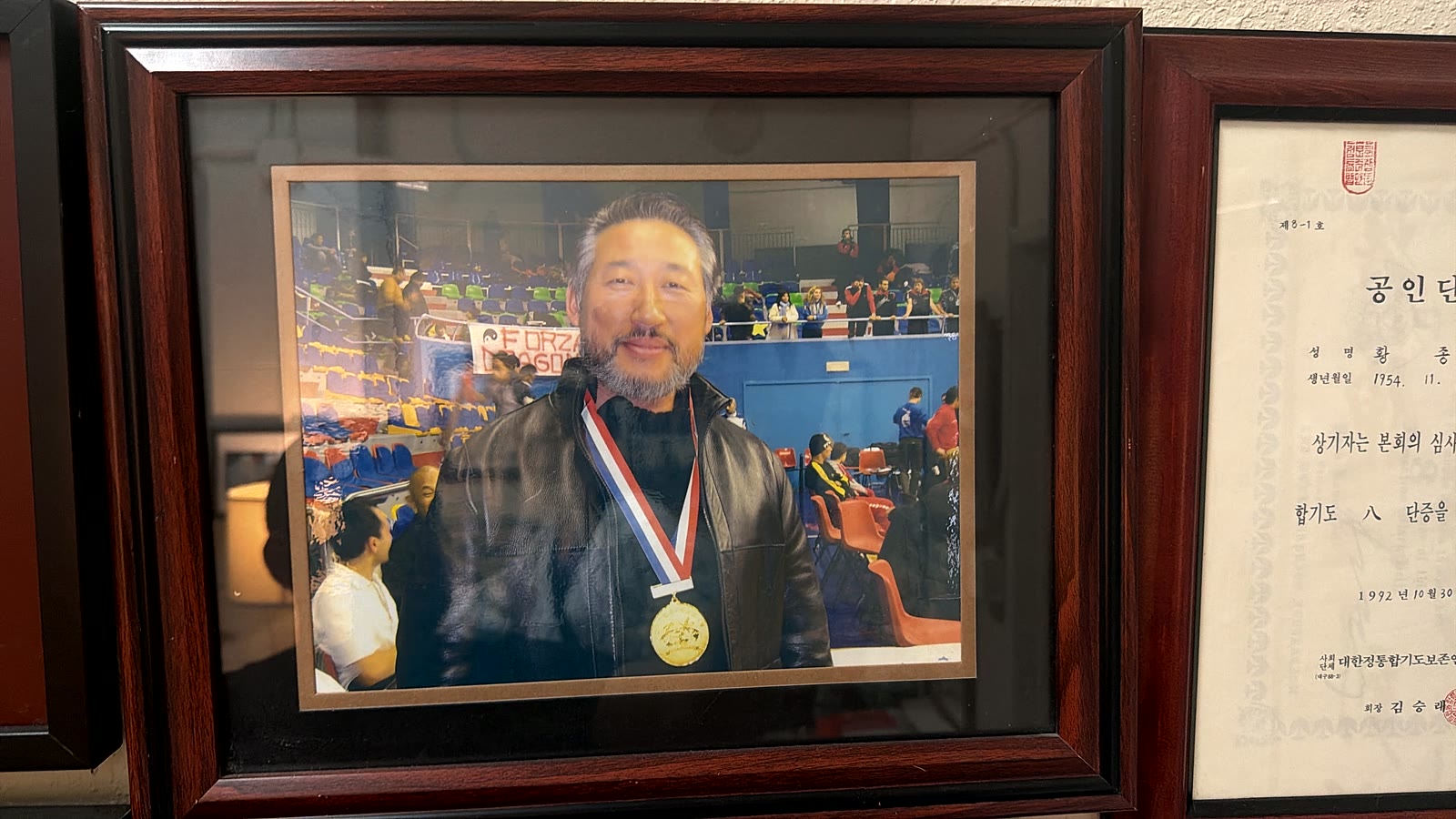
Grand Master Jong Yeon Hwang trained at the Korea Hapkido Headquarters Dojang from 1971 and holds 8th Dan Hapkido. He won Gold at the 10th Wushu World Cup in Milan in 2005. He also received the President's Volunteer Service Award, a White House honor, in 2023.
These verified facts describe part of KIMOO's heritage. Your own practice still grows through direct teaching, repetition, and respectful questions. Use mental rehearsal as a companion to that process.
Frequently asked questions
Does mental rehearsal replace physical martial arts practice?
No. It is a way to review attention and technique between sessions. Physical instruction is essential for checking balance, timing, safety, and partner communication.
What should I visualize first?
Choose one small skill you have been taught. Picture the starting position, key action, finish, and reset. Ask your instructor about anything you cannot describe clearly.
Can I visualize Hapkido and Taekwondo in the same way?
The general method can be similar, but each discipline gives movements its own purpose and context. Do not assume similar-looking techniques work identically.
How long should a rehearsal session be?
There is no required duration. A short, focused review is preferable to a long, vague session. Stop if you become tense or confused and seek clarification in class.
What if my imagined movement differs from what I learn in class?
Treat the instructor's correction as the reference point. Update your mental picture and practise the revised version slowly under appropriate guidance. Ready to make your training more deliberate? Book a free trial class at KIMOO Martial Arts in Santa Clara, or call (408) 243-1001.
Train with a champion
Book your free trial class at KIMOO Martial Arts in Santa Clara and train under a World Cup gold medalist.
Keep reading