Self-Defence
How to Choose Women's Self-Defence Classes in Santa Clara
Choosing women's self-defence classes in Santa Clara deserves more thought than selecting the first class that appears in a search. A valuable program should teach practical habits in a respectful environment, with instruction that is clear enough to understand and controlled enough to practise responsibly. The aim is not to promise that one technique solves every situation. It is to build awareness, decision-making, and disciplined responses through purposeful training.
Begin with the purpose of self-defence
Self-defence is broader than a set of physical techniques. It can include noticing surroundings, recognising when a situation feels unsafe, using a clear voice, creating space, and seeking help. Physical practice is one part of a larger approach to making thoughtful decisions under pressure.
Before visiting an academy, identify what you want to learn. You may be seeking an introduction to martial arts, a structured way to practise awareness, or a foundation in techniques connected with Hapkido. A clear goal helps you ask better questions and prevents a sales conversation from replacing an evaluation of the training itself.
KIMOO Martial Arts in Santa Clara offers Hapkido, Taekwondo, self-defence, and competition training. Discuss your goals with the academy and ask which introduction is appropriate for your interests.
Evaluate the instructor's teaching style
Observe how the instructor explains a movement or scenario. Strong teaching should identify the purpose of the exercise, demonstrate it clearly, and provide steps that a beginner can follow. Corrections should be specific, respectful, and focused on a useful adjustment.
Notice whether questions are welcomed. Self-defence practice can feel unfamiliar, so a student should be able to ask for an explanation, a slower demonstration, or a pause. A premium training culture maintains high standards without using embarrassment as motivation.
Ask how the instructor separates technical practice from claims about real-world outcomes. No academy can guarantee what happens in every encounter. Honest instruction explains what a drill develops and where its limits are.
Look for controlled, respectful practice
A self-defence class should make safety visible. Partner exercises need clear roles, agreed contact, a manageable pace, and an instruction to stop or reset. Students should not be encouraged to surprise one another, escalate force, or continue when something feels unsafe.
Pay attention to communication. Partners should be able to say that they need to slow down or repeat the explanation. The instructor should monitor practice and intervene when technique or intensity needs adjustment.
Control is a strength in training. A precise repetition teaches timing, distance, posture, and attention more reliably than a rushed display of power. This is especially important when learning a movement for the first time.
Ask about awareness and decision-making
Useful self-defence instruction does not begin and end with a physical response. Ask whether the class discusses awareness, boundaries, communication, de-escalation, and exit choices. These subjects can help a student think about options instead of reacting automatically.
You can also ask how scenarios are introduced. A responsible instructor should explain the learning objective, avoid unnecessary drama, and allow students to work within a controlled framework. If a scenario is uncomfortable, the student should know how to pause and speak with the instructor.
The goal is not to create fear. It is to develop calm attention and practical habits that support good decisions.
Compare disciplines and training goals
Different martial arts can offer different training experiences. Hapkido may appeal to someone interested in a Korean martial art and self-defence concepts. Taekwondo offers its own technical focus. Self-defence training may centre on awareness and controlled responses, while competition training has a performance-oriented purpose.
Ask what the class teaches rather than relying on the name alone. A trial class can help you see the pace, explanation, partner communication, and overall culture. You can then decide whether the instruction aligns with your goal.
Use a first visit to gather information
Prepare a short list of questions before visiting:
- How are new students introduced to self-defence practice?
- How are partner drills controlled and supervised?
- What should a student do if a movement causes discomfort or uncertainty?
- How are awareness and communication included in training?
- Which KIMOO discipline best matches my stated goal?
Pay attention to whether the answers are concrete. A thoughtful academy will explain its methods without inventing statistics, guarantees, or dramatic promises. You should leave with a clearer picture of the training environment.
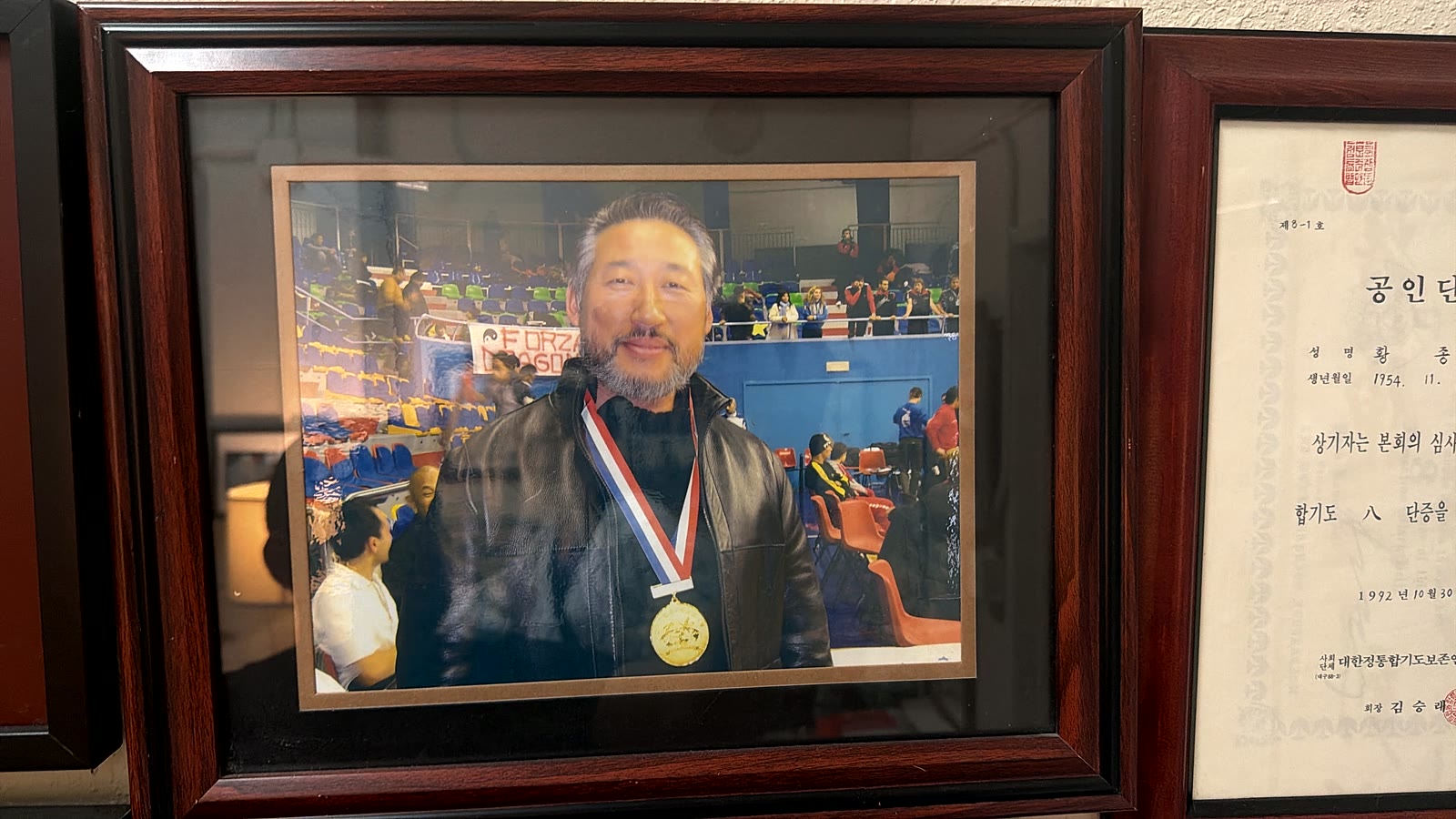
KIMOO's leadership includes Grand Master Jong Yeon Hwang, who trained at the Korea Hapkido Headquarters Dojang from 1971 and holds 8th Dan Hapkido. He won Gold at the 10th Wushu World Cup in Milan in 2005. KIMOO also received the President's Volunteer Service Award, a White House honor, in 2023.
Frequently asked questions
What should women's self-defence classes teach first?
A useful introduction can cover awareness, boundaries, communication, movement, and controlled practice. Ask the instructor how these ideas are combined with physical technique.
Is Hapkido a self-defence option?
Hapkido is one of the disciplines offered at KIMOO. Ask the instructor how Hapkido training connects with your goals and what a first lesson includes.
How can I judge whether a class is respectful?
Look for clear explanations, consent around partner practice, controlled contact, welcome questions, and corrections that focus on learning rather than embarrassment.
Can a beginner ask to modify an exercise?
You should tell the instructor about relevant concerns and ask for guidance. The instructor can explain whether a movement can be adjusted while preserving its learning purpose.
Does self-defence training guarantee safety?
No training can guarantee an outcome in every situation. Responsible instruction develops skills and habits while acknowledging the limits of any drill or technique. Ready to explore a focused and respectful approach to self-defence? Book a free trial class at KIMOO Martial Arts in Santa Clara, or call (408) 243-1001.
Train with a champion
Book your free trial class at KIMOO Martial Arts in Santa Clara and train under a World Cup gold medalist.
Keep reading