Why KIMOO
Martial Arts Lineage: What It Means and How to Check It
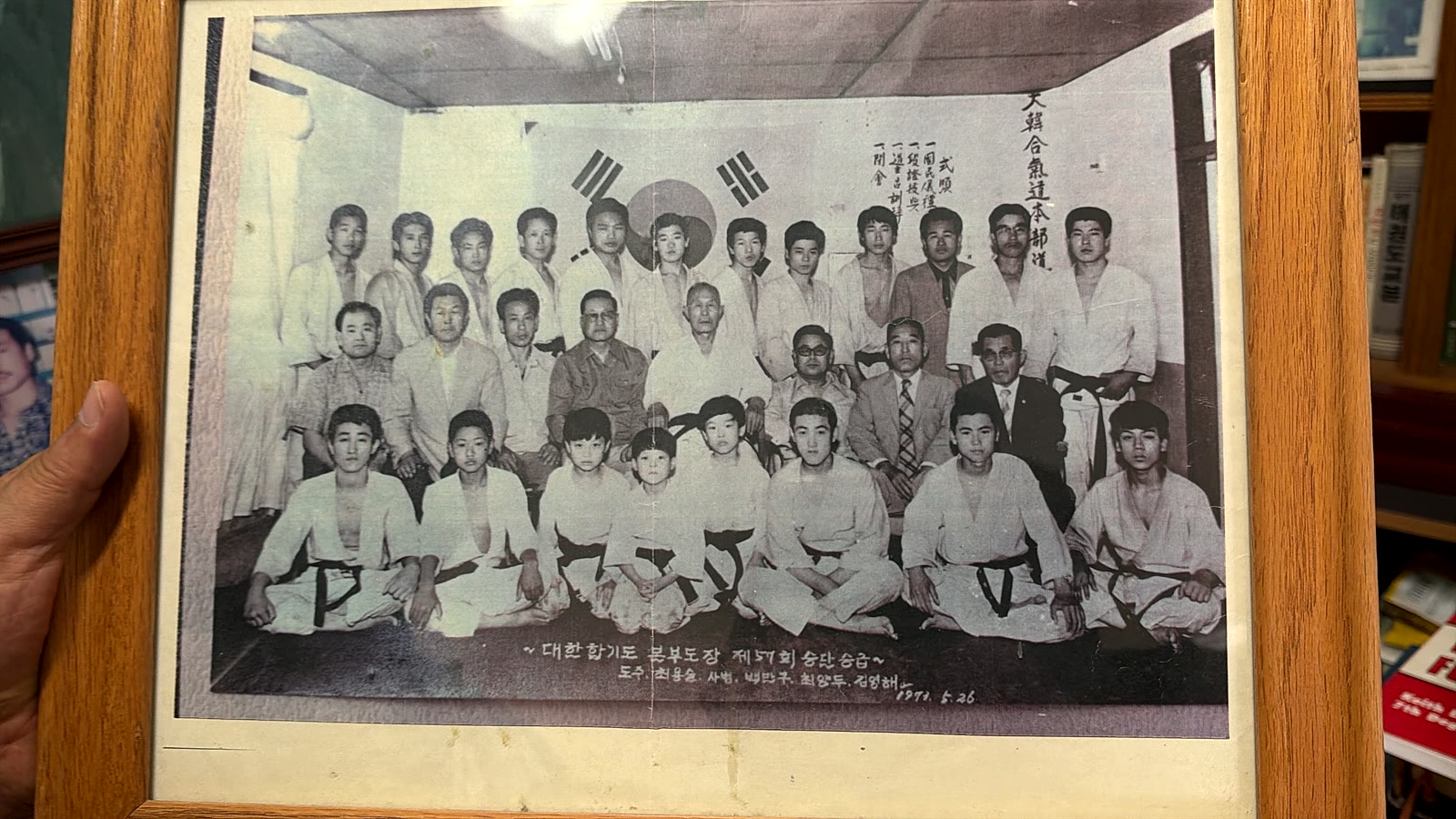
In an unregulated field, lineage is the credential that is hardest to fake — not because nobody tries, but because it is the only one with other people's memories attached.
It is also widely misunderstood, and worth explaining properly before you use it to judge a school.
What lineage actually is
Lineage is the chain of instruction: who taught your instructor, who taught them, and so on back to the people who developed the art.
It matters for a practical reason rather than a romantic one. Martial arts is transmitted by correction, not by documentation. A form written down is a sequence of positions; a form taught by someone who was corrected on it by the person who designed it carries information the notation does not — timing, emphasis, which details are structural and which are stylistic.
That is why a school's teaching history is informative in a way its certificates are not. Certificates say what someone was awarded. Lineage says where their understanding came from.
Why it is hard to fake
Certificates can be printed. Titles can be self-awarded — there is no authority preventing anyone from calling themselves a grandmaster, and plenty do. Competition records can be vague enough to be unfalsifiable.
Lineage is different because it names other people. Claiming to have trained at a particular dojang in a particular decade under particular teachers is a claim that other students from that time can contradict. In a small world — and the senior Korean martial arts world is small — that is a real constraint.
This does not make lineage claims automatically true. It makes them checkable, which is more than can be said for most of what goes on a dojang wall.
Be honest: the histories are genuinely disputed
Here is something most schools will not tell you, and it is important if you plan to verify anything.
The early organizational history of Hapkido is genuinely contested. Sources disagree about founding dates, which organizations were established when, who broke away from whom and what each body was called at the time. Multiple organizations were founded in the early 1970s with similar names, some in Seoul and some elsewhere, and the published accounts — mostly practitioner websites and encyclopedia entries — conflict with one another on specifics.
This is not evasion. It reflects a real situation: Hapkido never had a single unifying governing body in the way Taekwondo has Kukkiwon, which is a point we made in how to verify instructor credentials. Several federations claim legitimate descent, and several of those claims are reasonable.
What this means for you as a parent or student:
- Do not expect a single register to confirm a Hapkido lineage. It does not exist
- Be suspicious of anyone presenting Hapkido's history as settled and simple. The people who know it best are the most careful about it
- For Taekwondo, registration is checkable. Kukkiwon maintains verifiable records, and that is the right thing to check
- Treat confident internet histories with caution, including ones that flatter a school you like
How to check a lineage claim
Practical steps, in order of usefulness:
- Ask for specifics. Names of teachers, the dojang, the years. A genuine claim is specific; a fabricated one stays vague or retreats into grand language
- Verify the checkable parts. For Taekwondo, Kukkiwon registration. For competition claims, the event and year — a World Cup result is a matter of record
- Look for third-party recognition. Awards from governments, cities, military units and accrediting bodies are issued by organizations with their own records. These are harder to invent than a certificate
- Ask who else trained there. A real lineage has siblings. An instructor who cannot name contemporaries is worth a second thought
- Check how the claim is phrased. "Trained under X at Y from 1971" is a verifiable statement. "Descended from the ancient masters" is not a claim at all
What lineage does not tell you
This is the part schools with impressive histories tend to skip, so we will say it.
Lineage is not teaching ability. Some people with extraordinary pedigrees teach poorly. The skills are unrelated — one is about what you received, the other about what you can transmit. A school trading entirely on its founder's history, where the actual classes are mediocre, is using lineage as decoration.
Lineage is not the class your child attends. If the senior instructor's history is remarkable but your child is taught by an assistant on Tuesdays, the lineage is background rather than something you are buying. Ask who teaches the specific class.
Lineage is not safety or suitability. A fifty-year pedigree says nothing about whether the school supervises children properly or runs a sensible beginners programme.
So use lineage as one input. The more diagnostic question remains whether anyone ever fails a grading.
KIMOO's lineage, specifically
Ours is documented, and here it is in checkable form.
Our senior instruction traces to 1971, training at the Korea Hapkido Headquarters Dojang under its founding grand masters. From there:
- Certified 8th Dan in Hapkido
- Decorated by the U.S. Army's 728th Military Police Battalion for training American and Korean soldiers in Korea
- Gold medal, 10th Wushu World Cup, Milan, Italy, 2005 — a result on the competition record
- Appointed Commissioner of Martial Arts Science, 2005, through the American National Accreditation for Martial Arts School & College
- District 2 Business of the Year, City of Santa Clara, 2019
- President's Volunteer Service Award (Gold), 2023, signed by the President
Several of those are issued by bodies outside martial arts — a military unit, a city, the White House — which is the kind of recognition that is hardest to manufacture. The certificates are on display at the school, and you are welcome to examine them.
We will not tell you Hapkido's organizational history is simple, because it is not. We will tell you precisely where our training came from, and let you check it.
At KIMOO
KIMOO Martial Arts is at 2181 El Camino Real, Santa Clara, CA 95050. We teach Taekwondo and Hapkido to children, teens and adults.
Come and see for yourself — the wall, the class, and whether the teaching matches the history. Your first class is free, and enrolling includes a uniform and white belt at no cost. Call (408) 243-1001.
Frequently asked questions
What is martial arts lineage?
The chain of instruction behind a school: who taught the instructor, who taught them, and back to the art's originators. It matters because martial arts is transmitted through correction rather than documentation, so a teacher's own instruction shapes what they can pass on.
Why is lineage harder to fake than certificates?
Because it names other people. Claiming to have trained at a specific place in a specific decade under specific teachers can be contradicted by others who were there. Certificates and titles can be printed or self-awarded with nobody to object.
Can I verify a Hapkido lineage?
Not through a single register, because Hapkido has no one unifying governing body and its early organizational history is genuinely disputed across sources. Verify what is checkable — named teachers, dates, places, and third-party recognition — and be wary of anyone presenting that history as simple and settled.
How do I check a Taekwondo rank?
Taekwondo rank registered through Kukkiwon is verifiable through its records, which is the appropriate thing to check. Ask which body registered the rank and confirm directly with that body rather than through third-party sites.
Does a strong lineage mean good teaching?
No. Receiving excellent instruction and being able to transmit it are different skills, and they do not always appear together. A school trading on its founder's history while the actual classes are weak is using lineage as decoration. Watch a class.
What is the most reliable thing to check about a school?
Whether any student has ever been held back from a grading. A school where everyone passes on schedule is not assessing anyone, regardless of how impressive its history is. Lineage is useful context; grading standards are the test.
Where is KIMOO Martial Arts?
**2181 El Camino Real, Santa Clara, CA 95050.** Call **(408) 243-1001** to visit, examine the certificates and book a free trial class.
Train with a champion
Book your free trial class at KIMOO Martial Arts in Santa Clara and train under a World Cup gold medalist.
Keep reading