Kids & Family
Teaching a Child to Lose Well
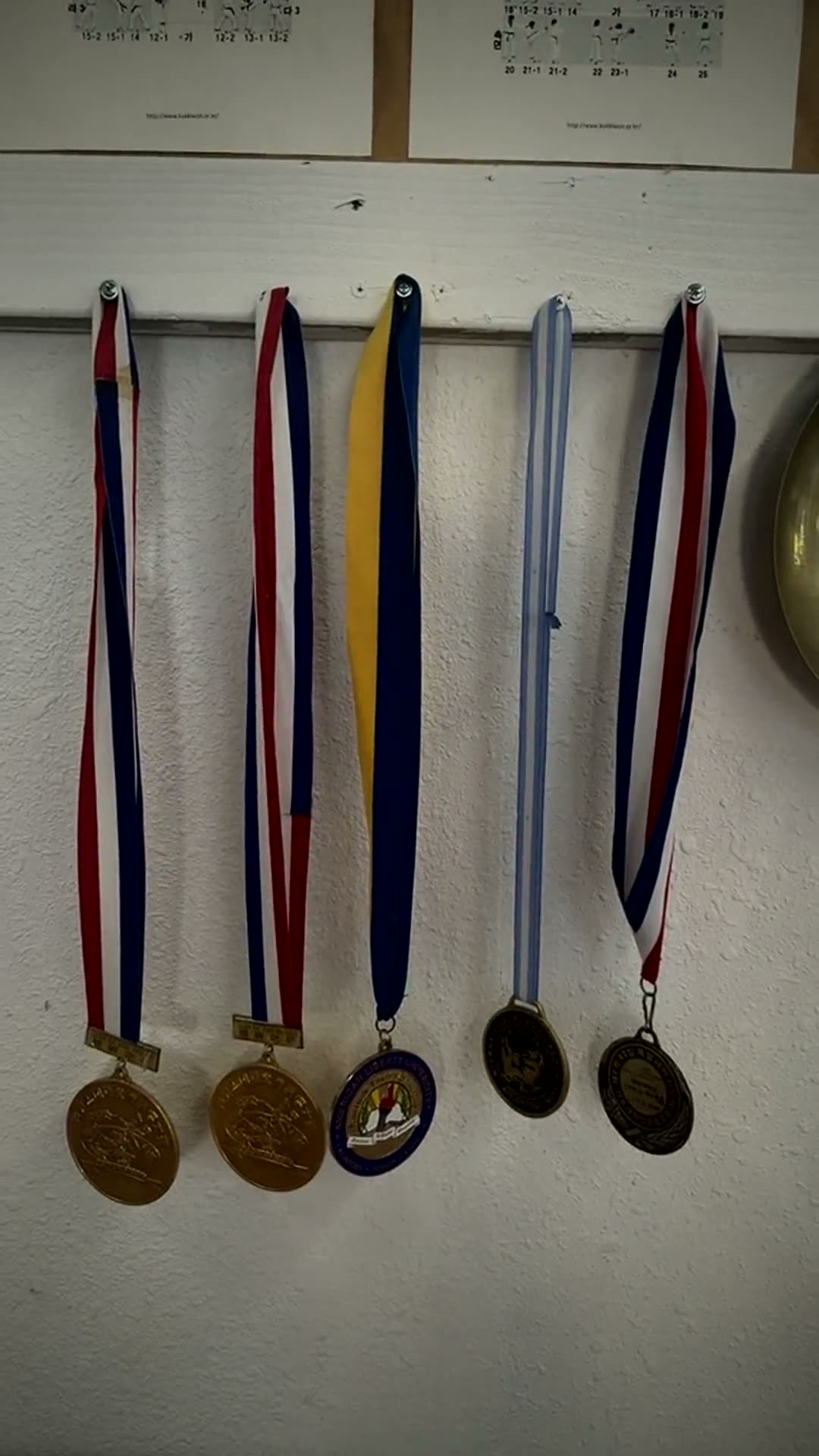
Every martial arts school makes some version of the claim that training builds resilience. It is usually asserted rather than explained, which is a shame, because there is a body of research here that is unusually practical.
The short version: children do not learn to handle losing simply by losing. They learn it from how the adults around them define what success is. And that definition is something you and the instructor control.
The two ways to define success
Achievement goal theory distinguishes two orientations a child can hold.
Task orientation (also called mastery orientation) defines success as improvement against your own previous standard. Did I do this better than last month? Did I learn something?
Ego orientation defines success as favourable comparison with others. Did I beat them? Am I the best in the class?
Both exist in every child to some degree, and neither is purely good or bad. What matters is which one dominates, because they produce very different responses to failure.
What the research found
Fear of failure tracks the climate, not the child. A study of 336 male players across five team sports found that a mastery climate had a low association with fear of failure, while an ego climate was strongly related to it. Related work found that parental mastery-oriented and autonomy-supportive climates were negatively associated with fear of failure.
That is the finding worth sitting with. A child who defines success as being better than other people has to fear failure, because the outcome is partly outside their control and the comparison never ends. A child who defines success as improvement has much less to fear, because improvement is available after a loss — in fact, that is usually when it is most available.
Children inherit their parents' orientation. A study of 319 athletes aged 7 to 18 found that children higher in task orientation tended to perceive their significant parent as higher in task orientation, and the same correspondence held for ego orientation. This is not a finding about what parents say. It is about what they ask about.
Pressure costs enjoyment. Research reviewed in the youth sport literature found that as parental pressure rose, children's enjoyment and satisfaction fell, and noted that even well-intentioned disappointment after a poor performance can undercut a child's motivation. A dissertation study of boys and girls found task orientation was the strongest predictor of enjoyment for girls, and that lower parental pressure related to intention to continue.
And it affects how they respond to setbacks. The theoretical account is that task-oriented athletes read an objective failure as information — a signal to revise strategy — rather than as a verdict on their ability, which supports continued effort after a setback.
Caveats worth stating: much of this is cross-sectional, self-reported, and drawn from team sports, with the samples skewing male in the fear-of-failure work. The pattern is consistent across studies, but these are associations.
What this means in practice
The mechanism is not a conversation you have after a loss. It is the question you habitually ask.
The question that builds ego orientation: Did you win? What place did you come? Who did you beat?
The question that builds task orientation: What did you do better than last time? What was the hardest part? What are you going to work on?
A child answers the second kind of question honestly and without defensiveness, because there is no bad answer. And over hundreds of small repetitions, the question you ask becomes the thing they measure themselves by.
The hardest part of this for parents is that the ego-oriented question is the natural one. It is what you ask because you are interested, and it is what everyone else asks. Changing it takes deliberate effort for a few months.
Where martial arts has a structural advantage
Martial arts is better positioned for this than most youth activities, for one specific reason: the primary progression system is not competitive.
A belt is a mastery measure. You do not earn it by beating other people; you earn it by demonstrating a standard against a syllabus. A nine-year-old can be the slowest child in the class and still grade, because grading asks whether they have met the requirement.
This is a genuine advantage and we should also be honest about where it breaks down. Belts become ego-oriented the moment children start comparing whose is higher, which they will. The syllabus is a mastery structure; the social dynamics around it are not automatically one. Our article on belt testing covers what the grading itself asks.
The second structural advantage is sparring, if it is taught well. A child spars, loses an exchange, and then spars again two minutes later. The loss is immediately followed by another attempt, which is a much healthier rhythm than a weekly fixture where a loss has seven days to sit.
Competition, which cuts both ways
Tournaments are the most ego-oriented part of the activity, by design. One person wins a division.
That does not make them bad. It makes them a tool with a specific risk, and the risk is concentrated in how the adults handle the drive home.
What seems to work: decide what success looks like before you go, and make it something the child controls. Doing the technique you have been working on. Competing in a division above your experience level. Not stopping when you are behind. Then on the way home, ask about that thing, not about the result.
What does not work: deciding afterwards that it was "a good experience" when every question in the car was about the medal. Children detect this instantly.
If your child is heading to a first tournament, what to expect sets the practical expectations, most of which involve waiting.
The thing that takes years
Here is the honest limit of this article. Reframing how you ask about class will not produce a child who handles losing gracefully next month. Achievement orientation is built over years, and it is competing with school, with peers, and with every other adult who asks who won.
What you can do is be the most consistent voice they have on it. Over a decade of training, that is a substantial amount of repetition — and it is the part of "martial arts builds resilience" that is actually doing the work.
At KIMOO
We teach children in Santa Clara at 2181 El Camino Real, Santa Clara, CA 95050, under a Grand Master certified 8th Dan in Hapkido who trained at the Korea Hapkido Headquarters Dojang. The school received the City of Santa Clara District 2 Business of the Year award in 2019, and our Grand Master received the President's Volunteer Service Award in 2023.
Competition is available to students who want it and is not required of anyone. The progression that matters is the syllabus. Call (408) 243-1001 for children's class times and to book a free trial class.
Frequently asked questions
How do I teach my child to lose well?
Change what you habitually ask about. Research on achievement goals finds that an ego-oriented climate — defining success as beating others — is strongly associated with fear of failure, while a mastery climate, defining success as improving on your own previous standard, is only weakly associated with it. Ask what they did better than last time rather than who they beat.
Does martial arts help children cope with failure?
It has a structural advantage, in that the main progression system is a graded syllabus rather than a competition. A child earns a belt by meeting a standard, not by beating other children. Whether that advantage is realised depends on how the adults frame it, since belts become competitive the moment children compare them.
My child is a bad loser. Is that normal?
It is common, and it usually reflects an ego-oriented definition of success rather than a character trait. A child whose measure of success is comparison with others has a genuine reason to fear losing, because the comparison is partly outside their control. Changing the measure changes the reaction, over months rather than days.
Should my child compete in tournaments?
Only if they want to, and with success defined before you go. Tournaments are the most comparison-oriented part of the activity by design. Setting a goal the child controls — executing a specific technique, not stopping when behind — gives them something achievable regardless of the result.
Does parental pressure actually hurt?
The research says so. Reviews of youth sport have found that rising parental pressure accompanied falling enjoyment and satisfaction, and that lower parental pressure related to intention to continue. Visible disappointment after a poor performance, even when well-meant, appears to undercut motivation.
What should I say on the drive home after a loss?
Ask about the thing you agreed on beforehand. What was the hardest part, what did they do better than last time, what do they want to work on. Avoid both consolation that implies the result mattered enormously and analysis of what went wrong; a child who lost already knows.
Where can my child train martial arts in Santa Clara?
KIMOO Martial Arts, **2181 El Camino Real, Santa Clara, CA 95050**. Call **(408) 243-1001** for children's class times and to book a free trial class. Competition is optional. New students receive a free uniform and white belt on enrolment.
Train with a champion
Book your free trial class at KIMOO Martial Arts in Santa Clara and train under a World Cup gold medalist.
Keep reading