Choosing a Dojo
What You Are Actually Paying a Martial Arts Instructor For
If you think of martial arts tuition as buying access to a building and a schedule, it looks expensive. A gym costs less and is open longer.
But that is not what you are buying, and understanding what you are buying is the difference between choosing a school well and choosing one badly.
You are paying for correction
Here is the thing that separates martial arts from almost anything else you could spend that money on: you cannot see yourself.
You cannot see that your rear heel lifts on a turning kick. You cannot feel that your guard drops two inches every time you exhale. You can film yourself, and you still will not know which of the fifteen things visible in that video is the one actually costing you power — because identifying that requires knowing what to look for.
That is the product. Someone who has watched ten thousand people make the same mistake, who can see yours in three repetitions, and who knows which single correction will fix four other problems downstream.
Everything else a school sells — the building, the uniform, the grading structure, the belt — is packaging around that.
What the research says about feedback
Motor learning research is reasonably clear that expert feedback helps, and it is also clear about something less obvious: more feedback is not simply better.
Reviews of feedback frequency describe an inverted-U pattern. Too little feedback and errors become habits. Too much and the learner becomes dependent on it, performing well while being watched and poorly when not. The practical guidance that emerges is to give frequent feedback early, while correct patterns are being established, then deliberately reduce it so the student develops independence.
That pattern is worth knowing because it tells you what good teaching looks like from the outside. An instructor correcting a white belt constantly and a green belt rarely is not neglecting the green belt. That is the method working.
It also explains why a beginner is the student who most needs attention — and why the first months are the worst time to be in an overcrowded class.
Which is why class size is the number that matters
If what you are buying is correction, then the supply of it is finite. One instructor has one pair of eyes and one hour.
The arithmetic is unforgiving. In an hour-long class of ten, there is time for an instructor to watch each student properly several times. In a class of forty, there is not — not because the instructor is lazy, but because the hour does not contain it. A student in that class gets group instruction and occasional luck.
This is why a school at half the price with four times the students has not given you a discount. It has sold you a quarter of the product. We make the same point in why the cheapest school often costs more, and it is worth asking directly: how many students are in the class I would actually join? Not the school's total enrolment. That specific class, on that specific evening.
Our guide to what to ask about class size covers the conversation in more detail.
And why who teaches it matters more than who owns it
A great deal of martial arts marketing is built on a senior name. The founder's rank, competition record and certificates go on the wall, and they may be entirely genuine.
The question is whether that person teaches the class your child attends on Tuesday at 5pm.
In many schools the answer is no. Classes are run by junior assistants or teenage students following a lesson plan. That can be fine — a well-supervised assistant teaching basics to beginners is a reasonable model. But it is not what the wall suggests you are buying, and the difference shows up in how precisely errors get spotted.
Ask plainly: who teaches this class, what is their rank, and how long have they taught? A school with nothing to hide answers with a name. Our guide to verifying credentials explains how to check what you are told.
What a good instructor actually does
Watch for these in a trial class. They are observable in forty minutes:
- Corrects individuals by name, rather than only addressing the room
- Gives one correction at a time. A student told four things fixes none. An instructor who understands learning picks the error that matters most and lets the rest wait
- Explains why, not just what. "Turn the hip" is an instruction. "Turn the hip, or the kick has only your leg behind it instead of your body" is teaching
- Scales to the person. The same drill looks different for a nine-year-old, a stiff forty-five-year-old and a competitive teenager. An instructor who runs one version for everyone is running a class, not teaching one
- Watches when not talking. An instructor demonstrating constantly is performing. One standing still and watching students work is assessing
- Is willing to hold someone back. If nobody ever fails a grading, nobody is being assessed. See belt testing fees
The honest limit of what tuition buys
It is worth being clear about what an instructor cannot sell you.
They cannot make you train. The research on feedback assumes a student who attends and repeats; nobody can correct a technique you do not perform. Two sessions a week of your own effort is the raw material an instructor works with, and without it the best teaching in the world produces nothing. That is why training frequency matters more than almost any other variable.
They also cannot compress time. Skill accrues at the pace it accrues, and a school promising otherwise is selling rank rather than ability — which is the whole argument in what a black belt actually costs.
At KIMOO
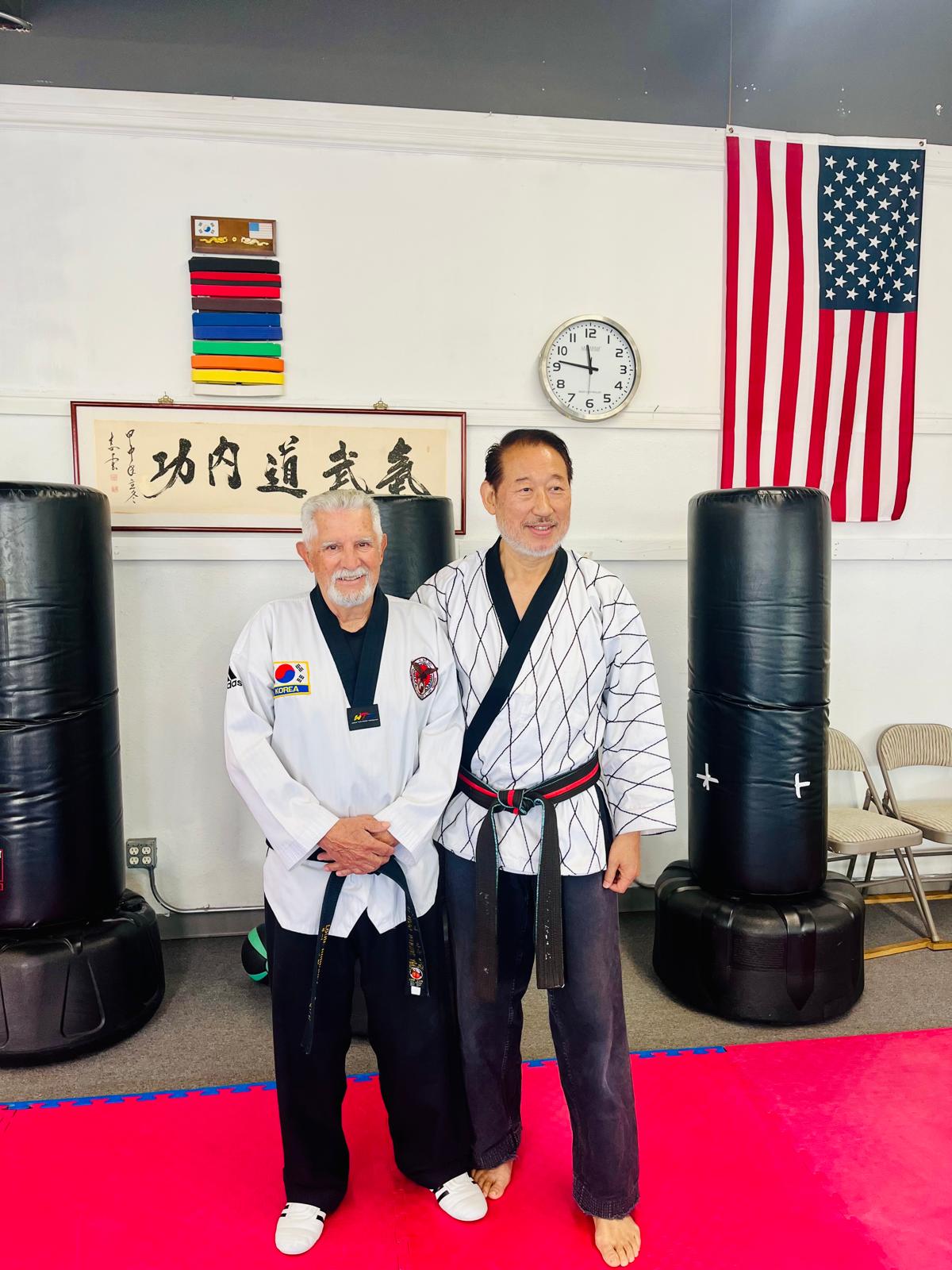
KIMOO Martial Arts is at 2181 El Camino Real, Santa Clara, CA 95050. Our classes are taught by qualified instructors, and our senior instruction comes from a lineage trained at the Korea Hapkido Headquarters Dojang from 1971 — more than five decades of watching people make the same mistakes and learning which correction fixes them.
Come and watch a class before you decide anything. Your first class is free, and enrolling includes a uniform and white belt at no cost. Call (408) 243-1001 and ask us how many students are in the class you would join, and who teaches it. Those are the right questions.
Frequently asked questions
What am I actually paying for in martial arts classes?
Correction. You cannot see your own technique, and you cannot reliably identify which of several visible faults is the one limiting you. An experienced instructor can, in a handful of repetitions. The building, schedule and belt system are packaging around that.
Does class size really matter in martial arts?
Yes, because correction is the product and it is finite. An hour-long class of ten allows an instructor to watch each student properly several times. A class of forty does not — the hour simply does not contain it. Ask how many students are in the specific class you would join.
Is more feedback from an instructor always better?
No. Motor learning research describes an inverted-U pattern: too little feedback lets errors become habits, while too much creates dependence, so students perform well when watched and poorly when not. Good practice is frequent feedback early, then deliberately reduced as the student develops independence.
How do I know if an instructor is good?
Watch a class. Good instructors correct individuals by name, give one correction at a time rather than four, explain why a change matters, scale drills to the person in front of them, and spend time watching rather than demonstrating. They are also willing to hold a student back from promotion.
Does the head instructor teach every class?
Often not, and you should ask. Many schools market a senior name while classes are run by junior assistants. A supervised assistant teaching beginners can work well, but it is not what the certificates on the wall imply. Ask who teaches the specific class, their rank, and how long they have taught.
Can a good instructor make me progress faster?
Up to a point. A good instructor removes wasted effort and prevents habits that take months to undo. What they cannot do is train for you or compress the time skill takes to accrue. Any school promising an unusually fast path to rank is selling the rank, not the ability.
Where is KIMOO Martial Arts?
**2181 El Camino Real, Santa Clara, CA 95050.** Call **(408) 243-1001** for class times, class sizes and to book a free trial class.
Train with a champion
Book your free trial class at KIMOO Martial Arts in Santa Clara and train under a World Cup gold medalist.
Keep reading