Self-Defence
Protecting Your Joints in a Joint-Lock Art
If you are considering an art built on joint locks — Hapkido, judo, jiu-jitsu — the reasonable question is what the actual injury risk is to the joints being locked, and whether training is wise in the long term.
The data gives a clearer answer than you might expect, and it is more reassuring than the concept sounds. But we should start with what the data does not cover.
What the evidence does and does not exist for
There is no hapkido-specific injury epidemiology that we can find. We looked. If it exists, it is not in the accessible literature. So anyone citing a hapkido injury rate to you is either reading across from other arts or making it up.
What does exist is good data on Brazilian jiu-jitsu and judo — arts that also rely on joint locks, applied to resisting partners, at competitive intensity. Reading across is reasonable, with the caveat that competition data overstates risk in a traditional training setting, usually by a wide margin.
Where the risk actually sits
The elbow, by hyperextension, from the arm bar.
- A study of 951 athletes at the 2009 World No-Gi Championship found the elbow and knee had the highest joint injury incidence, both at 7.5 injuries per 1,000 athlete-exposures. The same study found no meaningful difference in joint injury risk across belt ranks.
- A Hawaii tournament study covering 2005 to 2011 identified the elbow as the most commonly injured joint, with the arm bar the usual mechanism. Researchers have described the arm bar as a distinct hyperextension mechanism of elbow injury.
- That same comparison found BJJ competitors at substantially lower risk of injury than competitors in judo, taekwondo, wrestling and mixed martial arts.
- A European Judo Championships registry spanning 2005 to 2020 found the knee, shoulder and elbow the most common injury sites, with a higher proportion of elbow injuries in women. Wrist injuries were 2.2% of cases. In judo, posterior elbow dislocation and ulnar collateral ligament injury are the most common acute elbow injuries, and arm lock techniques are a frequent cause of acute UCL injury.
Two things stand out.
The wrist is not the problem. Most people new to joint-lock arts worry about their wrists, because wrist locks are the visually alarming part. In the judo registry, wrists were 2.2% of injuries. The wrist has a short range before pain arrives, which means the warning comes early and loudly. The elbow is the dangerous one precisely because it can be taken further before the signal is unmistakable.
Belt rank did not predict joint injury. That finding cuts against the intuition that beginners get hurt more. In practice beginners get hurt in a different way — they do not recognise a lock early enough — while advanced practitioners get hurt resisting longer.
What actually keeps the risk low
The safety rules in a joint-lock art are not arbitrary etiquette. Each maps onto the mechanism above.
Tap early, and tap loudly. The tap is not a surrender in a competition; in training it is the brake on the entire system. The instinct to hold on one second longer is the instinct that produces a UCL injury. There is no situation in training where tapping late is a good outcome.
Tap with a sound if your hands are trapped. Tap the mat, tap your partner, say it out loud, stamp a foot. A tap you cannot deliver protects nobody, which is why verbal tapping is taught.
Apply slowly, always. A lock applied gradually gives your partner time to tap. A lock applied explosively removes the interval in which the safety mechanism works. Speed in applying locks is the single most common thing a good instructor will stop a student from doing.
Release instantly. Not "ease off" — release. The gap between tap and release is where injuries happen.
Never resist a lock that is already on. This is the advanced practitioner's injury. Escapes happen before a lock is set, not after. Once it is set, the options are tap or get hurt.
Say it when something is pre-existing. A previously injured elbow or a hypermobile joint changes how a lock should be applied to you. The instructor cannot see it.
Hypermobility, which deserves its own note
If your joints move further than most people's, joint-lock training needs a specific adjustment, because the usual pain signal arrives later in your range. The protective warning you are relying on comes correspondingly late.
The practical consequence is that you tap on position, not on pain — when the lock is on, not when it starts to hurt. Tell your instructor and your training partners, because a partner applying a lock to a hypermobile joint can pass the safe range while still feeling plenty of room.
The longer-term question
Does decades of joint-lock training wear out the joints? We do not know, honestly. The longitudinal data to answer that is not there, and we are not going to assert either answer.
What is reasonable to say is that training intensity is the variable you control. The competition data above comes from people going at full resistance against strangers trying to win. Traditional class training, applied slowly, with cooperative partners and immediate release, is a different activity. The ratio between competition and training injury rates in martial arts generally runs several-fold, and in karate the reported figures were 15.34 injuries per 1,000 exposures in training against 106.6 in competition — roughly sevenfold. We covered that in martial arts injury rates.
Competition is opt-in. That is not a marketing line; it is the main lever on your injury risk.
At KIMOO
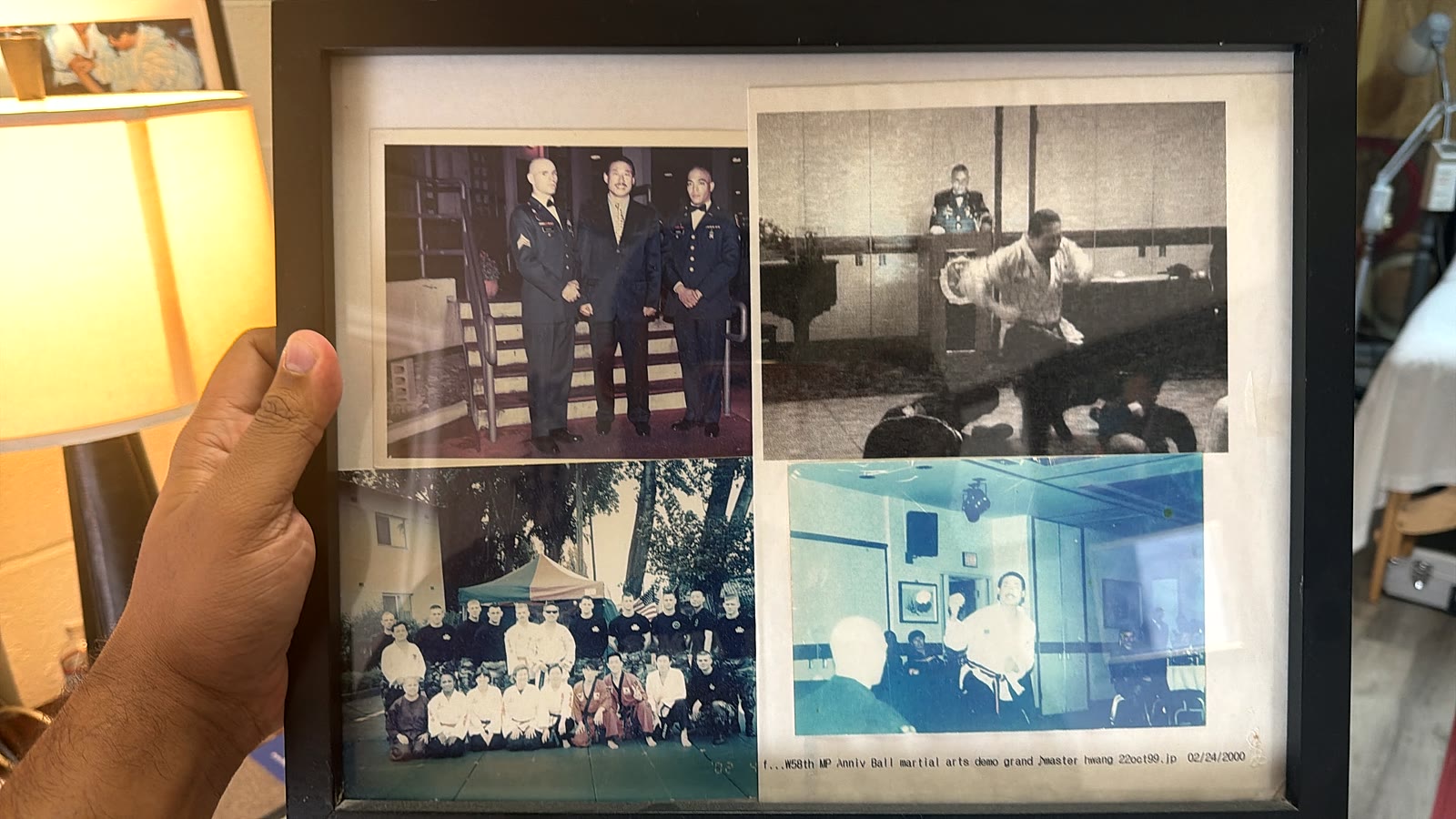
Hapkido is a joint-locking art and it is taught in Santa Clara at 2181 El Camino Real, Santa Clara, CA 95050 by a Grand Master certified 8th Dan in Hapkido, who trained at the Korea Hapkido Headquarters Dojang — the birthplace of the art — under its founding grand masters, and who was decorated by the U.S. Army's 728th Military Police Battalion for training American and Korean soldiers.
Who teaches a joint-lock art matters more than in most activities, because the margin for error is held by the instructor's judgement about how fast a technique may be applied and how quickly a class is progressed. More on the art itself in Hapkido self-defence.
Call (408) 243-1001 for class times and to book a free trial class. Tell us about any previous joint injury when you arrive.
Frequently asked questions
Are joint locks dangerous to train?
The risk is concentrated in one joint and one mechanism. Competition data from Brazilian jiu-jitsu found the elbow and knee at the highest joint injury incidence, both 7.5 per 1,000 athlete-exposures, with the arm bar the usual elbow mechanism. The same comparison found BJJ competitors at substantially lower risk than judo, taekwondo, wrestling and MMA competitors. Training applied slowly, with immediate release on a tap, is a different risk profile again.
Will joint locks damage my wrists?
Much less than people expect. In a European Judo Championships registry covering 2005 to 2020, wrist injuries were 2.2% of cases. The wrist has a short range before pain arrives, so the warning comes early. The elbow carries more risk because it can be taken further before the signal is unmistakable.
What is tapping out and why does it matter?
Tapping is the signal to release a technique immediately, and in training it is the entire safety mechanism rather than an admission of defeat. Tap early, tap audibly if your hands are trapped, and expect instant release. Holding on one second longer is how ligament injuries happen.
Do beginners get injured more in joint-lock arts?
A study of 951 competitors found no meaningful difference in joint injury risk across belt ranks. The pattern differs rather than the rate: beginners miss a lock going on, while experienced practitioners get hurt by resisting a lock already set.
What is the injury rate for Hapkido?
We could not find hapkido-specific injury epidemiology in the accessible literature. Anyone quoting one is reading across from judo or jiu-jitsu data, or inventing it. The judo and BJJ data is the closest honest proxy.
I am hypermobile. Can I train joint locks?
Yes, with a specific adjustment and after telling your instructor and partners. Because your pain signal arrives later in your range, tap on position rather than pain — when the lock is on, not when it starts hurting. A partner can pass your safe range while still feeling room to move.
Where can I learn Hapkido in Santa Clara?
KIMOO Martial Arts, **2181 El Camino Real, Santa Clara, CA 95050**, under a certified 8th Dan who trained at the Korea Hapkido Headquarters Dojang. Call **(408) 243-1001** for class times and to book a free trial class.
Train with a champion
Book your free trial class at KIMOO Martial Arts in Santa Clara and train under a World Cup gold medalist.
Keep reading