Adult Program
Starting Martial Arts at 40, 50 or 60: Is There an Age Limit?
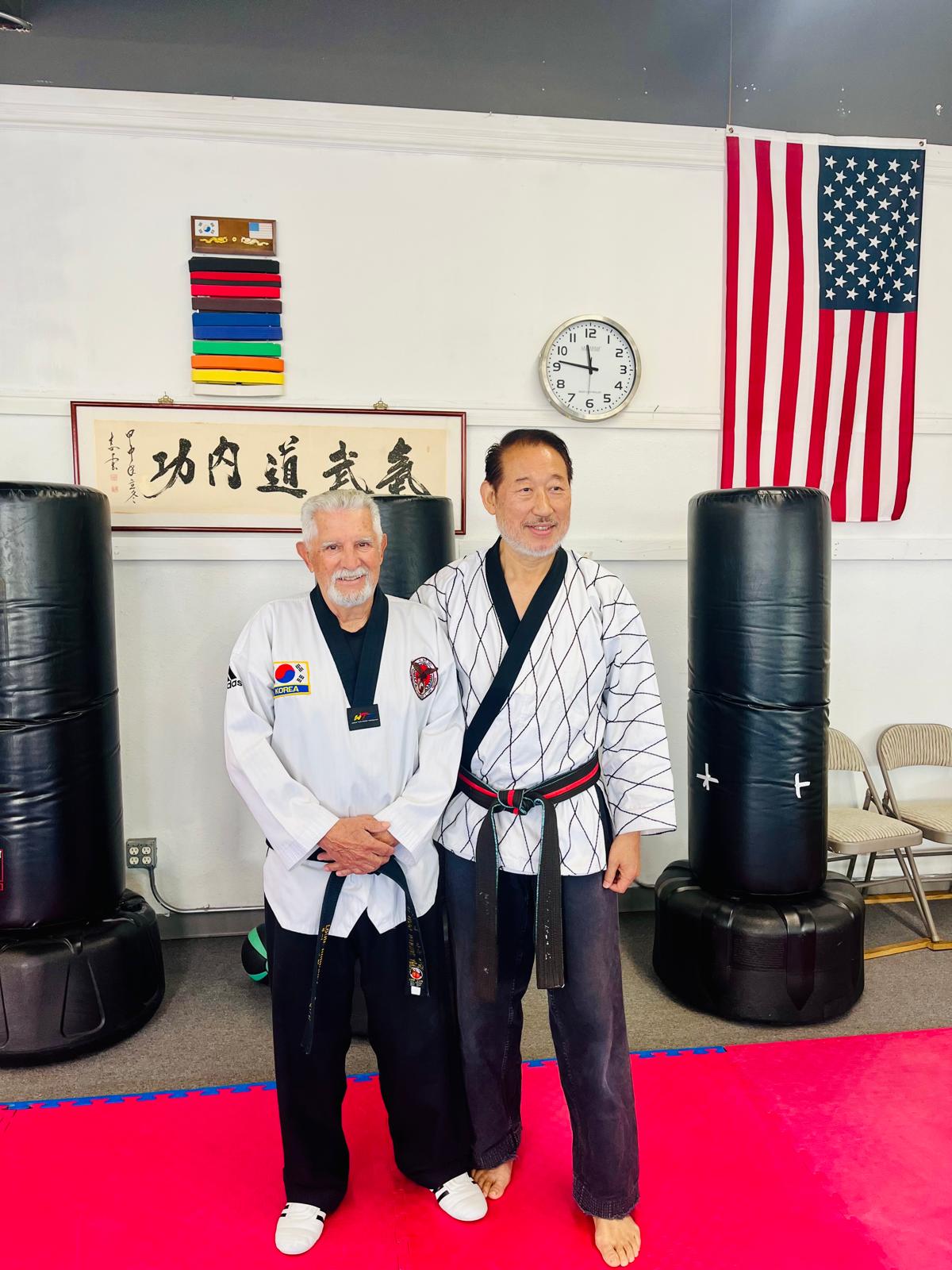
The short answer is no, there is no age limit, and adults in their forties, fifties and sixties begin martial arts regularly and successfully.
The longer answer is more useful, because it involves being honest about what the evidence does and does not support — including some very popular numbers that do not hold up.
First, the statistics you should ignore
If you search this topic you will encounter confident figures: martial arts reduces fall risk by 24%, or by 60%, attributed to landmark studies.
We could not trace those figures to any primary research. They circulate widely on martial arts school websites, sometimes attributed to major institutions, and the attributions do not check out. We are not going to repeat them to sell you a class.
There is also a genuine counter-result worth knowing. A randomised trial of Ving Tsun kung fu in a group of healthy older adults, run over three months, found no significant benefit to the fall-risk measures it tested, and the authors discussed why the training had failed to help. One small negative trial does not settle the question, but it does mean the picture is not uniformly positive.
If a school quotes you a precise percentage, ask for the study.
What the evidence does support
A more honest summary:
- Adapted martial arts programmes look promising for fall-related risk factors. A 2026 narrative review concluded that appropriately adapted martial arts-based training may improve several factors linked to fall risk, and described it as a promising complementary component of fall-prevention programmes. A review is weaker evidence than a trial, and "promising" is the right word
- Tai Chi is the best-supported option for fall prevention in older adults, with a considerably larger research base than other martial arts
- Qigong has supporting evidence. A 12-week medical qigong programme in older adults found significant improvements in balance and gait, with a modest gain in balance confidence — though it was small and used a waitlist control
- General guidance favours combining martial arts with strength and balance work at least twice weekly, rather than relying on it alone
So the defensible claim is: martial arts training appears to help with balance, mobility and confidence for older adults, the effect is not guaranteed, and the softer styles have the stronger evidence. That is less exciting than a percentage, and it is what the research actually says.
What is not in doubt is more mundane and arguably more important: it is structured physical activity, done regularly, with supervision and progression. For most adults over forty, that is the thing that was missing.
What actually changes with age
Honestly, so you can plan around it:
- Recovery takes longer. This is the real constraint, more than strength or flexibility. Training three days a week at fifty-five is not the same load as at twenty-five
- Flexibility starts lower and improves more slowly. It does improve. High kicks may never be your strength, and almost nothing in martial arts requires them
- Joints have history. Previous injuries dictate adaptation. Training around knee pain is routine and manageable
- Balance is trainable at any age, and is one of the clearer benefits
- Learning is slower but not much. Adults frequently learn technique faster than children by understanding the mechanics, while taking longer to make it automatic
And one advantage that is genuinely yours: adults quit less. The dropout data that dominates youth sport is about children. An adult who chose this deliberately, at their own expense, for their own reasons, tends to be a far more consistent student than a fourteen-year-old who was enrolled.
How to start sensibly
- Talk to your doctor first if you have cardiac history, uncontrolled blood pressure, joint replacements, or are returning after a long sedentary period. This is a genuine recommendation, not a disclaimer
- Tell the instructor everything on day one. Old injuries, surgeries, what hurts. An instructor who is not told cannot adapt, and one who dismisses the information is the wrong instructor
- Start at two sessions a week, not four. Recovery is the limiting factor, and two is enough for real progress
- Expect six weeks of being tired. Then it improves noticeably
- Do not chase the twenty-year-olds. Kick at the height you can control. Control is the skill; height is a by-product
- Ask whether the school has adults your age. Training alongside peers matters more than most people anticipate
- Consider Hapkido. Its emphasis on joint locks, leverage and redirection depends less on explosive flexibility than high-kicking competition Taekwondo. Joint locks for beginners gives a sense of it
What to ask a school before enrolling
- Do you have an adult class, or do adults train with teenagers?
- How old are your current adult beginners?
- How do you adapt for previous injuries?
- Is sparring required, and at what stage?
- Can I train without competing?
The last two matter. Competition should be optional, and a school requiring full-contact sparring of a fifty-eight-year-old beginner has not thought about its programme.
Our wider checklist is in questions to ask before enrolling.
At KIMOO
KIMOO Martial Arts teaches adults as a normal part of what we do, not as an afterthought — and we teach both Taekwondo and Hapkido, which gives genuine options depending on your joints and what you want from training. We are at 2181 El Camino Real, Santa Clara, CA 95050.
We will ask about your injuries before your first session and adapt accordingly. We will not quote you a fall-prevention percentage, because the honest ones do not exist.
Your first class is free, and enrolling includes a uniform and white belt at no cost. Call (408) 243-1001 and tell us your age and anything that hurts — we will tell you honestly what training would look like.
Frequently asked questions
Am I too old to start martial arts?
No. Adults begin in their forties, fifties and sixties regularly. Recovery time is the real constraint rather than strength or flexibility, so starting at two sessions a week and building gradually matters more than your age.
Does martial arts prevent falls in older adults?
The evidence is promising rather than conclusive. A 2026 narrative review found that adapted martial arts training may improve several fall-risk factors, and Tai Chi has the strongest research base. However, one randomised trial of kung fu in older adults found no significant benefit. Be sceptical of schools quoting precise percentages — the widely repeated 24% and 60% figures cannot be traced to primary research.
Which martial art is best for someone over 50?
Styles emphasising leverage, joint control and redirection — such as Hapkido — tend to depend less on explosive flexibility than high-kicking competition Taekwondo. Tai Chi has the strongest evidence base specifically for balance in older adults. The right answer depends on your joints and goals.
How often should an older beginner train?
Two sessions a week to start. Recovery takes longer with age and is the main limiting factor, so the common mistake is training too often early and accumulating fatigue rather than progress.
Do I need to spar?
Ask the school, because policies differ. Competition should always be optional, and a school requiring full-contact sparring of an older beginner has not thought its programme through. Many adults train for years without competing.
Should I see a doctor before starting?
Yes, if you have cardiac history, uncontrolled blood pressure, joint replacements, or are returning after a long sedentary period. Tell your instructor about every previous injury on day one — an instructor who dismisses that information is the wrong instructor.
Where is KIMOO Martial Arts?
**2181 El Camino Real, Santa Clara, CA 95050.** Call **(408) 243-1001** for adult class times and to book a free trial class.
Train with a champion
Book your free trial class at KIMOO Martial Arts in Santa Clara and train under a World Cup gold medalist.
Keep reading