Adult Program
Martial Arts for Desk Workers: Neck, Shoulders and Hips
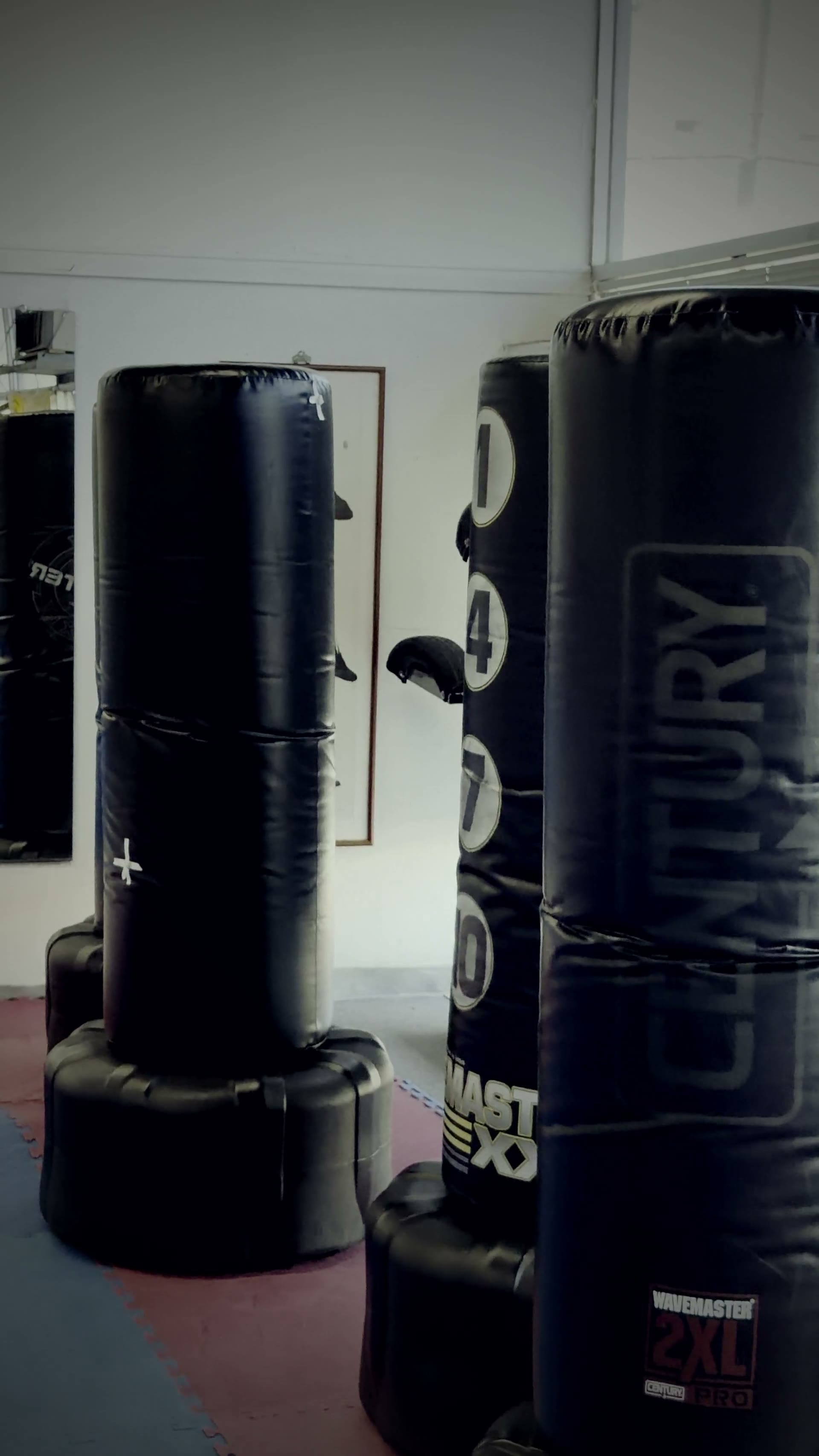
We are in Santa Clara, so a large share of the adults who walk into our school sit at a desk for eight to ten hours a day. The complaints are consistent: neck, upper back between the shoulder blades, and hips that no longer want to do what hips do.
There is real trial evidence on this, and it points at something more specific than "get more exercise."
What the workplace trials found
The most-cited body of work comes from Lars L. Andersen's group in Denmark.
The one-year trial (2008). Office workers were allocated to specific resistance training, all-round physical exercise, or a reference group receiving general health counselling — 180, 187 and 182 participants respectively. Specific resistance training increased shoulder elevation strength and reduced neck pain more than the reference group among workers who already had symptoms, and also helped prevent shoulder pain in those without symptoms at baseline.
The brief daily training trial (Lidegaard et al., 2013). A 10-week randomised controlled trial of 30 female office workers with chronic neck and shoulder pain. Two minutes of daily elastic resistance training increased isometric muscle strength by 6% and decreased neck and shoulder pain intensity by 40% compared with controls.
Dose-response work. A 2020 workplace study found 10-minute bouts as effective as two 10-minute bouts per day. A related 2020 study reported mean and worst pain falling by 25% and 43% when groups were merged, with no difference in strength observed between them.
Two caveats. These are small-to-moderate trials, the 2013 one has just 30 participants, and the broader literature on exercise for neck pain contains contrasting results from other high-quality trials — which is partly why the process evaluations exist. And it is specific strength work being tested, not martial arts.
The distinction that matters
Read the 2008 trial again: the comparison that worked was specific resistance training, not all-round physical exercise. The thing that moved neck pain was targeted loading of the muscles involved, not general activity.
This is the honest filter to apply to any claim that a given activity fixes desk-work problems. The question is not whether it makes you move. It is whether it loads the specific tissue that has been understimulated for ten hours.
Where martial arts matches, and where it does not
What genuinely addresses the desk problem:
- Hip extension and rotation. Sitting holds the hip flexors short for hours. Kicking, stance transitions and turning require the opposite — repeated hip extension and rotation under load. This is the single best match between martial arts and the desk-work pattern, and it is the one students report most.
- Thoracic rotation. Striking rotates the upper back, which is the segment a keyboard posture keeps still.
- Overhead and upward shoulder work. Blocks taken overhead load shoulder elevation, which is the function the 2008 trial measured and improved.
- Grip and forearm loading. Particularly in joint-lock work, where it is sustained rather than brief.
- Proprioception and reactive balance. Sitting requires none, and it degrades.
Where martial arts does not match the trials:
- The trials loaded specific muscles progressively, with resistance. A martial arts class is not progressive resistance training and does not claim to be.
- Neck musculature specifically is not loaded much in a striking syllabus. If the neck is your primary complaint, the trial evidence supports targeted neck and shoulder resistance work, and we would rather tell you that than pretend a class covers it.
- The trials used two to ten minutes most days. A class is twice a week. The frequency profile is different, and for pain specifically, frequency appears to matter.
So the realistic claim is a combination, not a substitution: a class twice a week for the hip, thoracic and shoulder work and for the part of this that is about actually doing it, plus two minutes of targeted band work on other days if neck pain is the specific problem you are solving. Our article on strength training for martial artists covers how to fit the two together.
The first six weeks, if you sit all day
Some honest warnings specific to deconditioned desk workers.
Your hips are the limiting factor, not your flexibility. People assume they need to stretch their hamstrings. Kicking height is mostly hip mobility, and we covered why the usual advice targets the wrong tissue in how long until you can kick high.
Expect upper back soreness you did not predict. Thoracic rotation under any load at all is novel if you have not rotated under load for years. Two days of soreness between the shoulder blades after a first class is normal.
The warm-up will be harder than the techniques. This is almost universal and it resolves in three to six weeks, because most of the early fatigue is coordination rather than conditioning. Do you need to be fit before you start covers this in detail.
If you have a diagnosed disc issue or nerve symptoms, talk to your doctor first and tell the instructor what you were told. Numbness, tingling or pain radiating down an arm is not something to train through.
The part that is not physical
One finding worth including. The research on exercise and anxiety supports a moderate effect, though the quality of the underlying evidence is uneven — and in practice, the most common thing adults with desk jobs tell us about class is not that their neck improved. It is that an hour requiring full attention to a physical task is the only hour in their day in which they are not thinking about work.
We wrote about what that evidence does and does not support in martial arts for adult stress and anxiety, including the finding that the post-exercise calm appears to last on the order of a few hours rather than all day.
At KIMOO
We teach adults in Santa Clara at 2181 El Camino Real, Santa Clara, CA 95050, on El Camino Real, under a Grand Master certified 8th Dan in Hapkido who trained at the Korea Hapkido Headquarters Dojang.
If you sit for a living, say so on your trial class, and name the specific area that bothers you. It changes which parts of the warm-up an instructor will have you emphasise. Call (408) 243-1001 for adult class times. New students receive a free uniform and white belt on enrolment.
Frequently asked questions
Is martial arts good for desk workers?
For hip mobility, thoracic rotation, overhead shoulder work and reactive balance — the functions sitting removes — it matches the problem well. For neck pain specifically, the trial evidence supports targeted resistance work rather than general activity, so a class is a complement to that rather than a replacement.
What does the research say about exercise and office neck pain?
A one-year Danish trial comparing specific resistance training, all-round exercise and health counselling in office workers found that specific resistance training reduced neck pain more than the reference condition among symptomatic workers. A separate 10-week trial in 30 women with chronic neck and shoulder pain found two minutes of daily elastic resistance training reduced pain intensity by 40% and increased strength by 6%.
Will martial arts fix my neck pain?
We would not claim that. The intervention tested in those trials was targeted resistance work for the specific muscles, performed most days. Martial arts loads the shoulders and upper back but does not load the neck much, and runs twice a week rather than daily. If neck pain is the main problem, do the targeted work as well.
I sit all day and I am stiff. Where will I feel it first?
The hips, almost always — sitting holds the hip flexors short, and kicking and turning require the opposite. The second place is the upper back between the shoulder blades, because thoracic rotation under load is novel. Both are normal and both improve within weeks.
Should I stretch my hamstrings to kick higher?
Mostly no. Kicking height is primarily determined by hip mobility rather than hamstring length, which is why years of hamstring stretching often produce little change in kicking height.
I have a disc problem. Can I train?
Ask your doctor first, specifically about impact tolerance and loaded spinal rotation and flexion, then tell the instructor exactly what you were told. Numbness, tingling or pain radiating into an arm or leg is not something to train through. A class can be scaled around a known restriction.
Where can tech and office workers train martial arts in Santa Clara?
KIMOO Martial Arts, **2181 El Camino Real, Santa Clara, CA 95050**. Call **(408) 243-1001** for adult class times and to book a free trial class.
Train with a champion
Book your free trial class at KIMOO Martial Arts in Santa Clara and train under a World Cup gold medalist.
Keep reading