Choosing a Dojo
How to Choose Between Two Martial Arts Schools You Both Like
You have done two trial classes. Both were fine. Nobody was obviously bad, the children enjoyed themselves, and now you are choosing on vibes and parking.
Here is a better way to separate them.
The four questions that do the work
Ask both schools the same four things and compare the answers side by side. These separate schools far more reliably than atmosphere does.
Who teaches the class my child would actually attend, what is their rank, and how long have they taught here?
Not who owns the school. The specific class, the specific evening. Listen for tenure — "eight years" and "since September" are different products, because an instructor who has watched the same children for years knows things that cannot be written down.
How many students are in that class?
Correction is finite. An hour of one instructor's attention divided by twelve is a different purchase from the same hour divided by forty. This is the main thing your tuition buys.
Is rank registered with an outside body, and which one?
A belt recorded only in that school's own files is worth something only inside that school. It affects whether years of training transfer if you move. How to verify it.
Has a student ever been held back from a grading?
The most diagnostic question available. A school with real standards answers immediately, usually with an example. A school selling rank rephrases the question without answering it. Listen for which one happens.
The one thing to watch in a trial class
If you take nothing else from this: count how many times the instructor corrects an individual student by name.
Not "good job, everyone." Not a demonstration to the room. An individual, named, told something specific about what their body is doing.
That number is the clearest single indicator of what you are buying, and it is observable in forty minutes without asking anyone anything. Two schools that feel similar often differ enormously on it.
The tie-breakers that actually matter
If the four questions come out level, these predict outcomes better than facilities do.
The schedule you will keep on a bad week. Not the ideal schedule — the one that survives a late meeting, a sick sibling, traffic on El Camino. Attendance determines everything, and a class time you will miss twice a month is worse than a slightly less convenient one you will always make.
Whether your child was spoken to. Did anyone learn their name? A child who felt noticed in a trial class is in a different position from one who was processed through it.
Whether anyone asked about injuries or conditions. A school that does not ask is not adapting for anyone.
Whether there is anything for a teenager to become. Ask what older students do. Schools with no role for a fifteen-year-old beyond "keep attending" lose them, reliably — and 13 to 15 is the peak dropout window.
The full twelve-month cost in writing. Both schools. Tuition, registration, every grading, required gear. Schools that look identical monthly often differ by several hundred a year once everything is counted, which is the point of what classes actually cost.
Tie-breakers that matter less than people think
- Facilities. Newer mats and better changing rooms are pleasant and do not teach anybody anything
- The founder's trophy wall. Relevant only if that person teaches your class. Lineage is useful context, not the lesson
- The style. Variation between schools within a style exceeds variation between styles. A well-taught Taekwondo class beats a poorly taught Hapkido one and vice versa
- Class size being very small. Three students is not obviously better than twelve — some partner work needs a room with people in it
- Price, within a reasonable band. Correlation between price and quality is weak in both directions
When one is cheaper
If the four questions come out level and one school costs meaningfully less, take the cheaper one. Genuinely.
The warning in why the cheapest school often costs more is about low prices that reflect class size, unqualified instructors or unregistered rank. If you have already checked those four things and they are equal, then the price difference is just a price difference.
What to avoid is using price as a substitute for the four questions, which is what most people do.
If you genuinely cannot decide
Two practical options.
Do a second trial at each, a week apart, on the day you would actually attend. The regular Tuesday class is a more honest sample than whichever class you were invited to.
Start month-to-month at one. You will know within four weeks. The first-month checkpoint tells you what to look for, and the cost of changing your mind at week four is close to zero — far lower than switching after a year.
Do not sign a long contract to resolve indecision. That is the one genuinely bad move available here.
At KIMOO
If we are one of your two, ask us all four questions. We would rather you did — a family that decided on evidence stays, and one that decided on a parking space does not.
KIMOO Martial Arts is at 2181 El Camino Real, Santa Clara, CA 95050. Your first class is free, and enrolling includes a uniform and white belt at no cost. Call (408) 243-1001 and ask for the class your child would actually be in, on the day you would actually come.
Ask the other school too. If they answer better than we do, go there.
Frequently asked questions
How do I choose between two martial arts schools?
Ask both the same four questions: who teaches the specific class and for how long, how many students are in it, whether rank is externally registered, and whether any student has ever been held back from a grading. Those separate schools far more reliably than atmosphere or facilities.
What should I watch during a trial class?
Count how many times the instructor corrects an individual student by name — not general encouragement to the room. That single number is the clearest indicator of what your tuition buys, and it is observable in forty minutes.
Does the martial art style matter more than the school?
No. Variation between schools within a style is larger than variation between styles. A well-taught programme with small classes and real grading standards beats a poorly taught one in any art.
Should I pick the cheaper school?
If the four key questions come out equal, yes. The usual warning about cheap schools concerns low prices that reflect large classes, unqualified instructors or unregistered rank. If you have checked those and they match, a price difference is just a price difference.
What if both schools seem equally good?
Do a second trial at each on the day you would actually attend, since the regular class is a more honest sample. Or start month-to-month at one — four weeks will tell you, and changing your mind then costs almost nothing.
Should I sign a contract to get a better rate while deciding?
No. Signing a long agreement to resolve indecision is the one clearly bad move available. Start on the most flexible terms, then commit once you have real information.
Where is KIMOO Martial Arts?
**2181 El Camino Real, Santa Clara, CA 95050.** Call **(408) 243-1001** to book a free trial class in the group your child would actually join.
Train with a champion
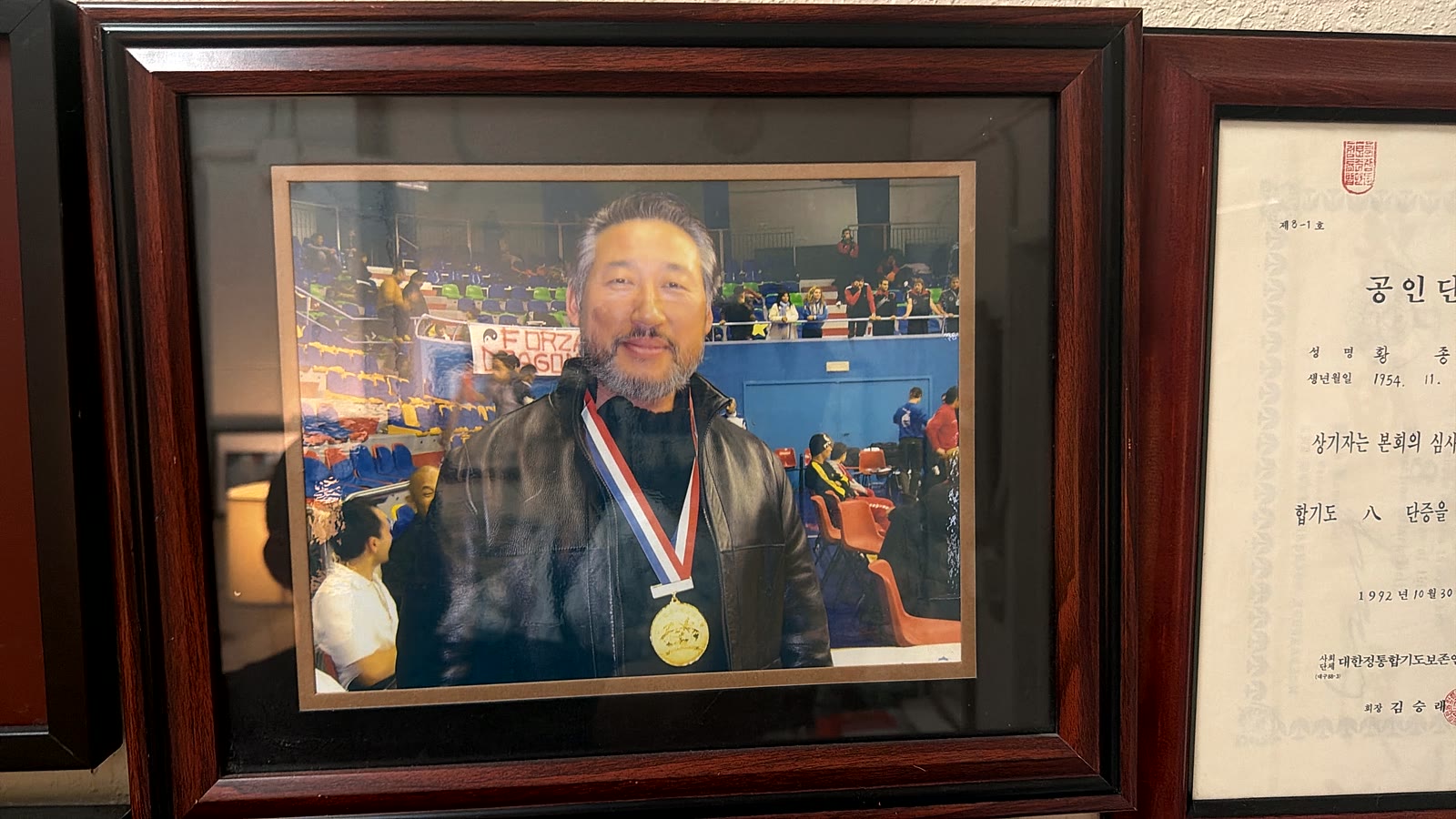
Book your free trial class at KIMOO Martial Arts in Santa Clara and train under a World Cup gold medalist.
Keep reading