Getting Started
Counting in Korean: Hana, Dul, Set and the Commands You Hear in Class
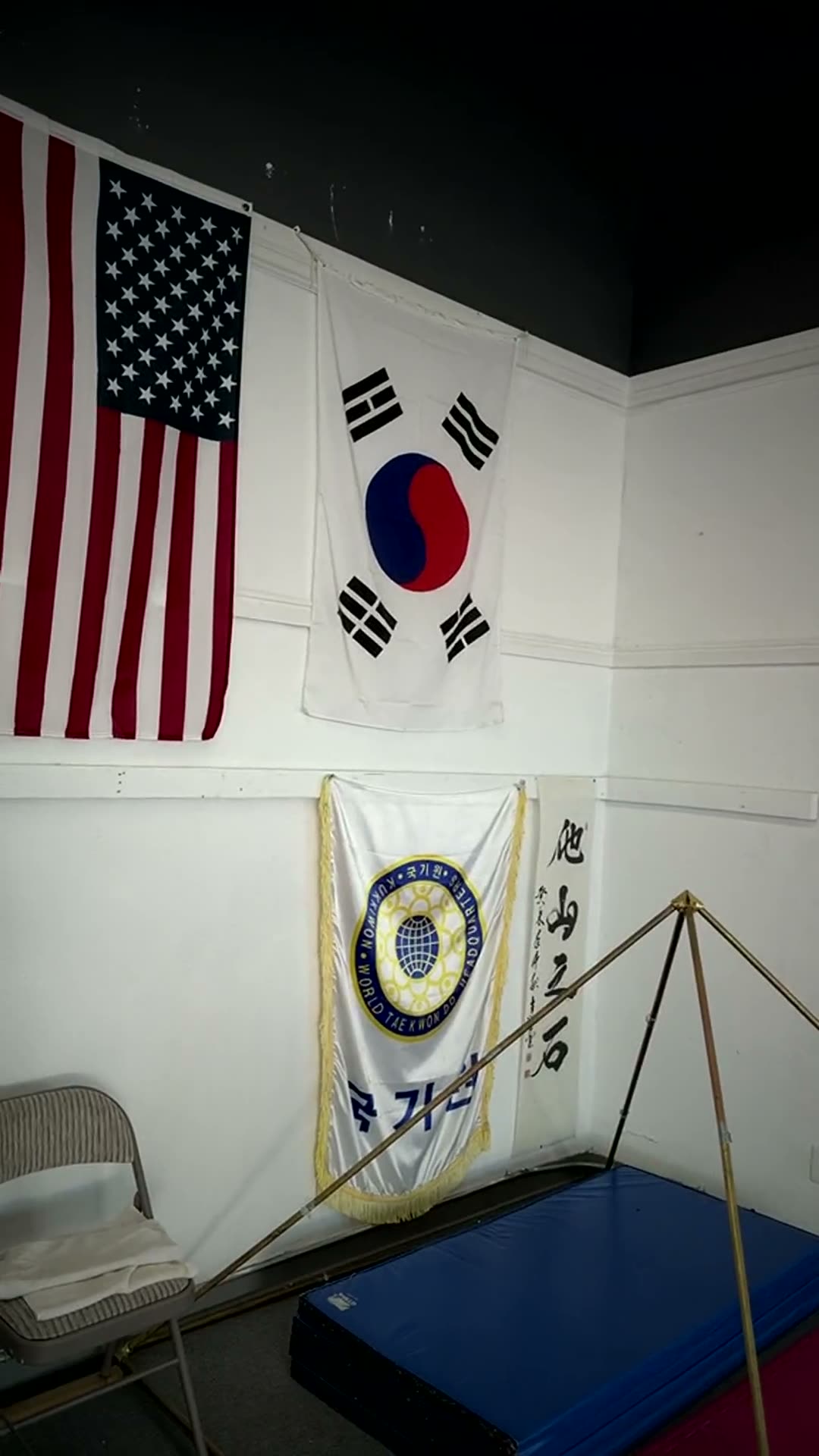
Your first class, the instructor calls out "hana, dul, set" and the room moves. By week three you are counting along without knowing what you are saying.
Worth knowing, because there is a genuinely interesting thing going on here that almost no martial arts school explains.
Korean has two number systems
This is the part that confuses students who start paying attention.
Korean uses two complete and separate sets of numbers. Not variants — different words entirely.
Native Korean numbers are used for counting things, people, ages and hours:
- Hana (하나) — one
- Dul (둘) — two
- Set (셋) — three
- Net (넷) — four
- Daseot (다섯) — five
- Yeoseot (여섯) — six
- Ilgop (일곱) — seven
- Yeodeol (여덟) — eight
- Ahop (아홉) — nine
- Yeol (열) — ten
Sino-Korean numbers, derived from Chinese, are used for dates, money, addresses, phone numbers and minutes:
- Il (일) — one
- I (이) — two
- Sam (삼) — three
- Sa (사) — four
- O (오) — five
- Yuk (육) — six
- Chil (칠) — seven
- Pal (팔) — eight
- Gu (구) — nine
- Sip (십) — ten
Why this matters in the dojang
Here is the connection almost nobody points out.
Counting repetitions uses native Korean. Hana, dul, set — because you are counting things.
The form names use Sino-Korean. Taegeuk Il Jang, Taegeuk Pal Jang — chapters one and eight. Which is why the eight Taegeuk forms are named with a completely different set of numbers from the ones you count kicks with.
So "il" and "hana" both mean one, and your instructor will use both in the same class for different purposes. That is not a mistake or a regional quirk. It is how Korean works.
A small detail if you want to sound right: native numbers change form before a counter word — hana becomes han, dul becomes du, set becomes se, net becomes ne. You will hear this and it is not an error.
Native Korean numbers also stop at 99. There is no native word for a hundred, which is why larger numbers always use the Sino-Korean set.
The commands worth recognising first
You do not need Korean to start. But recognising these means you are moving with the class rather than a half-second behind it, which matters more to a nervous beginner than any vocabulary list.
- Charyot (차렷) — attention. Stand straight, feet together, hands at your sides.
- Kyungnae (경례) — bow. Almost always follows charyot.
- Junbi (준비) — ready. Move into the ready stance. This is the command that starts a form.
- Shijak (시작) — begin. The form or drill starts now.
- Baro (바로) — return, come back to the previous position.
- Guman (그만) — stop.
- Dwiro dora (뒤로 돌아) — turn around.
- Shio (쉬어) — at ease, relax.
- Kyoshi / kyeongnye variations — bowing commands differ slightly between schools.
Of these, the four you will hear in the first ten minutes are charyot, kyungnae, junbi, shijak. Learn those and the rest arrive on their own.
Two things that help
Spellings vary, a lot. Kyungnae, kyeongnye, kyung-rae. Shijak and sijak. These are the same commands romanised differently, and no school is wrong. Learn the sound rather than the spelling — the sound is the same everywhere.
Nobody expects you to know any of this. New students mishear commands and move the wrong way constantly. It is completely normal, nobody is annoyed, and watching the student next to you is an entirely legitimate strategy for the first month.
Why bother with Korean at all
Two honest reasons.
It makes a class portable. The commands and counting are the same in Seoul and Santa Clara. A student who knows them can train anywhere in the world and follow the instruction.
It is precision, not ceremony. "That block, the middle one going inward" and momtong an makgi describe the same thing, but the second one describes exactly one technique. Once the vocabulary is in place, corrections get much faster, because the instructor and the student are provably talking about the same movement.
There is a third reason that is less practical but real: the terminology is part of what makes Taekwondo a Korean art rather than generic kickboxing with belts. The language carries the lineage.
Where the vocabulary goes next
Once counting and commands are comfortable, the technique names follow the same logic. The stances are here, the blocks here, the hand strikes here, and the kicks here.
Come and count along
You will pick up more in one class than from any list. And nobody will test you on it.
Your first class is free, with no contract, and new students receive a free uniform and white belt. Call (408) 243-1001.
A Korean art, taught properly
KIMOO is led by an 8th Dan Grand Master who trained at the Korea Hapkido Headquarters Dojang in 1971, in Korea, under the founding grand masters of the art. The terminology here is not decoration added for atmosphere.
Visit us: 2181 El Camino Real, Santa Clara, CA 95050
Frequently asked questions
How do you count to ten in Korean in Taekwondo?
Hana, dul, set, net, daseot, yeoseot, ilgop, yeodeol, ahop, yeol. This is the native Korean set, used for counting repetitions.
Why do Taekwondo form names use different numbers from counting?
Korean has two number systems. Counting repetitions uses native Korean (hana, dul, set), while the form names use Sino-Korean (il, i, sam), which is why Taegeuk Il Jang means chapter one.
What does "charyot" mean?
Attention. Stand straight with feet together and hands at your sides. It is almost always followed by kyungnae, meaning bow.
What does "junbi" mean in Taekwondo?
Ready. It instructs you to move into the ready stance, and it is the command that precedes starting a form.
What does "shijak" mean?
Begin. The form or drill starts on that command.
Do I need to learn Korean before my first class?
No. Recognising charyot, kyungnae, junbi and shijak is enough for a first class, and most students absorb the rest over a few weeks without studying.
Why are Korean terms spelled differently in different places?
Korean does not romanise cleanly into English and different organisations adopted different conventions. Kyungnae and kyeongnye are the same command. Learn the sound rather than the spelling.
Where is KIMOO Martial Arts in Santa Clara?
We are at 2181 El Camino Real, Santa Clara, CA 95050. Call (408) 243-1001.
Train with a champion
Book your free trial class at KIMOO Martial Arts in Santa Clara and train under a World Cup gold medalist.
Keep reading