Kids & Family
Will Martial Arts Harm My Child's Growth? What the Research Says About Growth Plates
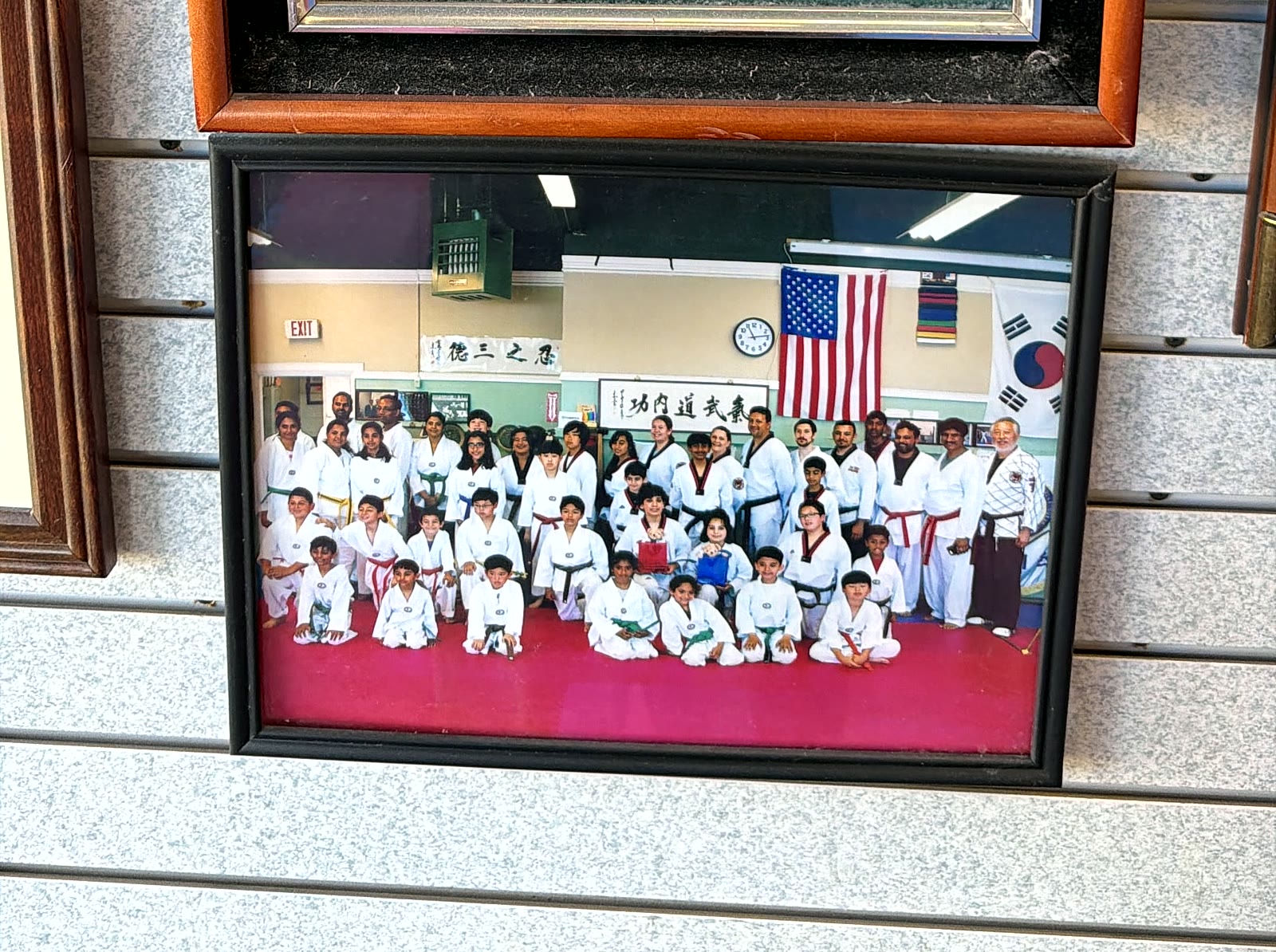
"Won't all that kicking damage her growth plates?"
It is one of the most common questions parents ask, and it deserves a straight answer rather than reassurance. The answer has two halves: the specific fear is not supported by evidence, and there are real risks, just not the ones people name.
What a growth plate is
A growth plate, or physis, is a layer of cartilage near the ends of a child's long bones where new bone is produced. They are the reason children grow taller, and they close in late adolescence.
Because cartilage is softer than bone, the worry is intuitive: load it and you damage it, and a damaged growth plate could mean a limb that stops growing properly. Growth plate fractures are genuinely serious when they happen.
Where the research actually points
The claim that structured training harms growth plates has been examined repeatedly, mostly in the context of youth strength training, and it has not held up.
The injury mechanism is wrong. Growth plate fractures typically result from acute trauma — a fall, a collision, a single high-force event — rather than from repetitive loading. Most occur in ordinary activities and sports like football, basketball and skateboarding.
The review evidence is consistent. A review by Malina covering 22 experimental youth training programs found no prospective study conducted with professional guidance had reported an injury to growth cartilage. Faigenbaum and Myer reached similar conclusions. A study following 70 competitive young weightlifters aged 7 to 16 over a year found none lost training time to injury.
Professional bodies have moved on. A 2014 international position paper endorsed youth resistance training as safe and effective, and the growth-plate claim is now generally characterised as a myth rather than an open question.
Two honest caveats. Much of this research concerns weight training specifically, not martial arts — the transfer is reasonable but it is an inference. And the safety conclusion is conditional, every time, on supervision, age-appropriate programming and good technique. The research says supervised training is safe. It does not say any training is safe.
You may also see claims that youth strength training reduces overall sports injuries by around 66 to 68 percent. Those figures circulate widely through secondary sources and we could not trace them to a verified original, so treat the specific number with caution even though the direction is well supported.
The risks that are actually worth your attention
Having set the growth plate fear aside, here is what does matter for a child in martial arts.
- Acute impact and falls. This is the real mechanism for serious injury, which is why learning to fall safely is taught before anything that involves falling.
- Overuse from volume, not from load. A child doing hundreds of the same kick repeatedly, several days a week, without variety is at risk of overuse problems. This is a programming failure, and it is the main argument against year-round single-sport intensity.
- Head contact. Worth taking seriously on its own terms — we have written separately about sparring and concussion safety.
- Inadequate supervision. Nearly every documented risk in the literature is conditioned on supervision. In a class of thirty children with one instructor, nobody is correcting your child's landing mechanics.
- Growth spurts. During a rapid growth phase, bones lengthen faster than muscles and tendons adapt, which temporarily reduces flexibility and coordination and raises injury risk. A good instructor notices a child who has suddenly grown three inches and adjusts. This is a genuine window of vulnerability, and it is about timing rather than about training being harmful.
What to ask a school
- What is the instructor-to-student ratio in my child's class?
- How is technique corrected — individually, or by general instruction to the room?
- Is there variety in the training, or the same drills at high volume every session?
- How do you handle a child going through a growth spurt?
- What is the policy on head contact by age?
The comparison nobody makes
The growth plate question is almost always asked about martial arts and almost never about soccer, basketball or gymnastics — which, by the research, carry more growth plate fractures through collisions and falls.
That is not an argument for martial arts over those sports. It is an argument for assessing all of them by the same standard, which is supervision quality and training sensibility rather than the name of the activity. If overall safety is your question, the comparative injury data across sports is worth reading.
One thing the evidence does support
If your child is in a growth spurt or you have a specific orthopaedic concern, ask your paediatrician. A school, including this one, cannot assess your child's skeletal maturity, and any school that tells you it can is overstepping.
What we can do is teach carefully, in appropriately sized groups, with the technique corrected individually.
Come and watch a class first
Do not take our word for the supervision. Come and count the instructors, and watch whether individual children are being corrected.
Your child's first class is free, with no contract, and new students receive a free uniform and white belt. Call (408) 243-1001.
Taught by an 8th Dan, in person
Grand Master Hwang trained at the Korea Hapkido Headquarters Dojang in 1971 and has taught children in Santa Clara for decades. He is on the floor correcting technique himself, which is the variable the research actually cares about.
Visit us: 2181 El Camino Real, Santa Clara, CA 95050
Frequently asked questions
Does martial arts stunt a child's growth?
There is no research support for this. Reviews of youth training programs have found no reported injuries to growth cartilage in prospective studies conducted with professional guidance, and professional bodies now treat the claim as a myth.
Can kicking damage growth plates?
Growth plate fractures typically result from acute trauma such as falls and collisions rather than from repetitive loading. Most occur in sports like football, basketball and skateboarding rather than in supervised technical training.
What are the real injury risks for children in martial arts?
Acute impacts and falls, overuse from excessive repetition of the same movement, head contact, inadequate supervision, and the temporary vulnerability that comes with a rapid growth spurt.
Is my child more at risk during a growth spurt?
Temporarily, yes. Bones lengthen faster than muscles and tendons adapt, which reduces flexibility and coordination for a period. A good instructor notices and adjusts the training.
What matters most for keeping a child safe in training?
Supervision quality. Almost every safety finding in the research is conditional on professional guidance, age-appropriate programming and correct technique.
Should I speak to a doctor before enrolling my child?
If you have a specific orthopaedic concern or your child is in a growth spurt, yes. A martial arts school cannot assess skeletal maturity.
Where is KIMOO Martial Arts in Santa Clara?
We are at 2181 El Camino Real, Santa Clara, CA 95050. Call (408) 243-1001.
Train with a champion
Book your free trial class at KIMOO Martial Arts in Santa Clara and train under a World Cup gold medalist.
Keep reading